
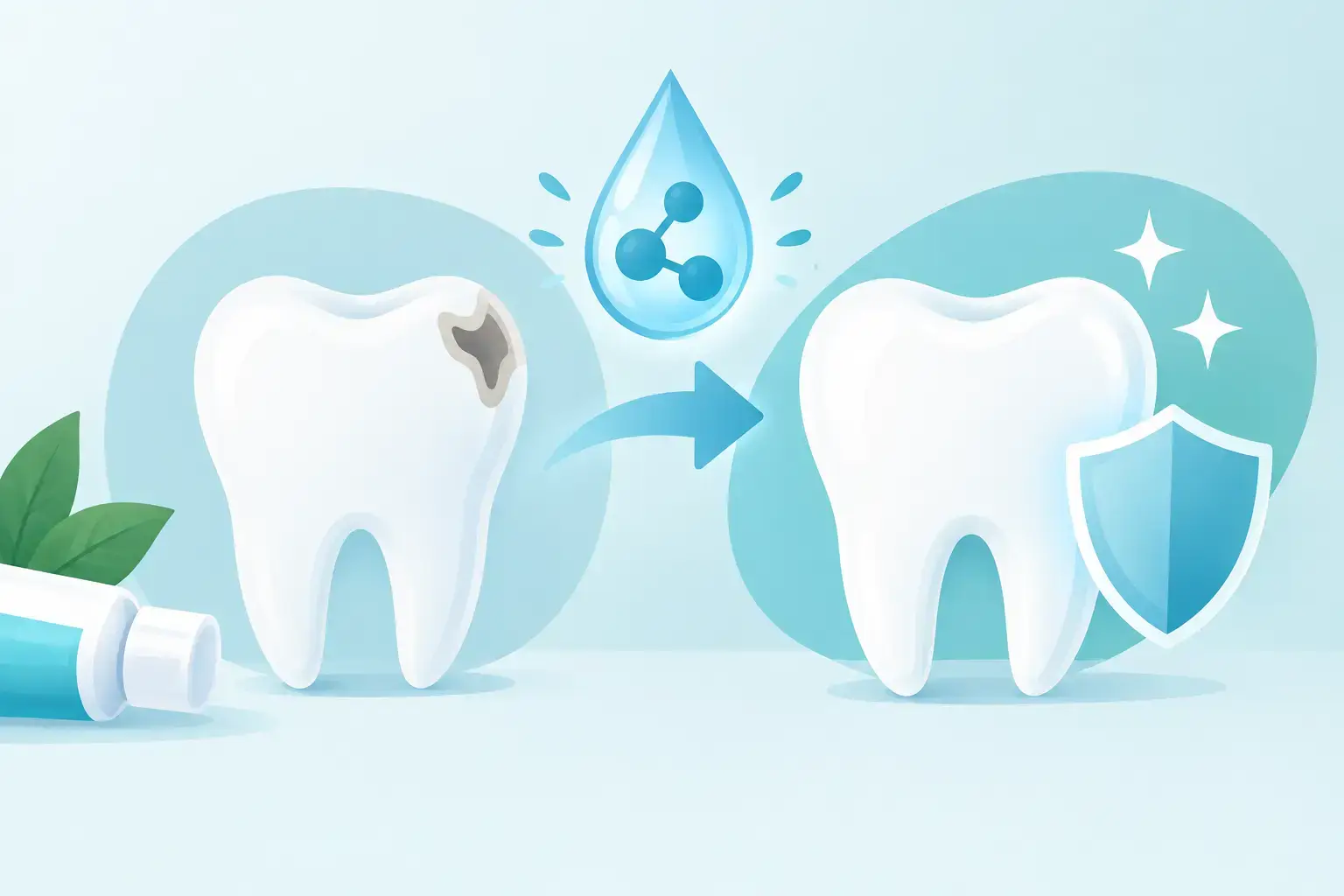
A faint white spot near the gumline or between teeth can feel like an alarming discovery. The encouraging answer to “can fluoride reverse early decay” is often yes – but only when decay is caught before a true cavity forms. At that early stage, fluoride can help strengthen weakened enamel and stop the damage from progressing. Once tooth structure has broken down into a hole, however, fluoride cannot rebuild it.
Knowing the difference matters. Early treatment may be as simple as targeted fluoride, improved home care, and closer monitoring. Waiting until decay becomes a cavity can mean a filling, a crown, or more extensive treatment.
What Happens During Early Tooth Decay
Tooth decay does not begin as a visible hole. It starts when bacteria in plaque feed on sugars and starches left on the teeth. In the process, they produce acids that pull minerals, primarily calcium and phosphate, from the enamel. This mineral loss is called demineralization.
At first, enamel may develop a chalky white spot, lose some of its natural shine, or show subtle changes on a dental X-ray. The outer surface can still be intact. This is the window when enamel can recover through remineralization, provided the conditions in the mouth improve.
Saliva naturally helps this process by washing away food particles and supplying minerals. Fluoride gives the process an advantage. It helps enamel take up minerals more effectively and makes the repaired surface more resistant to future acid attacks.
Early decay is not always obvious to patients. It may occur between teeth, underneath a restoration edge, or in grooves on the chewing surface. That is one reason regular exams and digital X-rays are valuable: they can identify changes well before a tooth becomes painful.
Can Fluoride Reverse Early Decay?
Fluoride can reverse early decay when the enamel is demineralized but has not developed a cavitated lesion, meaning a physical break or hole in the surface. It does not “grow back” enamel in the same way the body heals skin. Instead, it helps remineralize and harden the remaining enamel, making the early lesion less active and more stable.
This is a meaningful distinction. A white spot lesion may become less noticeable over time, but the primary goal is to stop progression and preserve healthy tooth structure. A dentist will consider the location of the lesion, how deep it appears on X-rays, whether the surface feels intact, your cavity history, diet, saliva flow, and home-care routine before recommending a plan.
Fluoride is most successful when it is part of a broader preventive approach. If frequent snacking, dry mouth, inconsistent brushing, or untreated gum recession continues to expose teeth to acids and plaque, early decay may still progress despite fluoride use.
When Fluoride Is Not Enough
If decay has created a hole in the enamel, reached the softer dentin beneath it, or weakened the tooth enough that food and bacteria collect in the area, fluoride alone cannot repair the damage. A filling is usually needed to remove decay and seal the tooth.
This does not mean you have failed at oral care. Cavities can develop for many reasons, including deep grooves, crowded teeth, certain medications that cause dry mouth, reflux, pregnancy-related changes, and genetics. The goal is always to choose the most conservative treatment that protects the tooth for the long term.
A tooth may also need treatment sooner if an area is difficult to keep clean or appears to be progressing quickly. Your dentist can explain whether monitoring and remineralization are appropriate or whether restoring the tooth now is the safer choice.
How Dentists Use Fluoride to Protect Teeth
Professional fluoride treatment is not one-size-fits-all. For patients with early enamel changes or a higher risk of cavities, a dentist may recommend fluoride varnish during preventive visits. This concentrated fluoride coating adheres to the teeth and continues working after the appointment.
At home, most adults and children benefit from brushing twice daily with fluoride toothpaste. For patients at elevated risk, a dentist may prescribe a higher-fluoride toothpaste or recommend a fluoride rinse. These options can be especially helpful for people with dry mouth, exposed root surfaces, orthodontic appliances, a history of frequent cavities, or limited dexterity that makes brushing difficult.
Young children need special guidance because they may swallow toothpaste. A rice-sized smear is generally used for children under age 3, while a pea-sized amount is typical for children ages 3 to 6 who can reliably spit. Parents should supervise brushing and ask their child’s dentist for personalized recommendations.
Fluoride treatments are carefully selected based on age, cavity risk, and oral health needs. At Newport Beach Dentistry, preventive recommendations are tailored to the patient rather than offered as a generic routine. That personalized approach is particularly helpful for families, patients with dental anxiety, and adults returning to care after time away.
Habits That Help Remineralization Work
Fluoride works best when teeth have regular opportunities to recover from acid exposure. Brushing with fluoride toothpaste for two minutes twice a day is foundational. After brushing at night, spit out the excess toothpaste but avoid rinsing thoroughly with water right away, so a small amount of fluoride remains on the teeth.
The timing and frequency of sugar matter as much as the amount. Sipping sweet coffee, soda, sports drinks, juice, or flavored sparkling water throughout the day repeatedly bathes enamel in acid. Saving these beverages for mealtimes and choosing water between meals gives saliva time to neutralize acids.
Daily flossing or cleaning between teeth is also essential. Early decay often begins where toothbrush bristles cannot reach well. If traditional floss is challenging, interdental brushes or a water flosser may be useful additions, depending on your dentist’s recommendation.
For patients who experience dry mouth, staying hydrated is only part of the answer. Certain medications, medical conditions, mouth breathing, and cancer therapies can significantly reduce saliva. A dentist can recommend products and preventive strategies that protect vulnerable teeth and roots.
What About Fluoridated Water?
Community water fluoridation can provide low-level, ongoing exposure that supports cavity prevention across the lifespan. It is one useful layer of protection, but it does not replace brushing, professional care, or a thoughtful diet.
If you primarily drink bottled or filtered water, the fluoride level may vary. Some filtration systems remove fluoride, while others do not. Rather than making assumptions, discuss your household water source and cavity history with your dental team. They can help determine whether additional fluoride support is appropriate, particularly for children whose teeth are developing.
Signs You Should Schedule an Exam
Do not wait for pain to seek care. Early decay is often painless, and discomfort can indicate that decay has advanced closer to the tooth’s nerve. Schedule an evaluation if you notice a new white, brown, or dark spot; food repeatedly catching in one area; sensitivity to sweets or cold; roughness on a tooth; or a broken filling.
An exam allows your dentist to look beyond what is visible in the mirror. Intraoral imaging, X-rays when appropriate, and a careful clinical evaluation can reveal whether an area is stable, reversible, or in need of restorative treatment. That clarity can prevent both unnecessary procedures and avoidable progression.
Catching early decay is one of the most effective ways to keep treatment simple. If you are concerned about a spot, sensitivity, or a change in your smile, a timely visit can give you a clear answer and a personalized plan to protect your teeth with confidence.