A small cavity found during a routine exam may need only a conservative filling. A tooth that has cracked around an old restoration, lost a large portion of its structure, or completed root canal treatment may need the stronger protection of a crown. When comparing dental fillings versus crowns, the best choice is not simply about cost or appearance. It is about preserving as much healthy tooth structure as possible while giving the tooth the support it needs to function comfortably for years.
At Newport Beach Dentistry, treatment recommendations are personalized. We evaluate the size and location of the damage, the strength of the remaining tooth, your bite, your aesthetic goals, and your overall oral health before recommending a restoration.
Dental Fillings Versus Crowns: The Core Difference
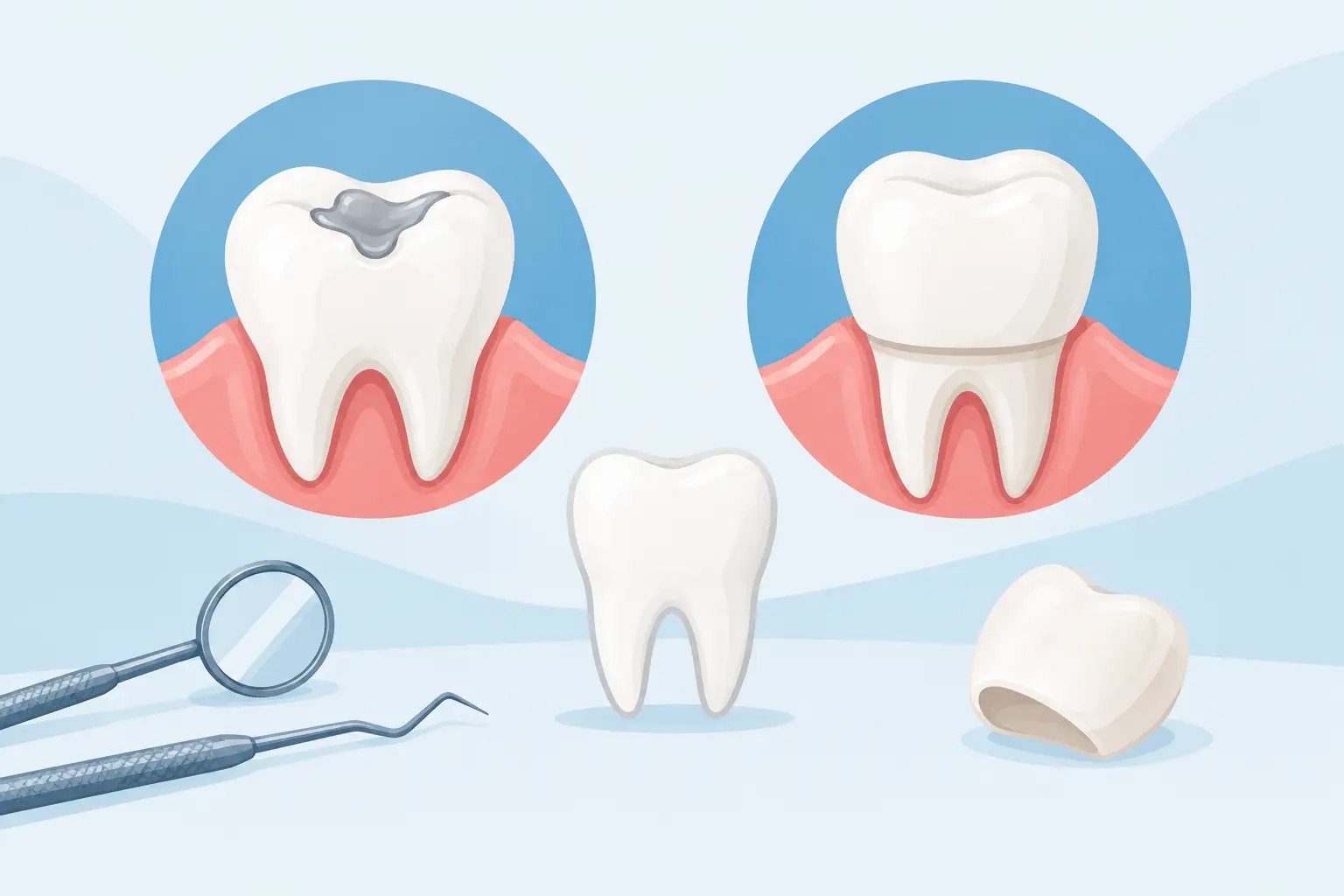
A dental filling repairs a limited area of decay or damage. After removing decay and cleaning the tooth, the dentist places restorative material directly into the prepared area. Modern composite fillings are tooth-colored and can blend naturally with surrounding enamel, making them a popular choice for visible teeth as well as back teeth.
A dental crown is a custom-made cover that fits over the entire visible portion of a tooth. The tooth is reshaped to create room for the crown, which is then fabricated from materials such as ceramic, porcelain, zirconia, or porcelain fused to metal. A crown restores the tooth’s shape, strength, and appearance while holding weakened tooth structure together.
Think of a filling as a targeted repair and a crown as structural reinforcement. Both are valuable restorative treatments, but they solve different problems.
When a Filling Is Usually the Right Choice
A filling is often the most conservative option when decay or damage is small to moderate and enough healthy enamel remains around it. Because less tooth structure must be altered, a filling can be an excellent way to restore function while preserving the natural tooth.
Composite fillings are especially useful for early cavities, small chips, worn areas, and the replacement of older metal fillings when the surrounding tooth remains strong. They can often be completed in one visit, and their shade can be selected to closely match your natural teeth.
The location of the tooth also matters. A small cavity on a front tooth or along the side of a tooth may respond very well to a filling because the area is not receiving heavy biting force. A modest cavity on a back tooth can also be treated with a filling when the cusps, or raised points used for chewing, remain intact.
A filling may not be the best long-term solution when it would become too large relative to the remaining tooth. Filling material restores lost areas, but it does not protect thin or cracked walls of enamel from flexing under chewing pressure. In that situation, placing an increasingly large filling can leave the tooth vulnerable to a fracture.
When a Crown Offers Better Protection
A crown is generally recommended when a tooth has significant structural loss or a high risk of breaking. This may happen when decay is extensive, an old filling has failed, a tooth has a large crack, or a substantial portion of the tooth has broken away.
Crowns are also commonly used after root canal therapy. Removing infected tissue can save a tooth, but a tooth that has undergone root canal treatment may be more brittle, especially a molar that absorbs substantial chewing force. A crown can protect it from splitting and help restore normal function.
Other situations where a crown may be appropriate include a severely worn tooth, a tooth with a large existing restoration, or a tooth that needs support as part of a dental bridge. Crowns can also improve the shape, color, or alignment of a tooth, although cosmetic goals should always be balanced with the amount of healthy enamel present.
A crown requires more preparation than a filling, so it should not be used when a smaller restoration can reliably protect the tooth. However, choosing a filling for a tooth that clearly needs full coverage may lead to repeated repairs, a fracture, or the need for more complex treatment later.
How Dentists Decide Between a Filling and a Crown
The decision is based on more than what can be seen in a mirror. Digital X-rays can reveal decay between teeth, below old restorations, or near the nerve. Intraoral camera images allow you to see areas of concern, while a clinical examination helps identify cracks, weakened cusps, gum health concerns, and bite-related wear.
The amount of healthy tooth remaining is one of the most important factors. A tooth with strong walls of enamel may hold a filling well. If the walls are thin, undermined by decay, or fractured, a crown may provide the protection the tooth needs.
Your bite is another key consideration. People who clench or grind their teeth place greater pressure on restorations. A filling that works well for one patient may not be durable enough for someone with heavy grinding forces. In some cases, a custom night guard may be recommended to protect both the restoration and your natural teeth.
The position of the tooth matters, too. Molars experience significant chewing pressure, while front teeth are more visible when you smile and speak. Material selection and restoration design should account for both strength and aesthetics.
Cost, Time, and Long-Term Value
A filling typically costs less than a crown because it uses less material and usually requires less treatment time. Most fillings can be placed during one appointment. Crowns generally involve more detailed preparation, impressions or digital scans, laboratory fabrication or same-day technology when available, and a final placement visit.
That difference in upfront cost is real, but the least expensive option is not always the best value. If a tooth needs a crown and receives a large filling instead, the tooth may later crack below the gumline or develop deeper decay around the restoration. At that point, treatment could involve root canal therapy, a new crown, or even extraction and tooth replacement.
On the other hand, placing a crown on a tooth with a small, straightforward cavity would remove more healthy structure than necessary. Good restorative dentistry is not about choosing the biggest treatment. It is about choosing the most appropriate treatment for the tooth in front of you.
Dental insurance may contribute differently to fillings and crowns depending on your plan. Before treatment, our team can help you understand expected benefits, discuss options, and create a plan that respects both your oral health needs and your budget.
Appearance and Material Choices
Today’s restorative materials can provide natural-looking results. Composite fillings are matched to the color of your teeth and are often nearly invisible in the smile zone. For crowns, all-ceramic and zirconia options offer excellent aesthetics along with dependable strength.
The best material depends on the tooth, the size of the restoration, your bite, and your cosmetic priorities. A crown on a front tooth may call for highly translucent ceramic to mimic natural enamel. A crown on a molar may benefit from a stronger material designed to handle intense chewing forces. Your dentist can explain the visual and functional trade-offs clearly before treatment begins.
Caring for Fillings and Crowns
Neither fillings nor crowns are immune to future decay. Bacteria can collect at restoration edges, especially when brushing and flossing are inconsistent. Daily home care, regular professional cleanings, and routine exams are the best ways to help restorations last.
Avoid chewing ice, hard candy, or other non-food objects, particularly if you have a large filling or crown. If you notice sensitivity that does not improve, pain when biting, a rough edge, a loose restoration, or a change in how your teeth come together, schedule an evaluation promptly. Early attention can sometimes prevent a small concern from becoming a larger repair.
The right restoration should feel comfortable, look natural, and support your long-term oral health. If you have a damaged tooth or an old filling that no longer feels right, a careful exam can provide clarity and a treatment plan designed around your smile, comfort, and future needs.