
A loose denture can affect far more than meals. It can change how comfortably you speak, whether you laugh freely in photos, and how confidently you interact with family and friends. An implant denture review should look beyond before-and-after pictures or a single star rating. The meaningful question is whether this treatment can provide the comfort, function, appearance, and long-term support that fit your health and goals.
Implant-supported dentures can be life-changing for the right patient, but they are not one-size-fits-all. A thoughtful evaluation considers your bone health, gum health, remaining teeth, medical history, budget, and expectations for daily care. With careful planning, many patients find that implant dentures feel more stable and natural than conventional removable dentures.
What Is an Implant-Supported Denture?
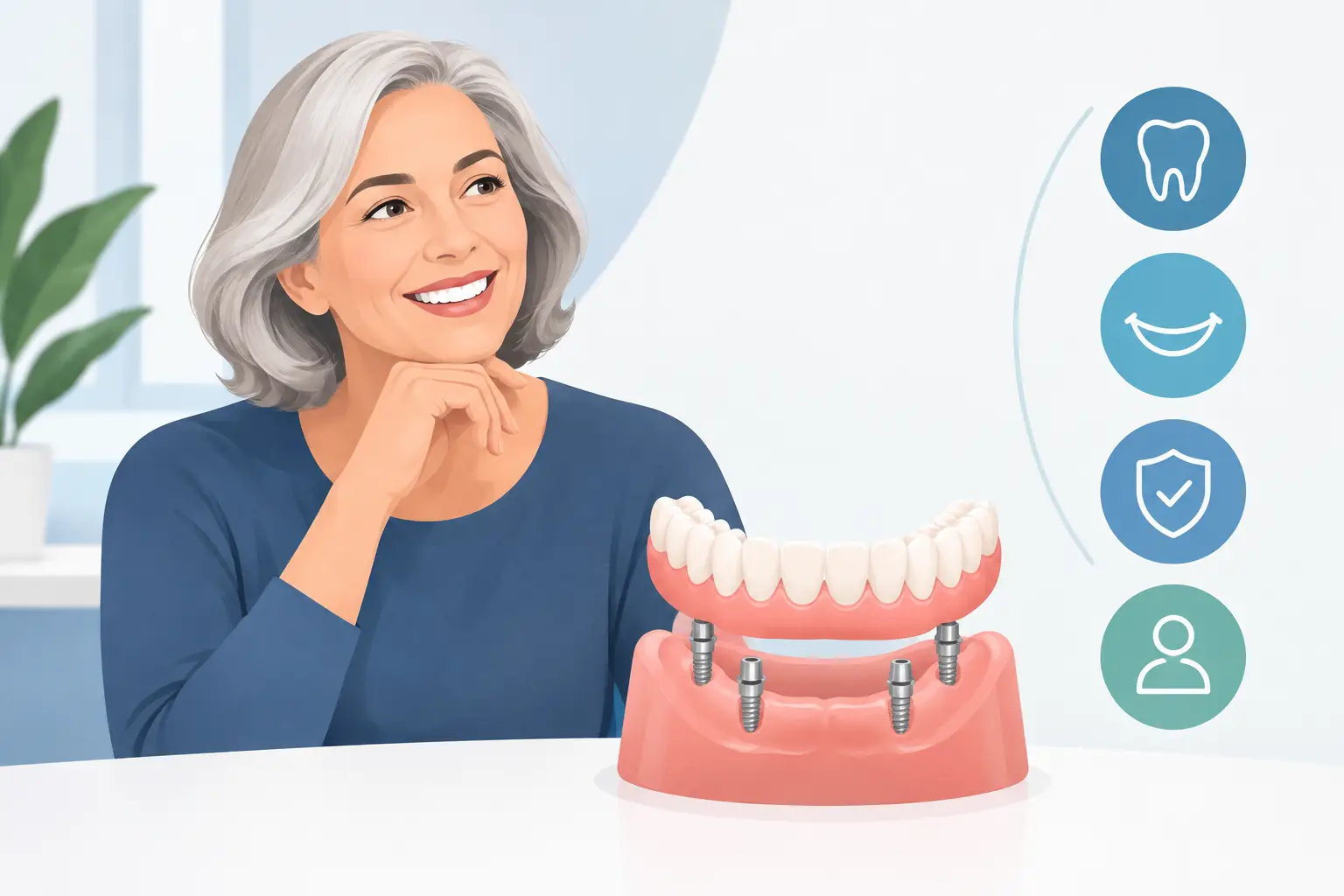
An implant-supported denture is a full or partial prosthetic tooth replacement that attaches to dental implants placed in the jawbone. Unlike a traditional denture that rests on the gums, implants provide secure support beneath the denture. This added stability can reduce slipping, improve chewing efficiency, and help preserve the jawbone after tooth loss.
There are two primary approaches. A removable implant denture, often called an overdenture, snaps onto implants and can be taken out for cleaning. A fixed full-arch prosthesis is attached by the dentist and remains in place day to day. Patients often refer to the latter as a permanent denture, though it still needs professional maintenance over time.
Neither option is automatically better. A removable option may be easier to clean and may involve a lower initial investment. A fixed option can feel closer to natural teeth and offers exceptional stability, but it requires careful home hygiene and periodic professional care. The best choice depends on the individual patient.
Implant Denture Review: Benefits Worth Considering
The most common reason patients explore implant dentures is stability. Conventional dentures can shift during eating or speaking, particularly when the lower denture has limited natural suction. Implants help hold the denture in position, which can make everyday activities feel more predictable and comfortable.
Chewing ability is another significant consideration. Stable dentures often allow patients to eat a broader range of foods, including many fruits, vegetables, and proteins that may have been difficult with loose dentures. That does not mean every patient will chew exactly as they did with healthy natural teeth, but a well-designed implant restoration can make a meaningful functional difference.
Implants also help stimulate the jawbone. After teeth are lost, the bone that once supported them gradually changes. Conventional dentures do not stop this process. Dental implants can help preserve bone in the areas where they are placed, supporting facial structure and helping maintain the fit of the restoration over time.
For many patients, the emotional benefit matters just as much. A denture that stays in place can reduce self-consciousness and make social situations less stressful. The goal is not simply to replace teeth. It is to restore comfort, confidence, and a healthy smile that looks like it belongs to you.
The Trade-Offs Patients Should Understand
An honest review of implant dentures includes the limitations. Treatment requires surgery to place the implants, and healing takes time. Some patients can receive a temporary restoration soon after surgery, while others need a longer healing period before the final denture is made. The right timeline depends on bone quality, infection risk, the number of implants, and the complexity of the case.
Cost is also higher than a conventional denture because treatment includes surgical planning, implant placement, custom restorative work, and follow-up care. The total can vary substantially based on the number of implants, whether extractions or bone grafting are needed, the type of final restoration, and your insurance benefits. A quality consultation should provide a clear, personalized estimate rather than a vague promise of a low price.
Implants require maintenance, not neglect. They cannot develop cavities, but the gums and bone around them can become inflamed or infected without effective daily cleaning and regular professional visits. Fixed restorations require special flossing tools or water-based cleaning devices to clean beneath the bridge. Removable overdentures must be removed and cleaned thoroughly each day.
Finally, implant dentures are not suitable for every patient without preparation. Untreated gum disease, uncontrolled diabetes, heavy tobacco use, certain medications, and significant bone loss can affect treatment success. These factors do not always rule out implants, but they require careful management and realistic planning.
What to Look for in Patient Reviews
Online reviews can be helpful, especially when they describe the patient experience in detail. Look for comments about communication, comfort, treatment planning, follow-up care, and how the office handled questions or unexpected concerns. A review saying, “They explained every step and checked on me after surgery,” often tells you more than a general statement that a practice was “great.”
At the same time, patient reviews cannot tell you whether a treatment plan is clinically right for you. One person may be thrilled with two implant-supported overdenture attachments, while another needs four or more implants or a fixed full-arch design to meet their goals. Bone anatomy, bite forces, facial structure, and medical history are individual.
It is also wise to consider how a practice approaches complex cases. Ask whether digital imaging is used to evaluate bone and implant placement, how the final bite and smile design are planned, and who will coordinate the surgical and restorative phases. Comprehensive care matters because the implants, gums, bite, and prosthetic teeth must work together for the result to last.
Your Consultation Should Feel Personalized
A high-quality implant denture consultation begins with listening. Your dentist should ask what is not working with your current teeth or denture, what foods you miss eating, whether appearance is a concern, and what level of daily maintenance feels manageable. There is a major difference between wanting a secure removable denture and wanting fixed teeth that remain in place.
The clinical evaluation may include digital X-rays or 3D imaging, an examination of your gums and bite, and a review of your medical and dental history. If you still have failing teeth, the dentist will evaluate whether any can be preserved or whether removal and full-arch replacement is the healthier long-term option.
You should leave with a clear understanding of the recommended treatment, alternatives, expected timeline, total costs, and maintenance responsibilities. It is appropriate to ask how many implants are recommended and why, what materials will be used, whether a temporary denture is included, and what happens if an implant does not integrate as expected. Clear answers build trust and help prevent surprises.
How Implant Dentures Are Cared For
The long-term success of an implant denture depends on daily habits. If your denture is removable, take it out as instructed, brush it with a nonabrasive cleanser, and clean around the implant attachments and gum tissue. Do not use toothpaste that may scratch the denture surface unless your dental team specifically recommends it.
For fixed implant dentures, use the cleaning tools recommended for the space beneath the restoration. This often includes implant-safe floss, floss threaders, interdental brushes, or a water flosser. Brush twice daily with a soft toothbrush and attend routine examinations and cleanings. Professional visits allow the team to inspect the implant tissues, bite, attachment components, and prosthesis before small concerns become larger problems.
If you notice looseness, clicking, discomfort, bleeding gums, a change in your bite, or a broken tooth on the restoration, schedule an appointment promptly. These are not concerns to ignore or attempt to repair at home.
Choosing a Long-Term Smile Solution
At Newport Beach Dentistry, implant denture treatment is planned around the person behind the smile. Some patients need a secure, removable solution that makes eating easier. Others want a fixed full-arch restoration designed for maximum stability and a natural appearance. Both can be excellent options when they are matched to the right clinical situation.
The most useful next step is a personal evaluation, not a decision based solely on an online photo or another patient’s story. Bring your questions, describe what you want to change, and ask for a plan that protects your oral health as well as your confidence. A well-planned implant denture can give you a dependable foundation for the meals, conversations, and moments you do not want to hold back from.