A white, chalky spot near the gumline can feel very different from a visible hole in a tooth. That difference matters when patients ask whether cavities heal naturally. The most accurate answer is reassuring but clear: very early tooth damage can sometimes be strengthened and stopped, but a true cavity cannot grow its missing tooth structure back on its own.
Knowing where decay falls on that spectrum helps you make smart decisions before a small concern becomes pain, infection, or a more extensive restoration. A dental exam and digital X-rays can show what is happening beneath the surface, where even careful brushing cannot always reveal the full picture.
Can Cavities Heal Naturally in the Early Stages?
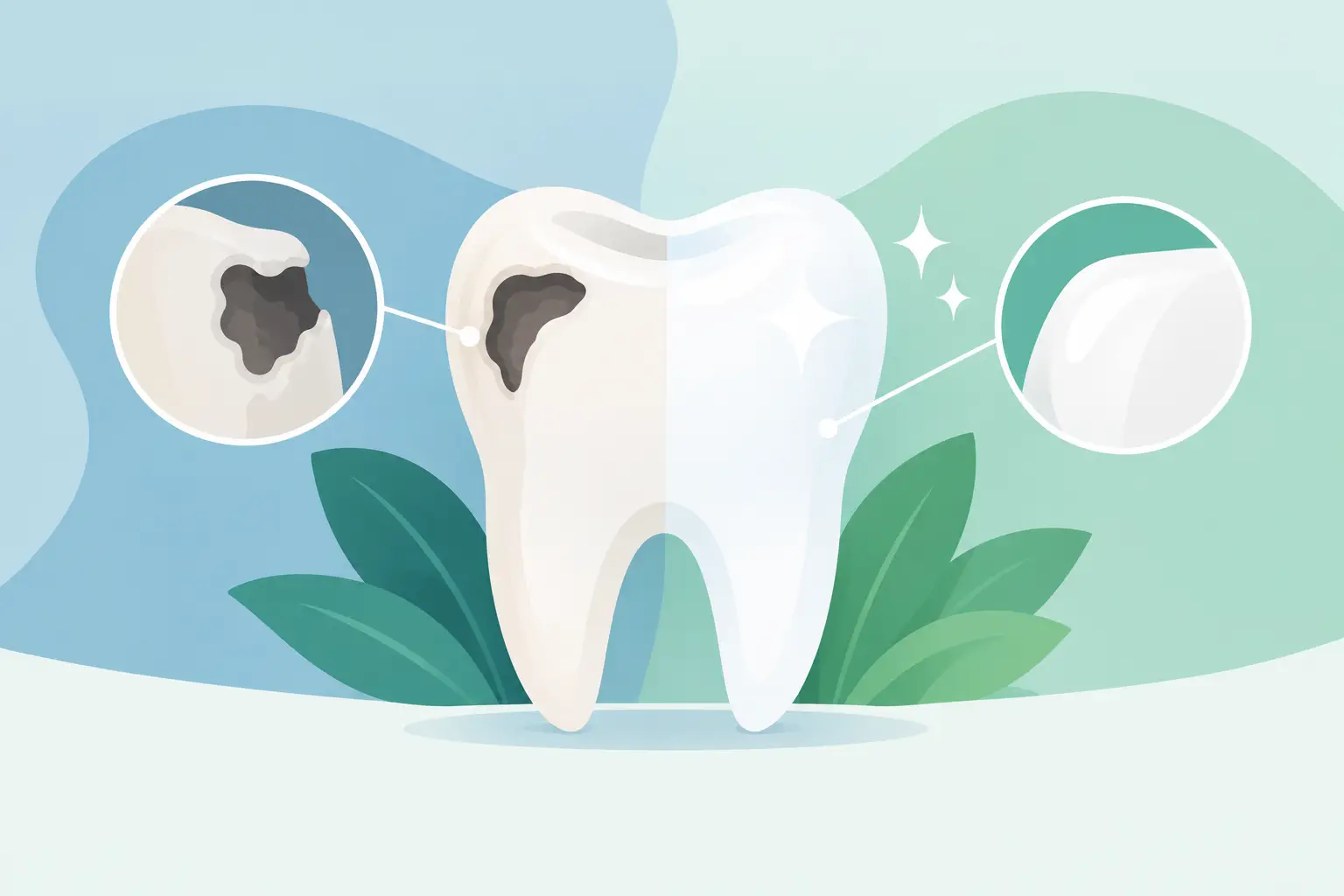
Tooth decay starts when bacteria in plaque use sugars and starches from food and drinks to produce acids. Those acids pull minerals, especially calcium and phosphate, out of enamel. This first stage is called demineralization.
When demineralization is caught early, the process can sometimes be reversed or arrested. Saliva naturally carries minerals that help enamel repair itself, and fluoride helps make that repaired enamel more resistant to future acid attacks. An early lesion may appear as a dull white, chalky area rather than a dark spot or opening in the tooth.
This is often what people mean when they say a cavity healed naturally. In reality, the enamel has been remineralized before it fully broke down. The tooth may become stronger, but it does not regenerate enamel in the same way skin heals after a cut.
Once decay has created a hole, softened enamel, or a cavity that catches on an instrument, the lost structure will not return naturally. The area may stop progressing with good care, but it remains structurally compromised and can still trap bacteria. A filling is usually the most conservative way to restore and protect that tooth before decay reaches deeper layers.
What Makes a Cavity Different From a Stain?
A dark line in a molar groove is not always an active cavity, and a tooth can have early decay without looking dark at all. Color alone is not a reliable diagnosis. Some stains are harmless, while active decay may be hidden between teeth or beneath an older filling.
Dentists evaluate several details: the texture of the enamel, the location of the area, whether the surface is intact, the patient’s cavity history, and what X-rays reveal. Intraoral camera images can also help patients see the areas being discussed and understand why monitoring, fluoride treatment, a filling, or another option is recommended.
This is why waiting for pain is risky. Cavities often do not hurt until decay has reached dentin, the softer layer under enamel, or irritated the tooth’s nerve. At that point, treatment may require more than a small filling.
How to Support Enamel Remineralization
For patients with early enamel changes, a personalized prevention plan can make a meaningful difference. The goal is not a quick home remedy. It is to reduce repeated acid exposure, improve plaque removal, and give enamel the conditions it needs to recover.
Brush twice daily with fluoride toothpaste, using a soft-bristled toothbrush and gentle pressure. Spit after brushing, but avoid rinsing thoroughly with water right away so fluoride can remain on the teeth longer. Floss or clean between teeth daily, since cavities often begin in places a toothbrush cannot reach.
Diet also matters, especially frequency. Sipping sweetened coffee, soda, sports drinks, juice, or flavored beverages throughout the day repeatedly exposes teeth to acid. It is generally easier on enamel to enjoy a sweet item with a meal rather than grazing or sipping it over several hours. Drinking water afterward and choosing water between meals can help saliva do its work.
For people at higher risk of decay, a dentist may recommend professional fluoride varnish, prescription-strength fluoride toothpaste, or more frequent preventive visits. Dry mouth, certain medications, acid reflux, orthodontic appliances, pregnancy-related changes, and a history of frequent cavities can all increase risk. The right plan depends on the patient, not simply on the appearance of one tooth.
Why Natural Remedies Are Not Enough for an Open Cavity
Online advice often promotes oil pulling, supplements, herbal rinses, or avoiding fluoride as ways to reverse decay. Some habits may feel pleasant or support a healthier routine, but none can rebuild a hole in a tooth. More concerning, relying on unproven approaches can delay treatment while decay progresses silently.
Good nutrition supports oral and overall health, but it is not a substitute for treating established decay. Calcium-rich foods, adequate vitamin D, hydration, and a balanced diet can support healthy teeth and saliva. They cannot replace enamel or remove bacteria from a cavity.
Fluoride is different because it has strong clinical evidence for helping remineralize early enamel damage and reducing the risk of new cavities. It is used in toothpaste, professional treatments, and community water systems at carefully regulated levels. Your dentist can help determine what fluoride approach is appropriate for you or your child.
When a Filling Is the Healthier Choice
A filling is not a failure of prevention. It is often a conservative intervention that removes active decay and seals the tooth so bacteria cannot continue moving inward. Treating a cavity while it is small usually preserves more healthy tooth structure and is generally simpler than waiting until a crown, root canal, or extraction is needed.
Modern tooth-colored fillings can blend naturally with your smile and are designed to restore normal function. If decay is more extensive, treatment may involve an onlay or crown to protect a weakened tooth. When infection has reached the pulp, root canal treatment can often save the natural tooth and relieve discomfort.
The best treatment is always the least invasive option that reliably protects your oral health. For an early lesion, that may mean monitoring and fluoride. For a cavitated area, restoring the tooth promptly is usually the safer choice.
A Practical Plan for Parents and Families
Children can develop cavities quickly because newly erupted teeth are more vulnerable and brushing skills are still developing. Parents should help younger children brush with a rice-sized smear of fluoride toothpaste until age 3, then a pea-sized amount for ages 3 to 6. Supervision matters because children may miss back teeth or swallow toothpaste.
Regular dental visits allow the care team to identify early changes, assess cavity risk, and recommend options such as fluoride varnish or sealants for vulnerable molars. Sealants are protective coatings placed in the deep grooves of back teeth, where food and plaque can be difficult to remove.
Adults benefit from the same preventive approach, particularly if they have gum recession, dry mouth, existing dental work, or a past history of decay. A customized plan can help protect both natural teeth and restorations for the long term.
When to Schedule an Exam
Schedule a dental visit if you notice tooth sensitivity to sweets, cold, or heat; food catching in one area; a rough edge or visible pit; a new dark or white spot; persistent bad taste; or discomfort when biting. Swelling, severe pain, fever, or facial swelling should be treated as urgent concerns.
Even without symptoms, routine exams are the most reliable way to find decay while it may still be reversible or small enough for conservative treatment. At Newport Beach Dentistry, patients can expect a clear explanation of what is being seen, what can be monitored, and what treatment may protect their smile.
Your teeth cannot always repair established cavities, but early action gives them their best chance. A thoughtful preventive routine and timely professional care can keep small changes from becoming bigger problems.