Coffee before a morning meeting, red wine with dinner, and years of normal wear can gradually change the color of a smile. Teeth whitening can safely brighten many healthy natural teeth, but the best approach is not always the strongest product on the shelf. The right choice depends on the source of discoloration, the condition of your teeth and gums, and the result you hope to achieve.
For patients who want a brighter smile in Newport Beach, a dental evaluation is a smart first step. Whitening is a cosmetic treatment, but it should always begin with oral health. Treating a cavity, gum inflammation, a cracked tooth, or existing sensitivity first helps protect your comfort and supports a more predictable result.
What Causes Teeth to Look Darker?
Tooth color is not simply a matter of brushing well or poorly. Natural enamel varies from person to person, and the dentin beneath it has a naturally warmer, more yellow tone. As enamel becomes thinner over time, more of that underlying color can show through.
Surface stains, called extrinsic stains, are especially common. Coffee, tea, red wine, dark berries, tomato-based sauces, tobacco, and some highly pigmented beverages can leave color deposits on enamel. A professional cleaning can remove portions of these surface stains, which is why some patients notice a brighter appearance after routine preventive care alone.
Other changes begin within the tooth. Aging, trauma to a tooth, certain medications taken during tooth development, and deep internal staining may create intrinsic discoloration. These cases can be more resistant to whitening. A tooth that suddenly becomes gray or dark after an injury also deserves prompt dental attention, since discoloration can sometimes signal damage to the tooth’s nerve.
Professional Teeth Whitening vs. Store-Bought Products
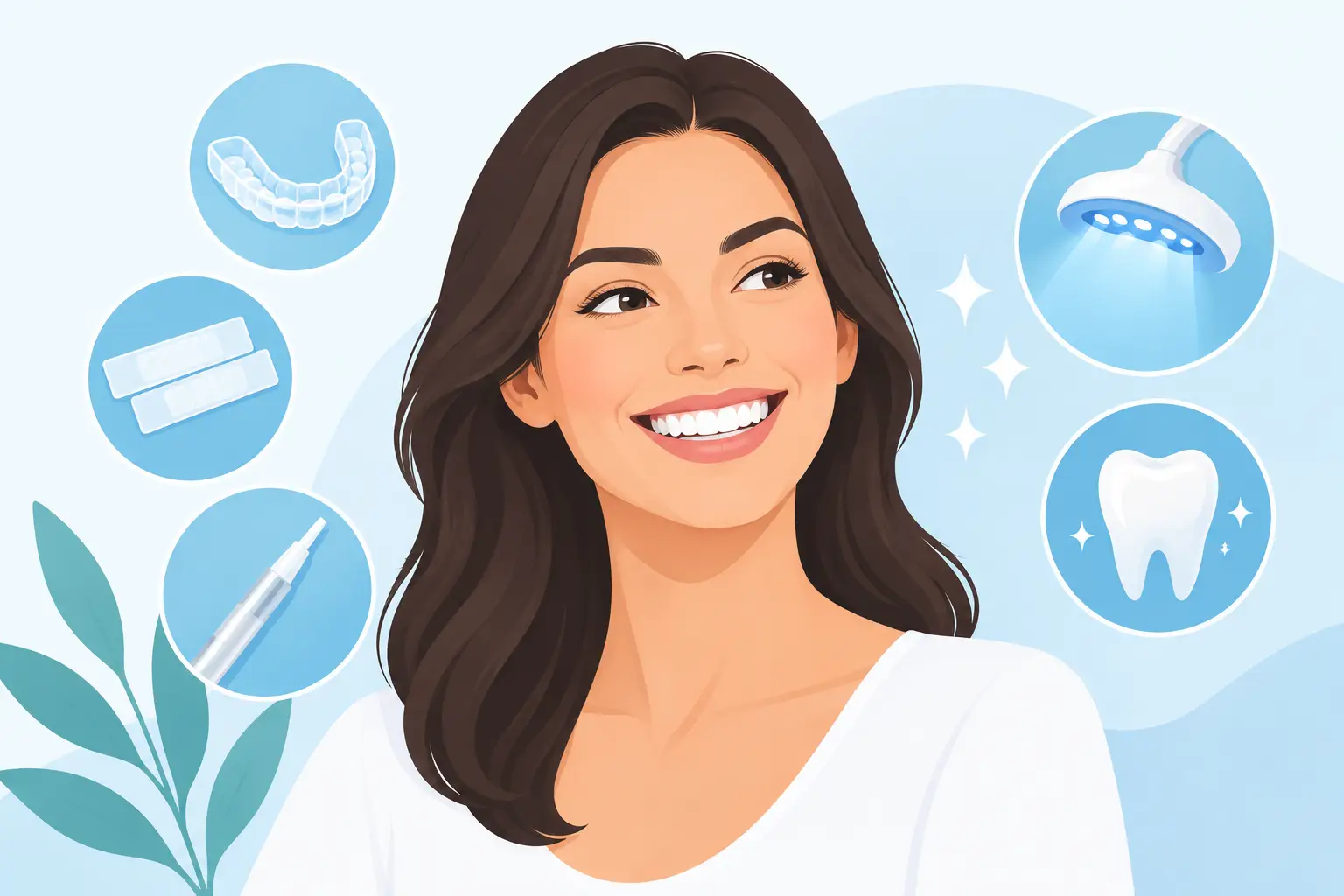
Both professional and over-the-counter options rely on peroxide-based whitening ingredients, but they differ in strength, fit, supervision, and predictability. No single method is ideal for every smile.
In-Office Whitening
Professional in-office treatment is designed for patients seeking a noticeable change in a relatively short appointment. A dentist protects the gums and soft tissues, applies a professional-strength whitening gel, and monitors the process. This controlled setting can be especially helpful for patients with a special event approaching or those who prefer to avoid the uncertainty of at-home products.
The trade-off is that in-office whitening typically costs more than retail strips or trays. Some patients also experience temporary sensitivity afterward, particularly if they already have sensitive teeth. Your dental team can adjust the plan and recommend ways to make treatment more comfortable.
Custom Take-Home Trays
Custom trays are made to fit your teeth closely and are used with dentist-provided whitening gel over a prescribed period. Because the trays fit more accurately than one-size-fits-all options, they help keep gel where it belongs and reduce contact with the gums.
Take-home whitening is often a good fit for patients who prefer gradual improvement and the flexibility to whiten on their own schedule. It also allows the treatment to be paced around sensitivity. Results develop over days or weeks, depending on the starting shade and the recommended regimen.
Whitening Strips, Toothpaste, and Retail Kits
Store-bought whitening strips can improve mild to moderate surface staining for some people. They may be convenient and less expensive, but the strips are not customized to your smile. Gel can miss curved or crowded areas, and poorly fitting products may irritate the gumline.
Whitening toothpaste works differently. Most formulas primarily use polishing agents to remove surface stains rather than substantially changing the internal color of teeth. They can be useful for maintenance, but they rarely create the dramatic change patients expect from professional whitening.
Retail light devices are also widely marketed, yet the whitening gel and its correct use matter far more than the light itself. Be cautious with any product that causes burning, persistent sensitivity, or gum irritation. More treatment is not necessarily better treatment.
When Whitening May Not Be the Right First Step
Whitening gel changes the color of natural tooth structure. It does not whiten crowns, veneers, fillings, bonding, dentures, or dental implants. If a visible crown was matched to your teeth years ago, whitening the surrounding enamel may make that restoration appear darker by comparison.
This does not mean you cannot brighten your smile. It means treatment should be planned in the right order. Many patients whiten their natural teeth first, allow the shade to stabilize, and then discuss replacing a visible restoration if needed. For a single dark tooth, internal whitening, bonding, or another restorative option may be more appropriate than whitening the entire smile.
Active cavities, untreated gum disease, exposed roots, and significant enamel wear should also be addressed before cosmetic whitening. These conditions can increase sensitivity and may affect how evenly teeth whiten. For children and teens, whitening decisions should be made carefully with a dentist, based on dental development and the cause of discoloration.
How to Prepare for a Safer, More Even Result
A recent examination and cleaning provide a useful foundation for whitening. During your visit, your dentist can identify existing restorations, check for decay or gum concerns, discuss your goals, and determine whether the discoloration is likely to respond to whitening.
It helps to begin with realistic expectations. Whitening can make teeth look noticeably brighter, but it does not create an identical shade for every person. Naturally darker dentin, gray-toned staining, and internal discoloration may respond differently than yellow surface stains. Photographs and shade comparisons can help you see progress that may be subtle from day to day.
Tell your dentist if you have a history of tooth sensitivity, frequent gum irritation, clenching, or prior dental trauma. Small adjustments, such as a lower-concentration gel, shorter wear times, or sensitivity-focused toothpaste, can make a meaningful difference. Personalized treatment is not a luxury in whitening care. It is how the process stays both effective and comfortable.
Keeping Your Smile Brighter After Whitening
Whitening results are not permanent because teeth continue to encounter foods, drinks, and natural aging. However, a few practical habits can help preserve your result longer. Rinsing with water after coffee, tea, red wine, or dark-colored foods can reduce how long pigments remain on your teeth. Using a straw for iced coffee or other dark beverages may also limit direct contact with the front teeth.
Consistent brushing with fluoride toothpaste, daily flossing, and regular professional cleanings remain essential. Whitening should complement preventive dentistry, not replace it. Tobacco use can quickly restain teeth and affects far more than appearance, including gum health and oral cancer risk.
Many patients benefit from occasional touch-ups rather than repeated intensive whitening. The ideal timing varies. Someone who drinks coffee every day may want maintenance sooner than someone with minimal staining habits. A dental team can recommend a touch-up schedule that protects your enamel and avoids unnecessary sensitivity.
Choosing a Whitening Plan That Fits Your Smile
The brightest possible shade is not always the most natural-looking or satisfying result. A successful whitening plan considers your facial features, existing dental work, comfort level, timeline, and long-term oral health. It should also leave room to adjust if sensitivity occurs or if a particular stain does not respond as expected.
At Newport Beach Dentistry, patients can discuss teeth whitening as part of a complete cosmetic and preventive care plan, with options tailored to their smile rather than a one-size-fits-all promise. A brighter smile often begins with a simple conversation about what you see in the mirror, what you would like to change, and the healthiest way to get there.