A sharp twinge when your toothbrush reaches the gumline can make a simple morning routine feel stressful. Learning how to brush sensitive teeth is not about brushing less often or avoiding certain areas. It is about using a gentler technique while finding out why your teeth are reacting in the first place.
Sensitivity may occur when exposed dentin, the layer beneath enamel, allows heat, cold, sweetness, or brushing pressure to reach the tooth’s nerve more easily. Sometimes the cause is minor and manageable at home. Other times, a cracked tooth, cavity, gum recession, worn enamel, or periodontal concern needs professional attention. A comfortable, consistent routine can protect your smile while giving your dentist useful clues about what is causing the discomfort.
How to Brush Sensitive Teeth Gently
Start with a soft-bristled toothbrush. Medium and hard bristles can feel as though they provide a deeper clean, but more pressure does not equal better plaque removal. In fact, aggressive brushing can wear the tooth surface near the gumline and irritate delicate gum tissue, both of which may worsen sensitivity over time.
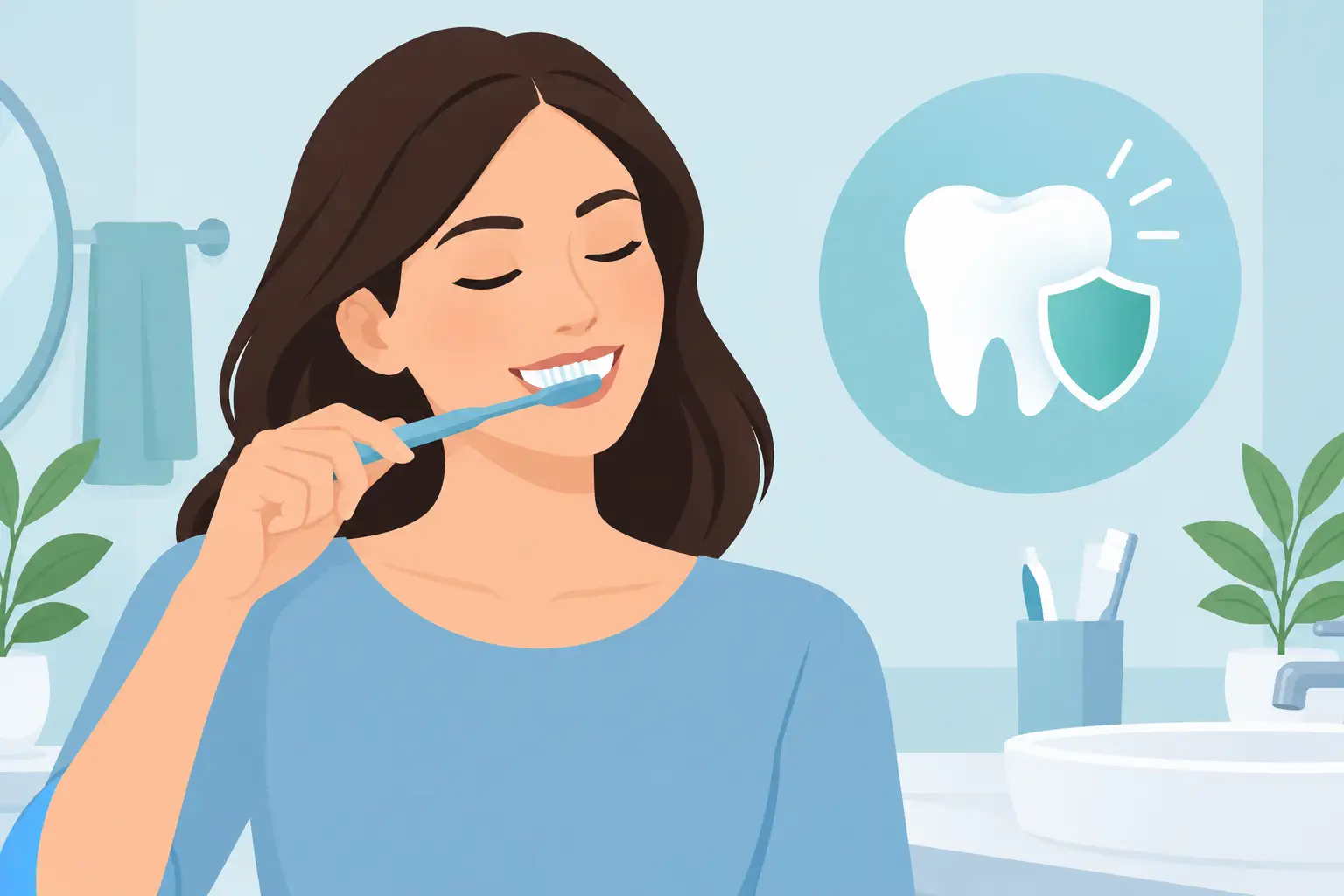
Hold the brush at a 45-degree angle where the teeth meet the gums. Use small, gentle circles or short back-and-forth strokes, moving methodically from one section of your mouth to the next. Let the bristle tips do the work. If the bristles flatten quickly, splay outward, or your gums feel sore after brushing, you may be pressing too hard.
Brush for two full minutes, twice each day. It can be tempting to rush through painful areas, but skipping them allows plaque to remain near the gums and can create a larger problem later. Instead, slow down and reduce pressure. An electric toothbrush with a pressure sensor can be especially helpful for people who tend to scrub without realizing it.
Use lukewarm water if cold water triggers a jolt of pain. This small change can make brushing more tolerable while you work on the underlying issue.
Choose a toothpaste made for sensitivity
A sensitivity toothpaste can help reduce discomfort by blocking pathways in exposed dentin or helping strengthen the tooth surface. Results are not always immediate. Many people need to use the product consistently for several weeks before noticing a meaningful difference.
For best results, brush with a fluoride toothpaste formulated for sensitive teeth and spit out the excess after brushing rather than rinsing thoroughly with water right away. Leaving a light film of toothpaste on the teeth may allow the active ingredients more time to work. Your dentist may also recommend a prescription-strength fluoride product when enamel wear or root exposure is a concern.
Whitening toothpastes deserve a careful look if you have sensitive teeth. Some are more abrasive than others, and whitening ingredients can temporarily increase sensitivity for certain patients. That does not mean you must give up on a brighter smile, but it does mean your whitening plan should be personalized. A dentist can help you choose a safer approach for your enamel, restorations, and sensitivity level.
The Brushing Habits That Can Make Sensitivity Worse
Brushing hard is one common issue, but timing matters too. After drinking soda, citrus juice, wine, sports drinks, or other acidic beverages, enamel is temporarily softer. Brushing immediately afterward can increase surface wear. Rinse with plain water and wait about 30 minutes before brushing when possible.
Avoid using a toothbrush as a tool to remove food stuck between teeth. Floss, an interdental cleaner, or a water flosser is a safer choice. Poking at the gums or forcing bristles between teeth can cause irritation and recession.
Also consider your toothpaste and mouthwash. Products marketed for intense freshness or whitening may not be the best fit for every mouth. If a product burns, dries your mouth, or seems to make discomfort worse, stop using it and ask your dental team for recommendations. The goal is a routine you can maintain comfortably, not one that feels harsh.
Do Not Skip Flossing Because Your Gums Are Tender
Sensitive teeth and tender gums often occur together, especially when plaque has collected along the gumline. Daily flossing removes plaque where a toothbrush cannot reach and can support healthier gums over time. If flossing causes bleeding, be gentle and consistent rather than stopping altogether. Healthy gums generally become less likely to bleed as inflammation improves.
Slide floss carefully between teeth, curve it around one tooth in a C shape, and move it up and down without snapping it into the gums. If traditional string floss is difficult to manage, ask about alternatives such as floss holders, interdental brushes, or a water flosser. The best option is the one you can use correctly every day.
Why Sensitive Teeth Need a Personalized Diagnosis
Tooth sensitivity is a symptom, not a diagnosis. It may come from everyday enamel wear, but it can also signal a cavity, loose filling, cracked tooth, gum recession, clenching or grinding, or early gum disease. Reflux and frequent exposure to acidic foods or drinks can contribute as well.
The pattern of your pain matters. General sensitivity to cold drinks may have a different cause than pain limited to one tooth. A brief response that fades quickly is different from throbbing pain, lingering sensitivity after heat or cold, swelling, or pain when biting. A clinical exam and digital X-rays, when appropriate, can help identify concerns that are not visible in the mirror.
Treatment depends on the cause. Your dentist may recommend fluoride therapy, a desensitizing treatment, a filling, a protective restoration, treatment for gum disease, a night guard for grinding, or another customized option. Addressing the source early is usually more comfortable and more conservative than waiting for symptoms to intensify.
When to Call a Dentist About Tooth Sensitivity
Schedule a dental visit if sensitivity lasts longer than a couple of weeks despite using a gentle routine and sensitivity toothpaste. You should also seek prompt care for pain that is severe, wakes you from sleep, lingers after hot or cold foods, occurs when biting, or is accompanied by swelling, fever, a bad taste, or a visible crack.
Children should also be evaluated when they regularly avoid brushing, complain of pain with cold foods, or chew on one side of the mouth. Sensitive teeth are not something children should simply have to tolerate, and early care can protect developing smiles.
At Newport Beach Dentistry, patients receive individualized guidance based on their symptoms, oral health history, and goals. Whether sensitivity is related to enamel wear, gum recession, a restoration, or another concern, the focus is on comfortable care and a treatment plan that supports long-term health.
A gentle toothbrush, the right toothpaste, and steady daily habits can make a real difference. If your teeth still protest with every sip or brushstroke, listen to that signal and arrange an evaluation. Comfort is part of a healthy smile, not a luxury you should have to go without.