Bleeding when you brush, persistent bad breath, or gums that look red and puffy are easy symptoms to dismiss. But they can be early warnings that deserve attention. So, can gum disease be reversed? The answer depends on its stage: early gum disease, called gingivitis, is often reversible with professional care and consistent home hygiene. More advanced gum disease, called periodontitis, cannot usually be fully reversed, but it can be treated and controlled to protect your teeth, gums, and bone.
The encouraging news is that timely periodontal care can make a meaningful difference. A personalized examination helps identify what is happening below the gumline and provides a clear path forward without guesswork.
Can Gum Disease Be Reversed in Its Early Stage?
Gingivitis develops when plaque, a sticky layer of bacteria, collects along the gumline. If it is not thoroughly removed with brushing, flossing, and professional cleanings, the gums can become inflamed. They may bleed easily, feel tender, or appear darker red than usual. Some patients notice a bad taste in their mouth or bad breath that returns soon after brushing.
At this stage, the inflammation is limited to the gum tissue. The bone and connective tissues that support the teeth have not yet been permanently damaged. With a professional cleaning and a reliable at-home routine, gums can often return to a healthier state. Bleeding and swelling may improve within days or weeks, although the exact timeline depends on the amount of inflammation and how consistently plaque is removed.
Reversing gingivitis does not mean it cannot return. Plaque begins forming again every day, which is why brushing twice daily with fluoride toothpaste, cleaning between the teeth daily, and maintaining routine dental visits matter so much. For some patients, a manual toothbrush is sufficient; for others, an electric toothbrush or water flosser can make daily care easier. The best option is the one you will use correctly and consistently.
When Gum Disease Has Progressed to Periodontitis
Untreated gingivitis can progress to periodontitis. This occurs when bacteria and inflammation extend below the gumline, creating spaces called periodontal pockets between the teeth and gums. The body’s inflammatory response, along with bacterial infection, can begin to break down the bone and fibers that hold teeth in place.
Periodontitis is not reversible in the same way gingivitis is. Lost gum attachment and lost bone do not simply grow back after a better brushing routine. However, periodontal treatment can stop or slow progression, reduce infection, shrink pocket depths, and help preserve the healthy support that remains.
This distinction matters. Many people wait because their gums do not hurt, but gum disease can advance quietly. By the time a tooth feels loose or gums have noticeably receded, the condition may be more advanced. Regular exams and digital X-rays can reveal changes that are difficult to see at home.
What Professional Gum Disease Treatment Involves
Treatment should be based on your current condition, not a one-size-fits-all plan. Your dental team will evaluate gum health by checking for bleeding, measuring periodontal pockets, reviewing X-rays, and looking for recession, plaque buildup, tartar, and signs of bone loss.
For gingivitis, a thorough professional cleaning may be all that is needed, along with coaching on areas that are difficult to clean at home. Tartar, also called calculus, cannot be removed with a toothbrush or floss once it has hardened. Professional instruments remove it safely from the teeth and along the gumline.
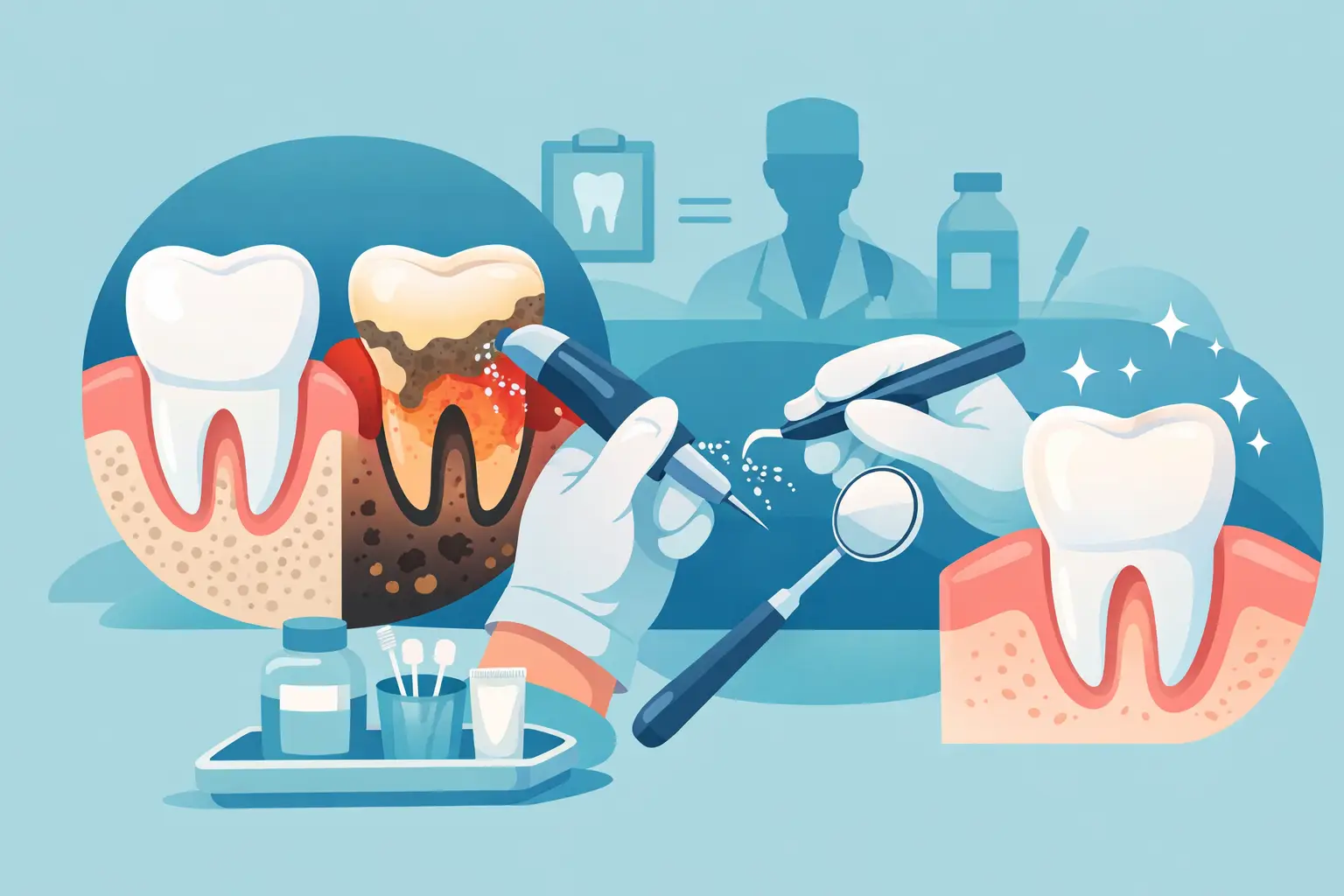
For periodontitis, the first step is commonly scaling and root planing, sometimes called a deep cleaning. Scaling removes plaque and tartar from beneath the gumline. Root planing smooths the root surfaces so the gums have a better opportunity to heal and reattach more closely to the teeth. Local anesthesia may be used to keep treatment comfortable.
Depending on the severity of the disease, other care may be recommended. This can include localized antimicrobial treatment, laser therapy in appropriate cases, periodontal surgery to access deeper deposits or reshape tissue, and regenerative procedures designed to help restore support in selected areas. Not every patient needs every option. The right treatment depends on pocket depths, bone levels, tooth position, overall health, and how the gums respond to initial therapy.
After active treatment, periodontal maintenance visits are essential. These cleanings are often recommended more frequently than routine cleanings because patients with a history of periodontitis need ongoing monitoring and removal of bacteria from deeper areas. A three- or four-month schedule is common, but your recommended interval should be individualized.
What You Can Do at Home to Support Healing
Professional treatment is the foundation, but your daily habits determine how well the results hold up between visits. Brush gently but thoroughly for two minutes, twice a day, with a soft-bristled toothbrush. Aim the bristles toward the gumline rather than aggressively scrubbing the teeth, which can irritate gum tissue and contribute to recession.
Clean between your teeth every day. Traditional floss works very well when used properly, while interdental brushes may be especially useful for larger spaces, bridges, braces, or areas of recession. Your dental team can show you which tool fits your smile and how to use it without causing discomfort.
Lifestyle factors also affect periodontal health. Tobacco use significantly increases the risk and severity of gum disease and can make treatment less predictable. Diabetes can make gum inflammation harder to control, while untreated gum infection can also complicate blood sugar management. Dry mouth, certain medications, stress, hormonal changes, and a diet high in frequent sugary snacks can contribute as well.
Mouthwash can be a helpful addition for some patients, but it is not a substitute for brushing between the teeth and professional care. If a medicated rinse is recommended, use it exactly as directed. Overusing certain rinses or relying on them to mask bad breath can delay the care that actually addresses the cause.
Can Receding Gums Grow Back?
Gum recession and gum disease are related but not identical. Recession can result from periodontal disease, aggressive brushing, thin gum tissue, tooth position, grinding, or other factors. Once gum tissue has receded, it generally does not grow back on its own.
That does not mean there are no solutions. The first priority is identifying and controlling the cause so recession does not worsen. In some cases, gum grafting or other periodontal procedures may improve coverage, protect exposed roots, and reduce sensitivity. Whether treatment is appropriate depends on the location and extent of recession, your oral hygiene, and your long-term goals.
Signs You Should Schedule a Periodontal Evaluation
A professional assessment is wise if your gums bleed when you brush or floss, look swollen, or feel tender. Other warning signs include ongoing bad breath, a bad taste, gums pulling away from the teeth, changes in how teeth fit together, new spaces between teeth, sensitivity near the gumline, pus around a tooth, or any tooth mobility.
Even if you have no symptoms, do not assume your gums are healthy. Periodontal disease can be subtle in its early and moderate stages. An exam allows your dentist to identify problems before they threaten the foundation of your smile.
At Newport Beach Dentistry, periodontal care is approached with the same attention to comfort, education, and personalized planning as every other aspect of care. Advanced diagnostic tools and modern treatment options help patients understand their condition and make confident decisions about the next step.
Healthy gums should not bleed routinely, and changes in your mouth are worth addressing early. If you have noticed warning signs or are overdue for a cleaning, scheduling an evaluation can give you clarity and a practical plan to protect your smile for years to come.