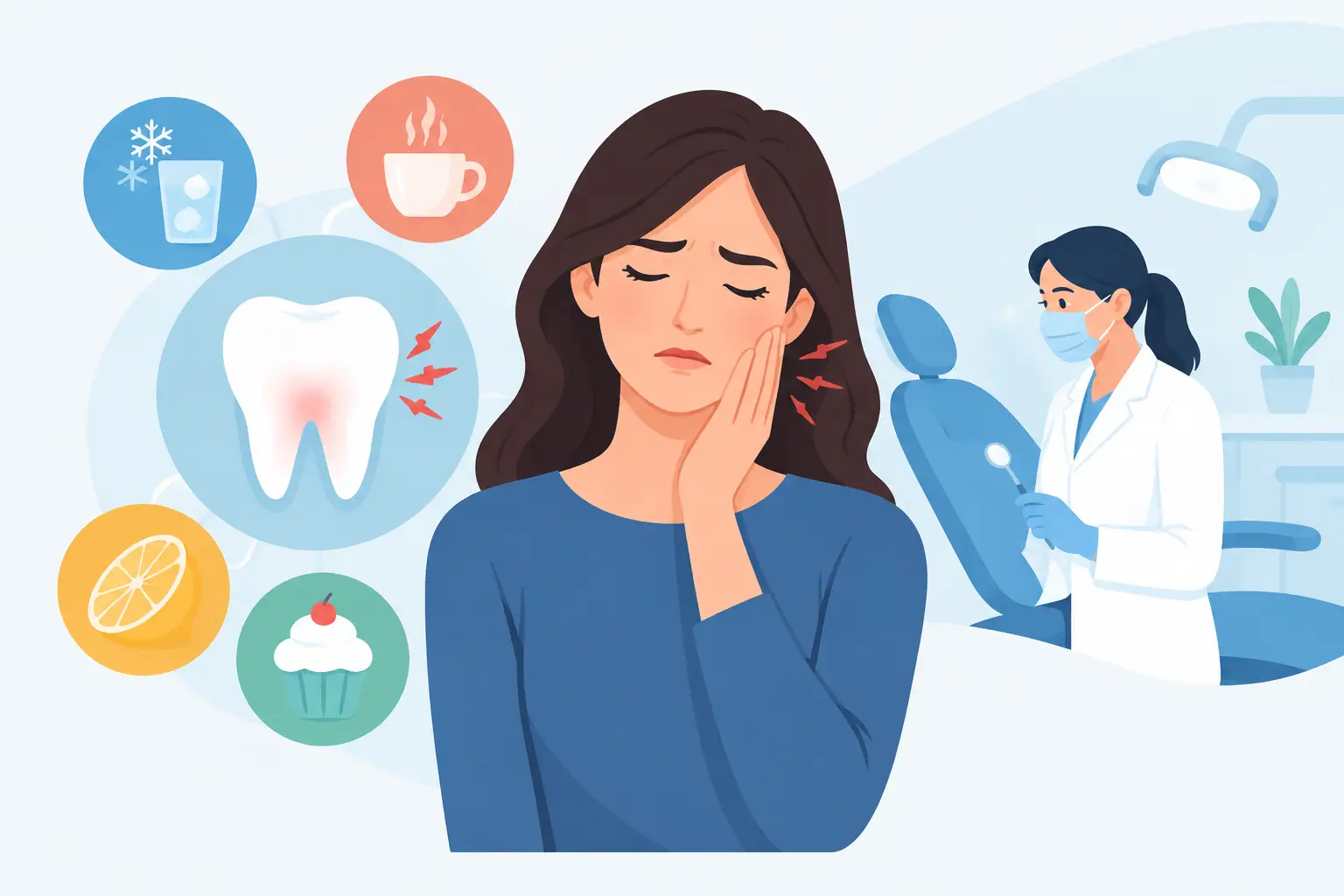
That quick, sharp jolt when you sip iced water or bite into something sweet can make even small everyday pleasures feel stressful. Tooth sensitivity causes range from minor enamel wear to problems that need timely dental treatment, so the pattern of your discomfort matters.
Sensitivity is not a diagnosis by itself. It is your tooth’s way of signaling that heat, cold, sweetness, pressure, or even air is reaching sensitive internal structures. The good news is that many cases can be managed effectively once the underlying cause is identified.
What Causes Tooth Sensitivity?
A healthy tooth has a hard outer enamel layer above the gumline and a protective root surface below it. Under those protective layers is dentin, which contains tiny channels leading toward the tooth’s nerve. When enamel wears down, gums recede, or a tooth becomes damaged, outside stimuli can travel through those channels and trigger a brief, sharp pain.
Some sensitivity is mild and occasional. Other cases become more frequent, last longer, or occur without an obvious trigger. That distinction helps your dentist determine whether you may benefit from a change in home care, a protective treatment, or restorative care.
Enamel erosion and everyday wear
Enamel is remarkably strong, but it can gradually thin over time. Acidic drinks and foods, frequent snacking, acid reflux, and repeated exposure to stomach acid can soften or erode enamel. Citrus, soda, sports drinks, and sparkling beverages can contribute, especially when they are consumed throughout the day rather than with meals.
Brushing too aggressively can also wear the tooth surface near the gumline. A firm toothbrush and forceful back-and-forth motion may feel like a thorough cleaning routine, but it can create grooves and expose dentin. A soft-bristled toothbrush and gentle, small circular motions are usually safer for both enamel and gum tissue.
Teeth grinding or clenching can add another form of wear. Many people clench during stressful periods or grind while sleeping without realizing it. In addition to sensitivity, grinding may cause jaw soreness, worn biting edges, small fractures, headaches, or repeated damage to dental restorations.
Gum recession and periodontal disease
When gums pull back from the teeth, the roots can become exposed. Root surfaces do not have the same thick enamel protection as the crowns of teeth, making them more vulnerable to cold, touch, and brushing.
Gum recession can occur from periodontal disease, overly aggressive brushing, clenching, tobacco use, or the natural anatomy of your gums. If sensitivity occurs alongside bleeding gums, persistent bad breath, swelling, or teeth that appear longer than before, it is worth scheduling an evaluation soon. Treating gum disease early helps protect not only your comfort but also the bone and tissues that support your teeth.
Cavities, cracks, and failing dental work
Tooth decay is one of the more common tooth sensitivity causes because a cavity creates an opening in the protective outer layer of the tooth. Sensitivity to sweets may be an early clue, while pain from cold or chewing may indicate decay has progressed closer to the nerve.
A cracked tooth can cause a particularly unpredictable type of discomfort. You may feel pain when releasing a bite, chewing on one side, or eating something hard. Cracks are not always visible without a close examination and dental imaging, and delaying care can allow the crack to deepen.
Older fillings, crowns, or bonding can also develop small gaps, wear, or fractures. This does not automatically mean a restoration must be replaced, but it does require a professional assessment. Digital X-rays and intraoral imaging can help identify concerns that may not be apparent in a mirror.
Recent dental treatment or whitening
Temporary sensitivity can happen after a dental cleaning, filling, crown placement, teeth whitening, or other treatment. For example, gums may be mildly tender after a cleaning, or a tooth may briefly react to temperature after a new restoration is placed. Whitening products can also cause sensitivity because peroxide temporarily affects the tooth’s internal nerve response.
This type of discomfort often improves within a few days. However, contact your dental office if the pain is severe, lingers, worsens, or begins to interfere with eating and sleeping. A tooth that continues to hurt after treatment may need its bite adjusted or further evaluation.
When Sensitive Teeth Need Prompt Care
Brief sensitivity that appears only with cold foods is often manageable, but pain should not be ignored simply because it comes and goes. The duration and behavior of the pain provide useful clues.
Make an appointment if sensitivity lasts more than a few seconds after the trigger is gone, occurs when you bite down, wakes you at night, or is getting more intense. These symptoms can indicate deeper decay, a crack, an infected tooth, or inflammation of the dental pulp. Swelling in the face or gums, fever, a pimple-like bump on the gum, or difficulty swallowing should be treated as urgent concerns.
Children should also be evaluated when they complain of tooth pain or avoid cold foods. Young patients may not be able to describe what they feel clearly, and a small cavity can progress quickly in a primary tooth.
How Dentists Identify the Source of Sensitivity
A personalized exam is the most reliable way to separate minor sensitivity from a condition requiring treatment. Your dentist will ask when the discomfort began, what triggers it, how long it lasts, and whether it affects one tooth or several.
The examination may include checking the gums, measuring areas of recession, looking for decay or wear, testing individual teeth, and taking digital X-rays when appropriate. Intraoral camera technology can also help patients see wear patterns, cracks, or gum changes that are contributing to their discomfort.
Because several conditions can produce similar symptoms, treatment should fit the cause. A sensitive toothpaste may help exposed dentin, but it will not repair a cavity. A night guard may protect teeth from grinding, but it will not resolve active gum disease. Accurate diagnosis prevents temporary fixes from masking a problem that needs care.
Treatment Options for Tooth Sensitivity
For mild sensitivity caused by exposed dentin, your dentist may recommend a desensitizing toothpaste with ingredients that help block sensation pathways. Results are not always immediate, and consistent use matters. Fluoride varnish, prescription-strength fluoride, or other in-office desensitizing treatments may offer additional protection for vulnerable areas.
If the issue is related to brushing habits, a soft brush, lower-pressure technique, and nonabrasive toothpaste can make a meaningful difference. Patients with acid erosion may also benefit from reducing frequent acidic drinks, drinking water afterward, and waiting about 30 minutes to brush after consuming acidic foods or beverages. Brushing immediately after acid exposure can rub softened enamel more aggressively.
When a cavity, crack, worn restoration, or exposed root is responsible, treatment may involve a filling, bonding, crown, or another restorative option. Deeper infection may require root canal treatment to relieve pain and preserve the natural tooth. For recession caused by periodontal concerns, gum-focused treatment can reduce inflammation and help protect the foundation of your smile.
Teeth grinding requires a different approach. A custom night guard can cushion the teeth during sleep and reduce the risk of further wear or fractures. If clenching is connected to bite imbalance, missing teeth, or damaged restorations, your treatment plan may include additional restorative or bite-related care.
Simple Steps That Can Protect Your Comfort
Until your appointment, avoid using a sensitive tooth to bite hard foods, ice, or candy. Choose lukewarm foods and drinks if temperature triggers are strong, and use a soft toothbrush with gentle pressure. Avoid placing aspirin directly on a tooth or gum tissue, as this can burn the tissue and does not treat the cause of the pain.
Over-the-counter pain medication may provide short-term relief when used as directed and when safe for you, but it should not replace an exam for persistent symptoms. If you are unsure whether your discomfort is urgent, calling the dental office is a sensible first step.
At Newport Beach Dentistry, care begins with listening to what you are feeling and identifying why it is happening. A sensitive tooth deserves more than a quick workaround. With a thoughtful evaluation and a treatment plan designed around your oral health, you can get back to enjoying your favorite foods, drinks, and everyday moments with greater confidence.