The first tooth can feel like a tiny milestone, but it also starts a new part of your child’s healthcare routine. Parents often ask, “when should kids see a dentist?” The answer is earlier than many families expect: by their first birthday, or within six months after the first tooth appears, whichever comes first.
That early visit is not about searching for cavities in a full set of teeth. It is about helping your child become comfortable in a dental setting, checking that oral development is on track, and giving you practical guidance before small concerns become bigger ones. A calm, positive first experience can shape how a child feels about dental care for years.
When Should Kids See a Dentist for the First Time?
The American Academy of Pediatric Dentistry recommends a first dental visit by age 1. While some children will have only one or two teeth at that point, those teeth can still develop decay. Baby teeth have thinner enamel than adult teeth, and cavities can progress more quickly than parents may realize.
An early appointment also gives the dentist a baseline. Your child’s provider can examine the gums, teeth, bite, jaw growth, and oral tissues, while also looking for issues such as enamel defects, tongue-tie concerns, early crowding, or habits that may affect development. Digital imaging is not routinely needed for every very young child. When X-rays are appropriate, the decision should be based on your child’s individual risk and clinical needs.
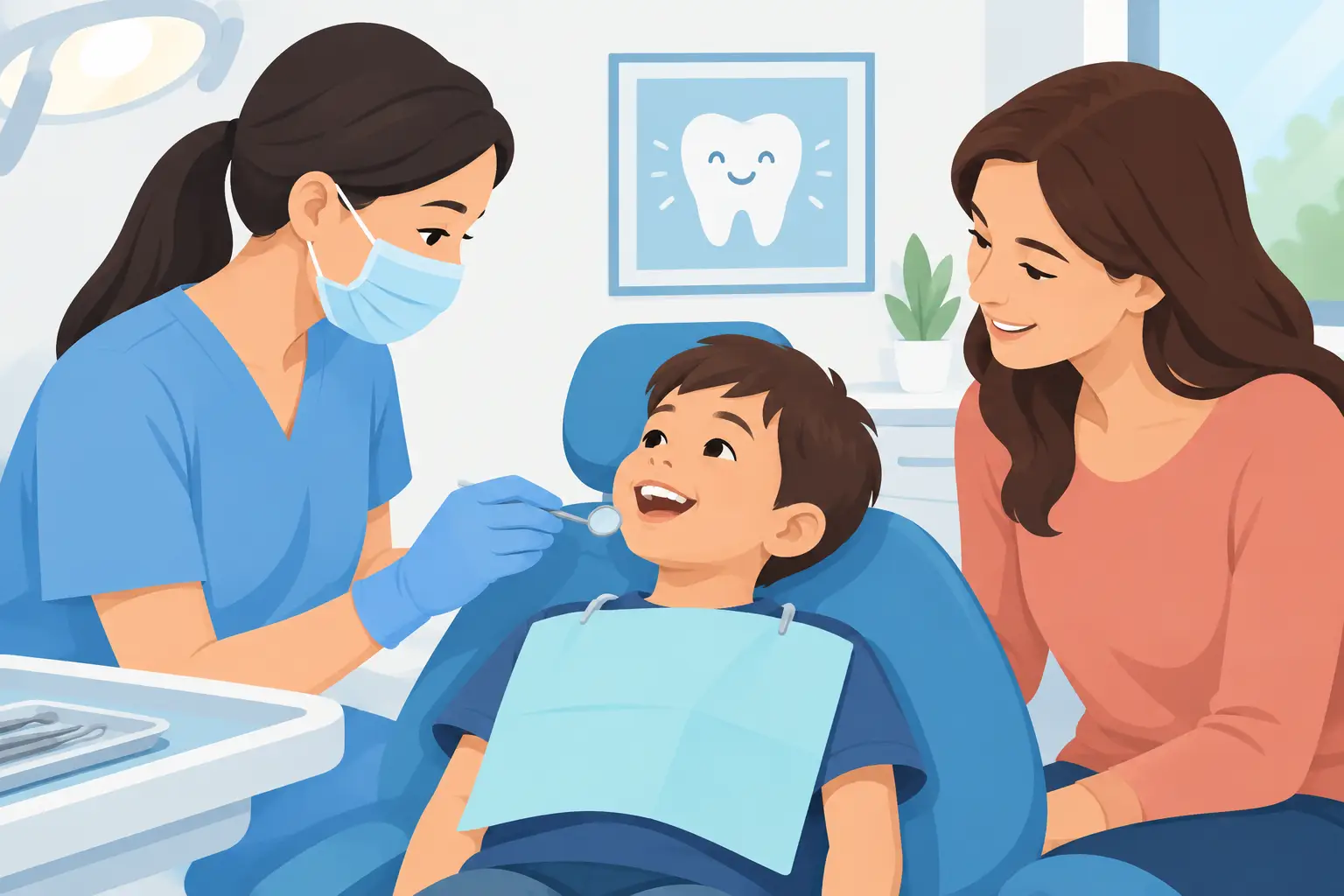
For many toddlers, the first visit is brief and gentle. A parent may hold the child while the dentist takes a look, discusses feeding and brushing routines, and answers questions. The goal is trust, education, and prevention – not forcing a child through more than they can comfortably handle.
Why Baby Teeth Deserve Serious Attention
It is easy to assume baby teeth matter less because they eventually fall out. In reality, they play an essential role in chewing, speech development, facial growth, and holding space for permanent teeth. A painful or infected baby tooth can affect eating, sleep, concentration, and a child’s willingness to smile or speak.
Untreated decay may also lead to emergency treatment that could have been avoided with routine preventive care. Regular checkups allow the dental team to spot early changes in enamel, gum health, and bite development before your child is in pain. Prevention is usually more comfortable, less time-consuming, and more affordable than treating advanced dental disease.
Early dental visits are also a chance to discuss everyday risks that vary from child to child. A toddler who frequently sips juice or milk from a bottle has different needs than a school-age child who snacks often, plays contact sports, or is beginning orthodontic development. Personalized guidance matters more than a one-size-fits-all checklist.
How Often Should Children Go to the Dentist?
After the first appointment, most children benefit from dental checkups and cleanings every six months. This schedule gives the dentist an opportunity to monitor growth, reinforce healthy routines, and catch developing concerns early.
However, six months is a general guideline, not a rule for every child. Children with frequent cavities, weak enamel, gum inflammation, orthodontic appliances, special healthcare needs, or a history of dental treatment may need visits more often. A dentist can recommend a schedule based on your child’s cavity risk, development, diet, and home care habits.
As children grow, regular appointments become more than cleanings. The dentist watches how permanent teeth are erupting, whether there is enough room in the jaw, and whether habits such as thumb-sucking, mouth breathing, or teeth grinding may be affecting the bite. Early observation does not always mean early treatment, but it gives families time to make informed decisions if treatment becomes beneficial.
Signs Your Child Should See a Dentist Sooner
Do not wait for the next routine visit if your child has pain or a visible change in their mouth. Children do not always describe discomfort clearly. They may avoid chewing on one side, become unusually irritable at meals, wake at night, or pull away when you brush a certain tooth.
Schedule a dental evaluation promptly if you notice:
- Tooth pain, sensitivity, swelling, or a pimple-like bump on the gums
- White, brown, or black spots on the teeth
- A chipped, cracked, loose, or knocked-out tooth after a fall or sports injury
- Persistent bad breath, bleeding gums, or gum swelling
- Trouble chewing, speaking, opening the mouth, or sleeping because of discomfort
A knocked-out permanent tooth requires immediate attention. If possible, gently pick it up by the crown, not the root, and keep it moist in milk or saliva while seeking emergency dental care. Do not try to put a knocked-out baby tooth back into the socket, as doing so could affect the developing permanent tooth underneath.
What Happens at a Child’s Dental Visit?
A good children’s dental appointment should feel informative and manageable, not intimidating. The dental team will typically review medical history, ask about brushing, diet, fluoride exposure, and habits, then perform an age-appropriate examination. Depending on your child’s age and comfort, the visit may include a gentle cleaning, fluoride treatment, and discussion of sealants once permanent molars arrive.
Fluoride is one of the most effective tools for strengthening enamel and lowering cavity risk. Sealants are thin protective coatings placed on the chewing surfaces of back teeth, where grooves can trap food and bacteria. Neither is automatically necessary for every child at every visit, but both can be valuable preventive options when recommended for your child’s risk level.
For children who feel nervous, preparation helps. Avoid using words that make dental care sound scary, such as “shot,” “drill,” or “pain.” Instead, explain that the dentist will count teeth and help keep their smile strong. Bringing a favorite comfort item and scheduling the visit at a time when your child is usually rested can also make a meaningful difference.
Building Healthy Habits Between Visits
Dental appointments are only part of protecting a child’s smile. The everyday routine at home has the greatest long-term impact. Begin cleaning gums with a soft cloth even before teeth erupt. Once the first tooth appears, brush twice daily with a soft, age-appropriate toothbrush.
For children under 3, use a rice-sized smear of fluoride toothpaste. From ages 3 through 6, use a pea-sized amount and supervise brushing so they spit out the toothpaste rather than swallow it. Parents should help or closely supervise brushing until a child has the hand skills to do it thoroughly, often around age 7 or 8.
Flossing should begin as soon as two teeth touch closely together. This is especially important in the back of the mouth, where toothbrush bristles cannot clean between teeth. Water is the best everyday drink between meals. Frequent exposure to sugary drinks, sticky snacks, and grazing throughout the day gives cavity-causing bacteria more opportunities to produce acid.
You do not need to eliminate every birthday treat or school celebration. The pattern matters most. Serving sweets with a meal, rather than offering small sugary snacks repeatedly across the day, is generally kinder to teeth. Afterward, water and regular brushing help support a healthy routine.
Looking Ahead to Orthodontic Development
A child may not need braces while they still have baby teeth, but monitoring the bite early is worthwhile. The American Association of Orthodontists recommends an orthodontic evaluation by age 7. At that stage, the dentist or orthodontic provider can identify concerns involving jaw growth, crossbites, crowding, protruding teeth, or early loss of baby teeth.
Many children will simply be observed until more permanent teeth erupt. In other cases, early interceptive treatment may help guide growth or reduce the complexity of future orthodontic care. The right timing depends on the child, not just their age.
At Newport Beach Dentistry, families can receive preventive care, restorative treatment, emergency support, and orthodontic guidance in one welcoming setting. That continuity allows the dental team to get to know your child’s needs as their smile changes.
Your child does not need to be in pain to benefit from a dental visit. Starting early, keeping appointments consistent, and responding promptly to changes gives them more than healthy teeth – it gives them a familiar place to turn for compassionate care throughout every stage of growing up.