A sore spot in the mouth can feel easy to dismiss. Maybe it appeared after biting your cheek, eating something sharp, or wearing a denture that rubs. Most mouth sores are harmless and heal quickly. But oral cancer can begin with subtle changes that do not hurt, which is why paying attention to anything that persists matters.
At Newport Beach Dentistry, preventive care includes looking beyond teeth and gums. During regular exams, dental professionals can assess the soft tissues of the mouth and identify changes that may need prompt attention. Early evaluation can make a meaningful difference in treatment options and outcomes.
What Is Oral Cancer?
Oral cancer is a type of cancer that develops in the tissues of the mouth or throat. It may affect the lips, tongue, inner cheeks, gums, floor of the mouth, roof of the mouth, tonsils, or the area at the back of the throat. Cancers that begin farther back in the throat are often grouped under oropharyngeal cancer, but they can share several risk factors and warning signs with cancers of the mouth.
One reason oral cancer deserves careful attention is that it does not always announce itself with severe pain. A small patch, thickened area, or sore may be the only visible change at first. When it is recognized early, treatment may be less extensive and more likely to preserve normal speech, swallowing, and appearance. When it is found later, treatment can become more complex.
Oral Cancer Symptoms That Need Attention
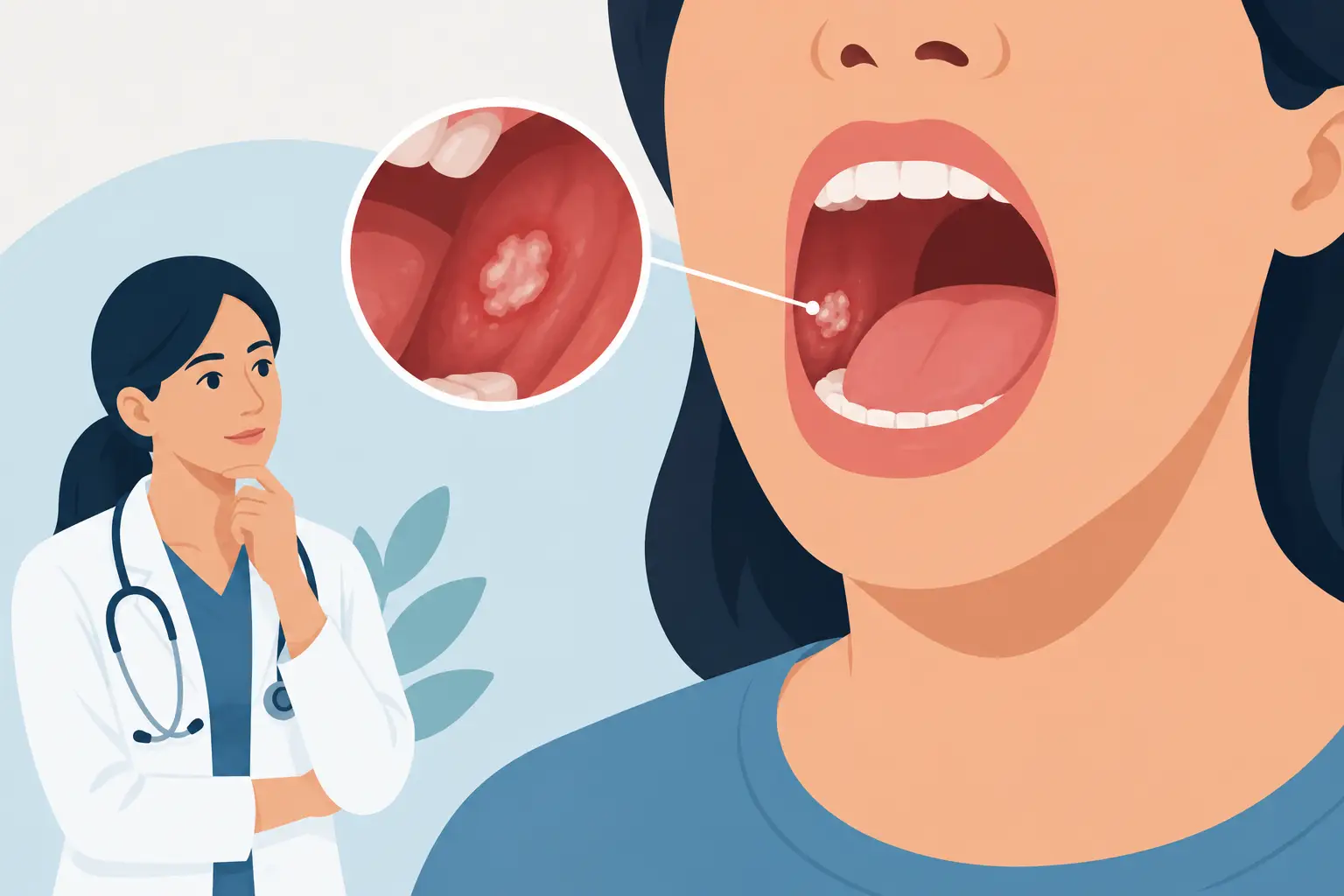
A mouth sore that has not healed after two weeks should be examined by a dentist or medical professional. This does not mean every lingering sore is cancer. Irritation from a sharp tooth, ill-fitting appliance, infection, or certain medications can also cause symptoms. The important point is not to diagnose yourself or wait indefinitely for a change to disappear.
Contact a dental professional promptly if you notice any of the following:
- A sore, ulcer, lump, or thickened patch that lasts longer than two weeks
- A red, white, or mixed red-and-white patch inside the mouth
- Unexplained bleeding, numbness, burning, or tenderness in the lips, mouth, or tongue
- Pain or difficulty with chewing, swallowing, speaking, or moving the jaw or tongue
- A persistent sore throat, hoarseness, or feeling that something is caught in the throat
- A new lump in the neck, unexplained ear pain, or a change in the way dentures fit
Color changes deserve attention even when they are painless. White patches can have benign causes, as can red areas, but some persistent patches require further evaluation. Likewise, a lump is not automatically cancer, yet it should not be ignored simply because it is small or not uncomfortable.
Why pain is not a reliable test
Many patients assume a serious condition will hurt. Unfortunately, early oral cancer may be painless. Waiting for pain can delay evaluation. A better standard is duration and change: Has the area lasted more than two weeks? Is it enlarging, bleeding, becoming firmer, or interfering with normal function? Those are practical reasons to schedule an exam.
Who Has a Higher Risk?
Oral cancer can affect people of different ages and health backgrounds. Tobacco use remains a major risk factor, including cigarettes, cigars, pipes, chewing tobacco, and other smokeless tobacco products. Heavy alcohol use can also increase risk, and using tobacco and alcohol together raises it further.
Human papillomavirus, especially certain high-risk strains of HPV, is associated with some cancers of the throat and back of the mouth. This means people who have never smoked may still develop oral or oropharyngeal cancer. Excessive sun exposure is another concern for lip cancer, particularly for people who spend a great deal of time outdoors without lip protection.
Age, a previous history of cancer, a weakened immune system, and poor nutrition may contribute to risk in some cases. Still, risk factors are not a diagnosis. Someone with several risk factors may never develop cancer, while someone with none may develop it. Regular dental visits are valuable because screening is based on what a clinician sees and feels, not just a patient’s risk profile.
What Happens During an Oral Cancer Screening?
An oral cancer screening is generally quick, comfortable, and part of a comprehensive dental examination. Your dentist or hygienist may examine your lips, cheeks, gums, tongue, palate, throat area, and the floor of your mouth. They may also gently feel the jaw, neck, and tissues under the chin for unusual lumps, asymmetry, or firmness.
Modern dental tools can help document areas of concern, but technology does not replace clinical judgment. Intraoral camera images, for example, can make it easier for patients to see a spot that needs monitoring and can help the dental team compare changes over time. If an area appears suspicious or does not resolve, your dentist may recommend a recheck, referral to an oral surgeon or physician, or a biopsy.
A biopsy is the only way to confirm whether cancer cells are present. It involves collecting a small tissue sample for laboratory examination. Being referred for a biopsy does not mean you have cancer. It means the area deserves a clear answer rather than guesswork.
When a Spot May Be Something Else
The mouth is sensitive tissue, and many common conditions can resemble more serious problems. Canker sores, cold sores, fungal infections, burns from hot foods, allergic reactions, friction from a broken tooth, and irritation from braces or dentures can all create visible changes.
The difference is often how the issue behaves over time. A minor injury usually improves once the source of irritation is removed. A denture adjustment, smoothing a sharp tooth edge, or allowing a bite injury to heal may resolve the problem. If it does not improve as expected, a closer examination is the appropriate next step.
Avoid trying to treat a persistent lesion with repeated home remedies alone. Saltwater rinses may soothe a minor sore, but they cannot determine its cause. Likewise, over-the-counter numbing products may reduce discomfort while masking a problem that should be assessed.
Simple Habits That Support Prevention
There is no guaranteed way to prevent every case of oral cancer, but certain choices can reduce avoidable risk. Avoiding tobacco in all forms is one of the most meaningful steps. Limiting alcohol, using SPF lip balm during prolonged sun exposure, eating a balanced diet, and discussing HPV vaccination with an appropriate medical provider can also support overall health.
Routine dental visits matter as well. A professional exam gives you an opportunity to discuss changes that may seem too small to mention. Between appointments, take a brief look in the mirror occasionally. Check the tongue, cheeks, gums, and lips in good light. The goal is not to create anxiety or conduct a diagnosis at home. It is simply to notice what is new or not healing.
Do Not Wait for Your Next Cleaning
If you have a sore, patch, lump, or other change that has lasted more than two weeks, call for an evaluation rather than waiting until your next routine appointment. This is especially true if you smoke, use tobacco, drink heavily, have a history of HPV-related disease, or notice a neck lump, swallowing difficulty, or unexplained numbness.
A compassionate dental team will approach the concern carefully, explain what they see, and help you understand the next step. Most changes in the mouth are not cancer, but peace of mind and early care are worth a timely examination. If something feels different and it is not getting better, let a trained professional take a look.