A toothbrush cannot completely undo a day of frequent sipping, snacking, and sugary drinks. The best foods for healthy teeth work alongside daily brushing, flossing, fluoride, and regular dental visits by giving your mouth the nutrients and saliva support it needs to protect enamel and gum tissue.
For Newport Beach families, the goal is not a restrictive “perfect” diet. It is learning which everyday choices are gentler on teeth, which foods provide meaningful nutritional benefits, and how to enjoy treats with less risk to your smile.
Why Food Choices Matter to Your Smile
Your teeth are covered by enamel, the hard outer layer that protects against decay. Enamel is remarkably strong, but it can soften when bacteria feed on sugars and starches and produce acids. Acidic foods and drinks, including soda, sports drinks, citrus beverages, and wine, can also contribute to enamel erosion over time.
Your gums need nutrition, too. Vitamin C supports healthy gum tissue, while protein, calcium, phosphorus, and vitamin D all contribute to the structures that support your teeth. Foods that require chewing can also encourage saliva flow. Saliva helps rinse away food particles, neutralize acids, and deliver minerals back to the enamel surface.
That said, no food can replace professional preventive care. A nutrient-rich diet lowers some risk factors, but cavities and gum disease can still develop without consistent home care and regular cleanings.
The Best Foods for Healthy Teeth
1. Dairy Foods With Calcium and Phosphorus
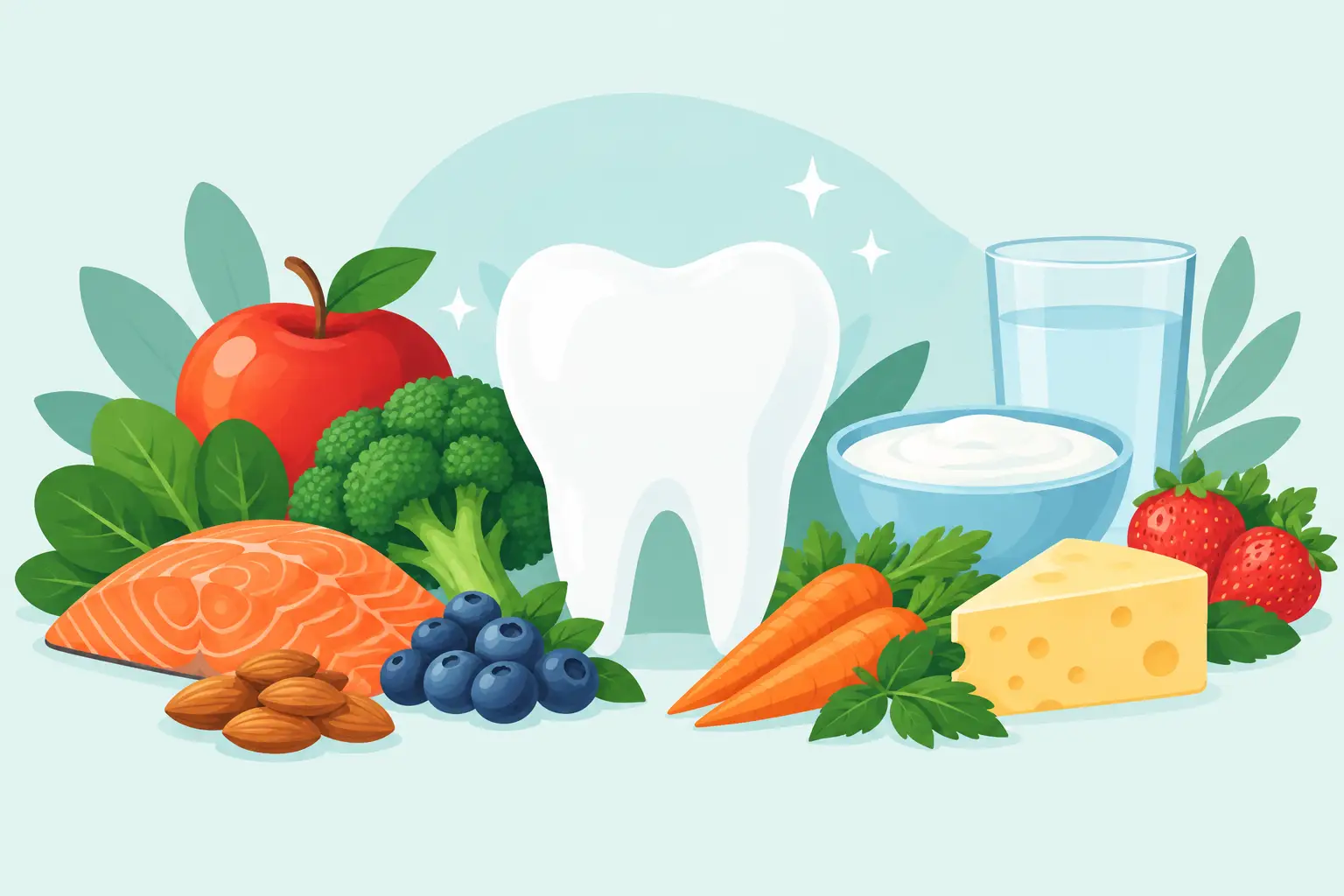
Milk, plain yogurt, cheese, and other unsweetened dairy foods are well-known choices for tooth-friendly nutrition. They provide calcium and phosphorus, minerals involved in maintaining strong teeth and bones. Cheese may be particularly useful after a meal because chewing it can stimulate saliva and help reduce acidity in the mouth.
Choose plain yogurt rather than heavily sweetened varieties when possible. Flavored yogurts can contain enough added sugar to turn a healthy option into a frequent source of fuel for cavity-causing bacteria. For patients who avoid dairy, fortified unsweetened plant-based alternatives can help, although nutritional content varies by product.
2. Crisp Vegetables
Carrots, celery, cucumbers, bell peppers, broccoli, and leafy greens are excellent choices for oral and overall health. Their water and fiber content can make them satisfying snacks without the sticky sugars found in many processed options. Chewing crisp vegetables also promotes saliva production.
They are not a substitute for brushing, despite the popular idea that raw vegetables “clean” teeth. Food particles can still remain between teeth and around the gumline. Think of them as a smart snack, then continue with normal brushing and flossing.
3. Leafy Greens
Spinach, kale, arugula, collard greens, and similar vegetables offer calcium, folate, and a range of vitamins that support general health. They are also low in sugar and can be easy to add to eggs, salads, soups, smoothies, and family meals.
For children or adults who do not enjoy the texture of greens, preparation matters. A finely chopped spinach omelet or blended vegetable soup can be more appealing than a large raw salad. Consistency is more valuable than forcing foods no one will eat.
4. Nuts and Seeds
Almonds, cashews, walnuts, sesame seeds, chia seeds, and pumpkin seeds provide protein, healthy fats, and minerals. Many are low in sugar and make a more tooth-conscious snack than crackers, candy, or sweet baked goods.
Portion size and safety matter. Whole nuts may not be appropriate for young children because of choking risk, and very hard foods can occasionally damage a weakened tooth, loose filling, crown, or veneer. Nut butters with no added sugar are a softer alternative, though they should be eaten as part of a meal or snack rather than repeatedly grazed on throughout the day.
5. Fresh Fruit, Especially When Eaten With Meals
Fresh fruit provides fiber, water, and valuable vitamins. Apples, pears, berries, melons, and oranges can all fit into a smile-supportive diet. The key is context: eating fruit with a meal is generally kinder to teeth than slowly nibbling or sipping something sweet over several hours.
Fruit does contain natural sugar, and citrus fruits are acidic, so moderation and timing still matter. After an orange, grapefruit, or lemon-based drink, rinse with water. Wait about 30 minutes before brushing if your mouth has been exposed to acid, since brushing immediately after can add mechanical wear to temporarily softened enamel.
6. Eggs, Fish, Poultry, and Other Protein Foods
Protein-rich foods are important for maintaining body tissues, including gum tissue. Eggs also provide phosphorus, while fatty fish such as salmon may contribute vitamin D and omega-3 fatty acids. Lean poultry, beans, lentils, and tofu are versatile choices that can support a balanced meal without bathing teeth in added sugar.
Vitamin D deserves special attention because it helps the body use calcium effectively. Food is one source, but individual needs differ. If you have questions about nutrition, supplements, bone health, or medications that affect your mouth, speak with your physician and dental team for personalized guidance.
7. Water
Water is one of the simplest and most effective choices for your teeth. Drinking water after meals and snacks helps wash away debris and reduces how long sugars and acids remain in contact with enamel. If your local tap water contains fluoride, it can also provide an additional cavity-prevention benefit.
For many people, the biggest dietary improvement is replacing frequent soda, juice, sweet tea, energy drinks, or sports drinks with water. Even sugar-free carbonated drinks can be acidic. They may be a better choice than sugary soda for cavity risk, but they are not automatically harmless for enamel when consumed often.
Foods That Need a Little More Strategy
Some foods offer nutrition but can be challenging for teeth. Dried fruit is a good example. Raisins, dates, and fruit snacks can be sticky and linger in grooves and between teeth. Enjoy them occasionally with a meal, drink water afterward, and clean between teeth later in the day.
Starchy foods such as chips, crackers, white bread, and pretzels can also break down into sugars that feed oral bacteria. Their tendency to stick between teeth is often overlooked. Pair them with protein, cheese, vegetables, or water instead of making them an all-day snack.
Sticky candies, hard candies, caramel, and lollipops deserve special caution because they expose teeth to sugar for a prolonged period. Sour candies add an acidic component that can be especially rough on enamel. If you choose a sweet treat, having it once with a meal is generally preferable to repeated small amounts throughout the afternoon.
Timing Matters as Much as the Menu
A mouth-friendly eating pattern gives your saliva time to do its work. Frequent grazing means repeated acid attacks, even when the snacks seem small. Try to create clearer meal and snack times, then choose water between them.
After acidic foods or drinks, water is helpful. Avoid brushing immediately after soda, citrus, wine, or vinegar-heavy foods. Waiting roughly 30 minutes allows saliva time to begin restoring a healthier oral environment. This is a small habit that can make a meaningful difference for people with enamel sensitivity or erosion.
For infants and young children, avoid putting juice, milk, or sweetened drinks in a bottle at bedtime. Water is the safest bedtime beverage once a child is old enough for it. Parents should also remember that children need help brushing thoroughly until they have the coordination to do it well on their own.
Build a Tooth-Friendly Routine Around Real Life
Healthy teeth are supported by patterns, not one “superfood.” A practical day might include eggs and fruit at breakfast, water instead of a sugary beverage, vegetables and protein at lunch, plain yogurt or cheese with a snack, and a balanced dinner with leafy greens or other vegetables.
If you have dry mouth, frequent cavities, gum bleeding, tooth sensitivity, dental restorations, or a history of enamel erosion, your needs may be different. Certain medications, medical conditions, pregnancy, orthodontic appliances, and dental treatments can change what is most helpful. A personalized preventive plan can identify risks before they become more complex and costly concerns.
At Newport Beach Dentistry, we believe excellent oral health is built through clear education and care that fits your life. Bring your questions about diet, sensitivity, your child’s oral health, or recurring cavities to your next visit. A few realistic changes at the kitchen table, combined with consistent dental care, can help protect your family’s smiles for years to come.