
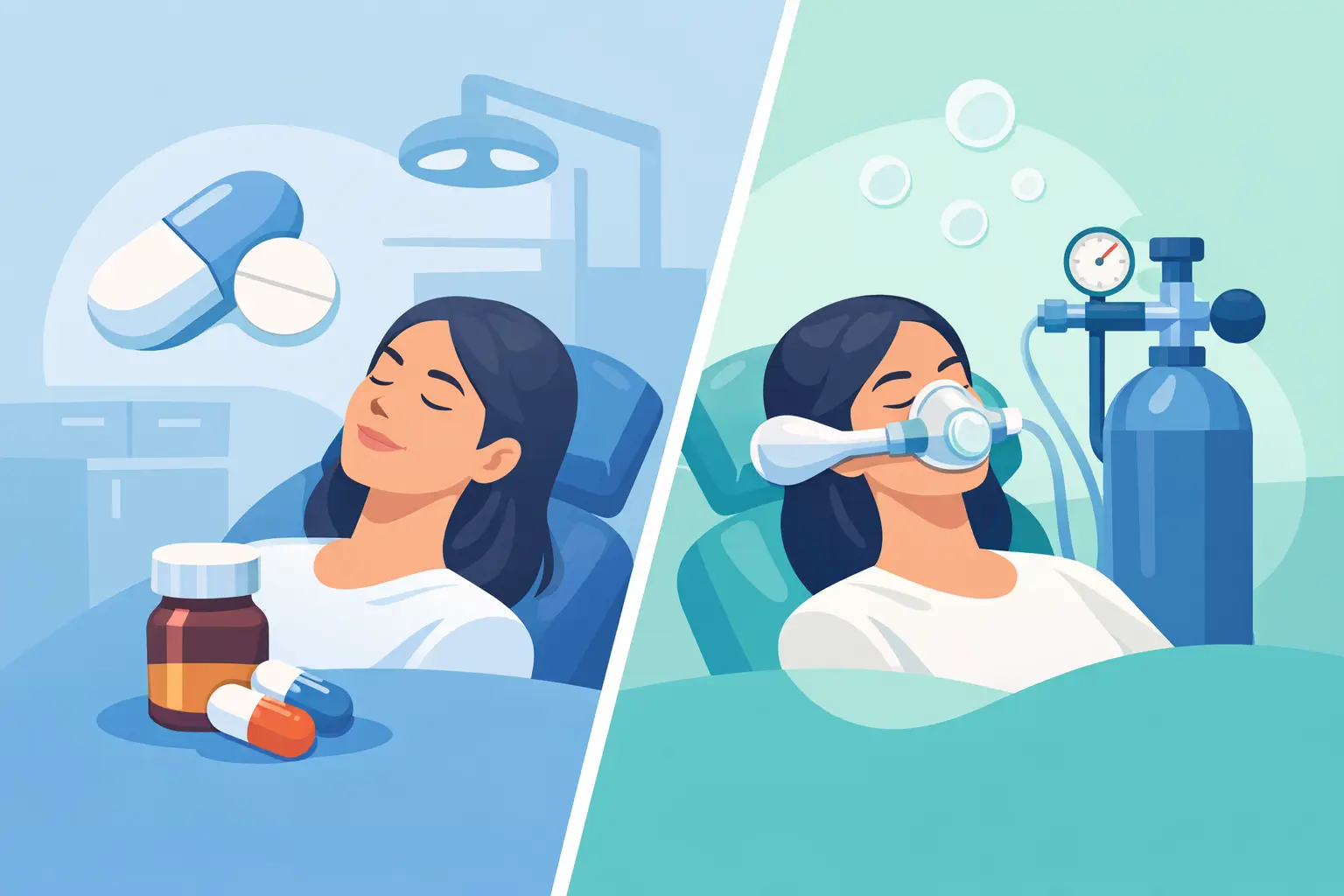
A patient facing a longer procedure may ask a simple question with an understandably personal answer: should I choose oral sedation versus nitrous oxide? Both options can make dental care feel more manageable, but they work differently, require different preparation, and suit different levels of anxiety. The right choice is not necessarily the strongest option. It is the option that supports your comfort while allowing treatment to be completed safely and predictably.
At Newport Beach Dentistry, sedation planning begins with a conversation. Your health history, medications, procedure, past dental experiences, and comfort preferences all matter. Whether you need a filling, extraction, root canal, implant treatment, or simply more confidence in the dental chair, a personalized approach can help you receive the care you need without avoiding it.
Oral Sedation Versus Nitrous Oxide: The Main Difference
Nitrous oxide and oral sedation are both forms of conscious sedation. You remain able to respond to directions, but your stress response is reduced. They differ most in how they are administered, how deeply they tend to relax you, and how long their effects last.
Nitrous oxide, often called laughing gas, is a colorless gas breathed through a small mask placed over the nose. It takes effect within minutes. Many patients describe a light, calm, floaty feeling, with less awareness of their usual tension. You are still awake, and the dentist can adjust the level of gas during the appointment based on your comfort.
Oral sedation is medication taken by mouth before the visit, usually as a prescribed tablet. It generally produces a deeper level of relaxation than nitrous oxide. Some patients feel drowsy, detached from the sounds and activity around them, or remember very little of the appointment afterward. The exact response varies from person to person, which is one reason a careful medical review is essential.
Neither option is intended to make you unconscious. If a procedure requires deeper anesthesia, your dentist will discuss the appropriate setting and provider for that level of care.
How Nitrous Oxide Feels and When It May Help
Nitrous oxide is often a good fit for patients with mild to moderate dental anxiety, a sensitive gag reflex, or nervousness about injections and routine treatment. It can also be helpful for patients who want a little extra support but need to return to normal activities relatively soon after their visit.
One of its practical advantages is the quick recovery. At the end of treatment, the nitrous oxide is turned off and oxygen is provided. Most patients feel alert again within a short time and can usually drive themselves home, unless their dentist advises otherwise based on their individual circumstances or other medications.
Because the effects can be adjusted throughout the appointment, nitrous oxide works well for shorter visits and treatment that may cause temporary discomfort or anxiety. A patient having a filling, deep cleaning, crown preparation, or other common procedure may find that the mask takes the edge off without leaving them heavily sedated.
Nitrous oxide is not ideal for everyone. Significant nasal congestion, certain respiratory concerns, difficulty breathing through the nose, or specific medical conditions may affect whether it is appropriate. Children and adults alike should be evaluated individually rather than assuming laughing gas is automatically the best choice.
How Oral Sedation Feels and When It May Help
For patients with more substantial anxiety, oral sedation can provide a greater sense of calm. It may be especially useful when a person has avoided dentistry for years, has a strong fear of dental treatment, needs extensive work completed, or struggles to stay relaxed during longer appointments.
Oral sedation can also help patients with a pronounced gag reflex or those who find it difficult to tolerate dental treatment because of tension, sensitivity, or past traumatic experiences. While the medication does not remove the need for local anesthetic, it can make the overall experience feel far less overwhelming.
The trade-off is that oral sedation requires more planning. You will need a responsible adult to bring you to the appointment and drive you home. You should not drive, operate machinery, make important decisions, or return to work that requires full alertness for the remainder of the day. Your dentist may also provide instructions about eating, drinking, and taking your regular medications before the visit.
Because oral medications can remain in the body longer, the recovery is less immediate than with nitrous oxide. Patients should plan for rest and follow all aftercare instructions carefully. It is also essential to share a complete list of prescription medications, over-the-counter drugs, supplements, allergies, and health conditions before sedation is prescribed.
Which Option Is Better for Dental Anxiety?
There is no universal winner between oral sedation and nitrous oxide. The better choice depends on the nature of your anxiety, the treatment being performed, and your medical profile.
Nitrous oxide may be the better fit if you feel nervous but can still communicate comfortably, want fast recovery, and are having a relatively straightforward appointment. It offers a flexible, lighter form of support that many patients appreciate for routine care.
Oral sedation may be more appropriate if anxiety is severe, the appointment is lengthy, you have a history of postponing care because of fear, or you need more help relaxing. For some patients, knowing they are unlikely to recall every detail of the procedure is what makes treatment possible.
It is also possible that neither option is necessary. A compassionate team, clear explanations, a slower pace, topical numbing gel before injections, headphones, breaks when needed, and modern treatment techniques can make a meaningful difference. Sedation is one comfort tool among many, not a measure of courage or a requirement for good dental care.
Safety Starts With a Personal Evaluation
Sedation dentistry should never be selected from a menu without considering the patient behind the appointment. Before recommending oral sedation or nitrous oxide, the dental team should review your medical history, current medications, allergies, pregnancy status, breathing concerns, and previous experiences with anesthesia or sedation.
Certain medications can interact with sedatives. Conditions such as sleep apnea, respiratory disease, liver or kidney concerns, and cardiovascular issues may require additional precautions or may change the recommendation. Alcohol and recreational substances should also be discussed honestly. This information is confidential and directly supports your safety.
Parents should know that sedation decisions for children require the same thoughtful evaluation. A child’s age, weight, cooperation level, medical history, developmental needs, and planned procedure all guide the recommendation. Sometimes nitrous oxide is appropriate for a child who needs help settling into a visit. In other cases, behavior guidance, shorter appointments, or a different care setting may be the safer choice.
Preparing for a Sedation Appointment
Preparation helps your visit go smoothly. If you are receiving nitrous oxide, arrive on time and let the team know if you are congested, ill, or have had changes in your health since scheduling. A light meal may be recommended before the visit, though your dentist will give instructions tailored to your treatment.
If you are receiving oral sedation, arrange your ride home before the appointment. Wear comfortable clothing, follow instructions about food and beverages, and take only the medications your dentist has directed you to take. Do not combine sedative medication with alcohol, cannabis, sleep aids, or any other substance unless your prescribing clinician has specifically approved it.
Bring your questions with you. Patients often want to know whether they will feel pain, whether they will be awake, and how long recovery will take. A good sedation conversation should leave you with clear expectations, not uncertainty.
Comfort Should Help You Keep Moving Forward
Dental anxiety can quietly turn a small concern into a larger one. A missed cleaning can lead to untreated decay; a painful tooth can become an urgent infection; a problem that might have needed a simple restoration can grow into more extensive treatment. Choosing the right comfort option can help protect both your oral health and your peace of mind.
If fear has kept you from scheduling care, start with a consultation and an honest conversation about what makes you uneasy. The goal is not to rush you through treatment. It is to create a calm, personalized plan that helps you feel safe enough to take the next step.