Bleeding when you brush is easy to dismiss, especially if it stops quickly. But healthy gums generally do not bleed during normal brushing or flossing. This guide to gum disease stages explains what those early changes can mean, how periodontal disease progresses, and when professional care can protect your smile.
Gum disease, also called periodontal disease, is an infection and inflammatory condition affecting the tissues that support your teeth. It usually begins with plaque, a sticky bacterial film that builds up along and below the gumline. Without consistent removal through brushing, flossing, and professional cleanings, plaque can harden into tartar. Tartar cannot be removed with a toothbrush, and it creates an ideal surface for more bacteria to collect.
The encouraging news is that gum disease is often preventable and highly manageable. The right treatment depends on its stage, your overall health, the condition of your teeth and bone, and how your gums respond to care.
A Guide to Gum Disease Stages
Periodontal disease does not always cause dramatic pain. In fact, many patients notice few symptoms until the condition has become more advanced. Understanding the stages can help you act before permanent damage occurs.
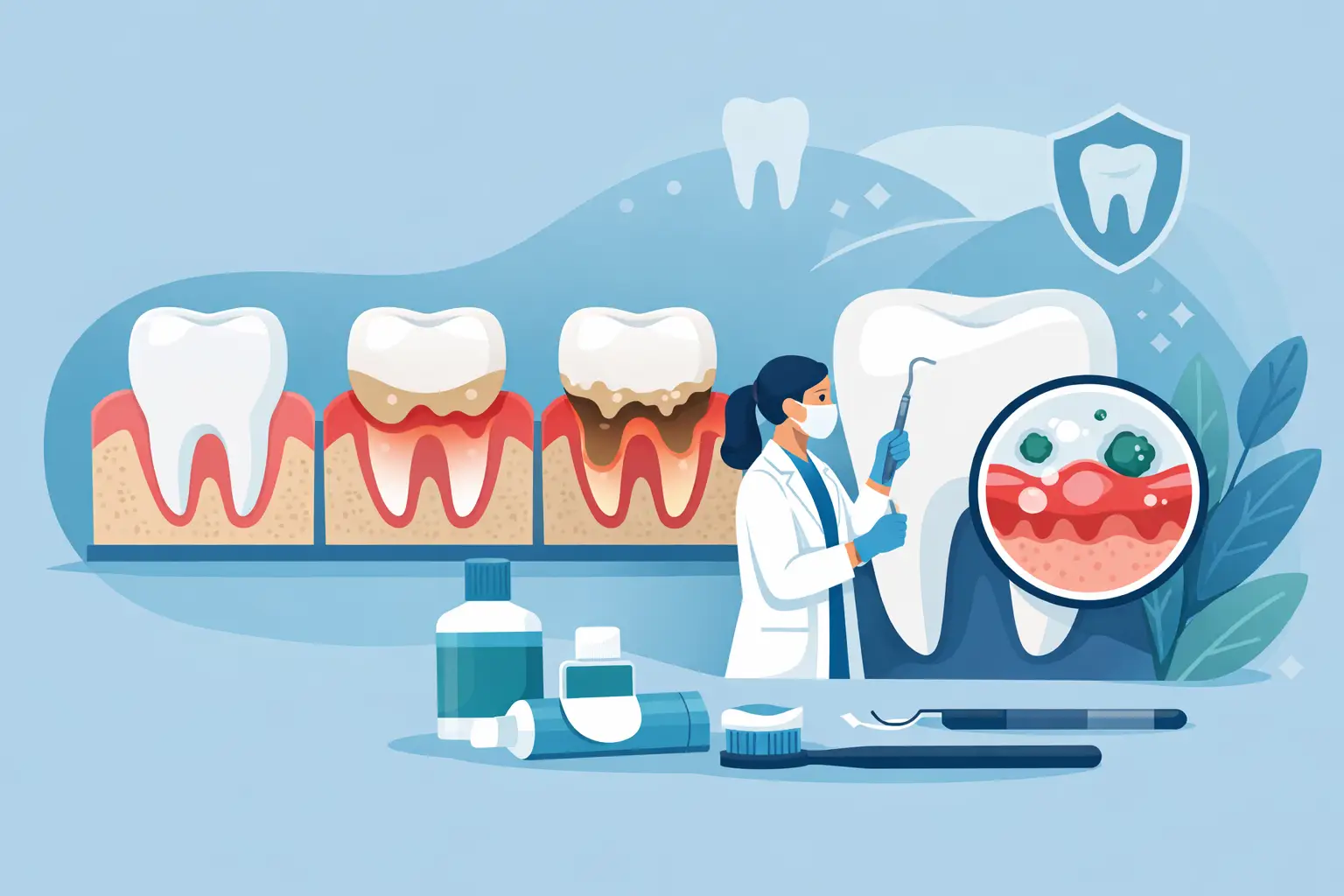
Stage 1: Gingivitis
Gingivitis is the earliest stage of gum disease. At this point, inflammation is limited to the gums, and the bone and connective tissues holding your teeth in place have not been permanently damaged.
Common signs include gums that look red or puffy, tenderness along the gumline, bleeding while brushing or flossing, and persistent bad breath. Some people notice a change in how their gums look around the teeth, while others have no obvious discomfort at all.
Gingivitis is reversible with timely care. A professional cleaning removes plaque and tartar buildup, while better home hygiene helps control the bacteria that caused the inflammation. Your dentist or hygienist may also recommend a more focused brushing technique, daily flossing or interdental cleaning, and more frequent preventive visits for a period of time.
Not every case of bleeding gums is gum disease. Brushing too aggressively, starting a new flossing routine, certain medications, hormonal changes, or vitamin deficiencies can contribute. Still, bleeding that continues for more than a few days deserves a dental evaluation rather than guesswork.
Stage 2: Early Periodontitis
When gingivitis is not controlled, inflammation can spread below the gumline. The body’s response to bacterial infection begins to break down the tissues that attach the gums to the teeth. Small spaces called periodontal pockets develop between the teeth and gums, allowing bacteria and tartar to collect farther below the surface.
In early periodontitis, there may be early bone loss visible on digital X-rays. Gums may start to recede, making teeth appear longer. Bad breath may become more persistent, and patients can sometimes notice mild sensitivity at the roots as gum tissue pulls away.
Unlike gingivitis, periodontitis cannot be fully reversed because lost supporting bone does not simply grow back on its own. However, early periodontitis can often be stabilized very successfully. Treatment commonly involves scaling and root planing, often called a deep cleaning. This procedure removes hardened deposits beneath the gumline and smooths the root surfaces so gum tissue can heal more closely around the teeth.
Stage 3: Moderate Periodontitis
Moderate periodontitis involves deeper pockets and more significant loss of the bone that supports the teeth. Symptoms may become more noticeable, but some patients still feel little or no pain. This is why regular examinations and X-rays are so valuable.
At this stage, you may see increasing gum recession, spaces developing between teeth, food getting trapped more easily, or teeth that feel slightly different when you bite. Some patients experience tenderness, bleeding, drainage from the gums, or a bad taste in the mouth. Teeth can begin to shift as their support weakens, which may change the appearance of your smile and affect how your bite comes together.
Treatment is personalized. Deep cleaning may still be appropriate, sometimes combined with targeted antimicrobial therapy or laser-assisted periodontal treatment when clinically indicated. After active treatment, periodontal maintenance visits are usually recommended more often than standard cleanings. Many patients benefit from care every three to four months, although the right interval depends on pocket depths, inflammation, home care, smoking status, diabetes control, and other individual factors.
Stage 4: Advanced Periodontitis
Advanced periodontitis is a serious condition involving substantial bone and tissue loss. Teeth may become loose, drift out of position, or become painful when chewing. Gum recession can be pronounced, and tooth loss becomes a real risk.
Advanced disease can affect more than appearance. Missing or unstable teeth may make it harder to chew comfortably and may alter speech or bite function. Chronic oral inflammation also deserves attention as part of overall health, particularly for patients managing conditions such as diabetes. Gum disease does not cause every systemic health concern, but inflammation and diabetes can influence each other, making coordinated care especially helpful.
More complex periodontal treatment may be needed at this stage. Options can include nonsurgical therapy, periodontal surgery to access deep deposits, regenerative procedures in select cases, or extraction of teeth that cannot be predictably saved. If a tooth is lost, restorative options such as dental implants, bridges, or dentures can help rebuild comfort, function, and confidence. The best choice depends on bone quality, gum health, medical history, goals, and budget.
How Dentists Diagnose Gum Disease
A periodontal evaluation is more thorough than simply looking for red gums. Your dental team measures the depth of the spaces between your teeth and gums using a small periodontal probe. Healthy measurements are generally shallow, while deeper pockets can signal infection and loss of attachment.
Digital X-rays help assess bone levels around each tooth. Your dentist will also evaluate gum recession, bleeding, plaque accumulation, tooth mobility, bite changes, restorations that may trap bacteria, and any signs of infection. Intraoral camera images can be particularly useful because they let you see areas that are otherwise difficult to view.
These findings matter because two people with similar symptoms may need different care. A patient with isolated inflammation around one difficult-to-clean area may need a focused cleaning and home-care adjustment. Someone with generalized deep pockets and bone loss needs a broader periodontal plan and ongoing monitoring.
Factors That Can Raise Your Risk
Plaque buildup is the primary cause of gum disease, but several factors can make it more likely to develop or progress. Tobacco use is one of the most significant because it can impair healing and sometimes mask bleeding that would otherwise signal a problem. Diabetes, especially when blood sugar is not well controlled, can also increase susceptibility to infection.
Family history, stress, hormonal changes, certain medications that cause dry mouth or gum enlargement, crooked teeth, poorly fitting dental work, and inconsistent home care can all play a role. This does not mean gum disease is inevitable. It means preventive care should be tailored to your needs rather than treated as one-size-fits-all.
What You Can Do Between Dental Visits
Consistent daily care supports every stage of periodontal treatment. Brush twice a day with a soft-bristled toothbrush and fluoride toothpaste, cleaning gently along the gumline instead of scrubbing hard. Clean between your teeth once daily with floss, interdental brushes, or another tool recommended for your spacing and dental work.
If you have periodontal pockets, implants, bridges, braces, or crowded teeth, the best cleaning method may differ from what works for someone else. An electric toothbrush can be helpful for many patients, but technique and consistency matter more than the brand. If your gums bleed when you begin flossing regularly, do not stop immediately. Gentle, daily cleaning often improves bleeding over time, but persistent bleeding should be checked professionally.
Avoid tobacco, stay hydrated, and keep regular appointments even when your mouth feels fine. Periodontal disease can be quiet, and maintenance care is designed to catch changes early.
When to Schedule a Periodontal Exam
Schedule an examination if your gums bleed repeatedly, your breath remains unpleasant despite brushing, your gums are receding, or you notice swelling, pus, loose teeth, or changes in your bite. A sudden gum abscess, facial swelling, severe pain, fever, or trouble swallowing requires prompt dental attention.
At Newport Beach Dentistry, periodontal care is approached with the same goal as all dental care: preserve as much healthy natural structure as possible while making treatment clear, comfortable, and tailored to you. Modern diagnostics and treatment options can make a meaningful difference, but the earlier we identify the problem, the more conservative care can often be.
If something about your gums has changed, trust that observation. A focused periodontal exam can replace uncertainty with a practical plan for protecting your teeth, your comfort, and your long-term oral health.