A tooth extraction is often the right step toward relieving pain, protecting nearby teeth, or making room for a healthier smile. Whether you need a simple extraction or a more involved surgical procedure, knowing how to prepare for tooth extraction can make the experience feel far more manageable. The goal is not to do everything perfectly on your own. It is to follow your dentist’s personalized instructions, arrive prepared, and give yourself the time and support needed to recover comfortably.
Start With a Clear Treatment Conversation
Before your appointment, make sure you understand why the tooth needs to be removed and what type of extraction is planned. A simple extraction involves a tooth that is visible above the gumline. A surgical extraction may be recommended for a broken tooth, impacted wisdom tooth, or tooth that cannot be removed easily with a standard approach.
Ask your dentist what to expect during the procedure, which type of anesthesia or sedation may be used, and how long recovery is likely to take. Most patients return to normal routines fairly quickly after a straightforward extraction, but a surgical procedure or multiple extractions may require additional recovery time.
This conversation is also the time to discuss replacement options when appropriate. Leaving a gap can allow surrounding teeth to shift and may affect chewing, speech, and bite alignment over time. Depending on your needs, a dental implant, bridge, or other restorative solution may be part of your long-term treatment plan.
Share Your Full Health and Medication History
Your dental team needs an accurate picture of your overall health to provide safe, personalized care. Tell them about medical conditions such as diabetes, heart disease, high blood pressure, sleep apnea, bleeding disorders, immune system concerns, or a history of joint replacement. Be sure to mention pregnancy, allergies, and any prior reactions to local anesthesia or sedation.
Bring or provide an up-to-date list of every medication and supplement you take. This includes prescription medicines, over-the-counter pain relievers, vitamins, herbal products, and blood-thinning medications. Some medications can affect bleeding, healing, or how sedation works.
Do not stop a prescribed medication on your own. If an adjustment is needed, your dentist will coordinate with your physician when necessary and tell you exactly what to do. This is especially important for patients taking anticoagulants, diabetes medications, or medications for heart conditions.
Follow Instructions About Food, Drink, and Fasting
What you should eat before an extraction depends largely on the type of anesthesia planned. If your procedure will use local anesthetic only, your dentist may recommend eating a light, nourishing meal beforehand. Arriving hungry can leave you lightheaded or uncomfortable, particularly if you will not be able to eat normally for several hours afterward.
If you are receiving oral sedation, IV sedation, or general anesthesia, fasting instructions are essential. You may be asked not to eat or drink for a specific number of hours before your appointment. Even water may be restricted close to the procedure. Follow the exact directions from your dental team rather than relying on general advice online.
Avoid alcohol for at least 24 hours before your procedure unless your dentist gives different guidance. Alcohol can interfere with medications, sedation, hydration, and your body’s healing response. Smoking and vaping should also be avoided before and after an extraction. Nicotine restricts blood flow and significantly increases the risk of dry socket, a painful condition in which the protective blood clot is lost too soon.
Plan Transportation Before the Day of Treatment
If you will receive sedation or take a prescribed calming medication, arrange for a responsible adult to drive you home and remain available afterward. You should not drive, operate machinery, make important decisions, or return to work immediately after sedation.
Even when only local anesthetic is used, some patients prefer having a ride home, especially after a surgical extraction or wisdom tooth removal. Swelling, fatigue, and numbness can make a quiet ride home much more comfortable than navigating traffic yourself.
For parents planning an extraction for a child or teen, arrange a calm schedule afterward. It may help to keep the rest of the day free from school, sports, and other activities that could make it harder for them to rest.
Prepare Your Home for a Comfortable Recovery
A little preparation at home helps you focus on resting rather than running errands while numb or sore. Pick up soft foods before your appointment, such as yogurt, applesauce, mashed potatoes, scrambled eggs, smoothies eaten with a spoon, soups that have cooled to a lukewarm temperature, and pasta. Choose foods that are nourishing but easy to chew.
Avoid crunchy, sharp, spicy, or very hot foods during the first stage of healing. Nuts, chips, popcorn, seeds, and crusty bread can irritate the extraction site or become trapped near it. Do not use a straw unless your dentist specifically says it is safe. The suction can dislodge the blood clot that protects the socket.
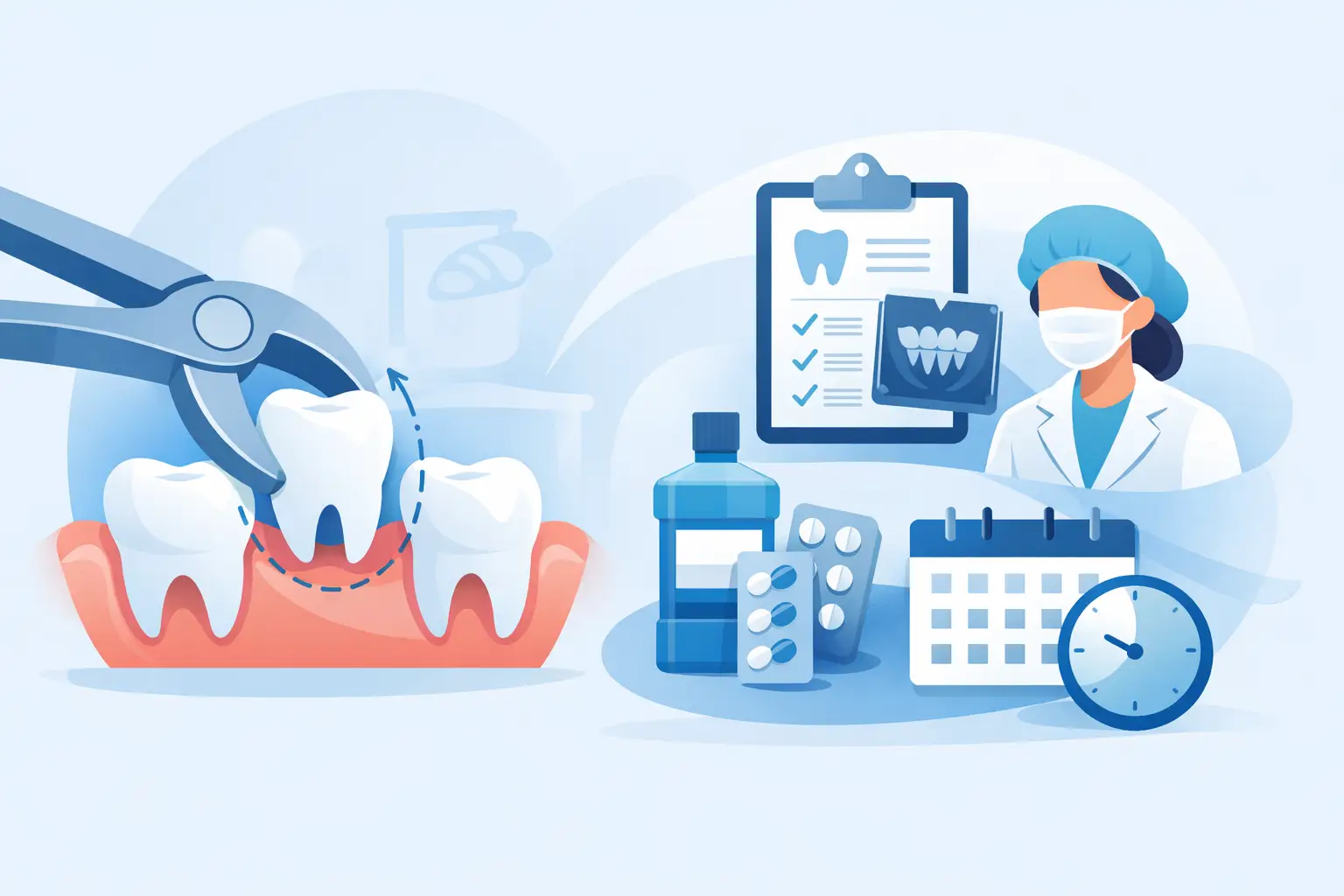
It is also helpful to have clean gauze, an ice pack or cold compress, a thermometer, and any recommended over-the-counter pain medication ready at home. If your dentist prescribes medication, fill the prescription before the procedure whenever possible. This prevents an unnecessary pharmacy trip when you should be resting.
Set up a comfortable recovery space with water, pillows, a phone charger, and easy entertainment. Rest with your head slightly elevated, particularly during the first night, to help limit swelling and throbbing.
Dress Comfortably and Arrive a Little Early
On the day of your appointment, wear loose, comfortable clothing. For sedation appointments, choose a short-sleeved shirt so your care team can easily monitor blood pressure or place an IV if needed. Avoid heavy makeup, lipstick, jewelry, and contact lenses if you have been instructed to receive deeper sedation.
Brush your teeth gently before leaving home unless you have been told otherwise. A clean mouth supports a healthy treatment environment, but do not aggressively brush or floss around a painful tooth. Arrive early enough to complete paperwork, review your health history, and ask any last questions without feeling rushed.
If anxiety is part of your concern, say so clearly. Dental anxiety is common, and it should never be a reason to postpone necessary care. Comfort options may include local anesthetic, nitrous oxide, oral sedation, or IV sedation, depending on the procedure and your health history. At Newport Beach Dentistry, treatment planning is designed around each patient’s clinical needs and comfort level.
Know What the First 24 Hours Will Require
Preparing for tooth extraction also means understanding the most important instructions after the tooth is removed. Your dentist will place gauze over the area and ask you to bite down with steady pressure to help a blood clot form. That clot is a normal and necessary part of healing.
For the first 24 hours, avoid vigorous rinsing, spitting, smoking, vaping, drinking through a straw, and strenuous exercise. These activities can disturb the clot and slow healing. If swelling is expected, apply a cold compress to the outside of the face in short intervals, following the instructions you receive.
Some oozing is common on the first day. However, contact your dental office if bleeding remains heavy despite following instructions, pain becomes severe or worsens after a few days, swelling increases significantly, you develop a fever, or you have trouble breathing or swallowing. Prompt guidance can protect your comfort and recovery.
Make Space to Heal, Not Just to Get Through the Appointment
An extraction appointment is only one part of the process. Give yourself permission to rest, eat soft foods, take medication exactly as directed, and keep follow-up visits if they are recommended. If you have questions before or after treatment, call your dental team rather than guessing.
A well-planned extraction can replace uncertainty with a clear path forward: relief from a damaged or infected tooth, protection for your oral health, and a personalized plan for the smile you want to maintain.