A veneer can change more than the color of a tooth. It can soften a chip that catches your eye in photos, close a small gap, create better symmetry, or help a worn smile look rested again. But the most attractive result is not the brightest or most uniform one. Knowing how to choose dental veneers means choosing a treatment that complements your facial features, protects healthy tooth structure, and still feels like you.
Start With Your Oral Health, Not a Photo
It is natural to bring inspiration photos to a cosmetic consultation. They can help communicate whether you prefer a subtle refinement or a more noticeable transformation. Still, another person’s veneers are not automatically right for your teeth, bite, gumline, or face shape.
A careful evaluation should come first. Your dentist will look for tooth decay, gum inflammation, cracks, old restorations, enamel thickness, grinding habits, and bite alignment. Digital X-rays and intraoral images can reveal concerns that are not visible in a mirror. Addressing these issues before cosmetic treatment gives veneers a more stable foundation and helps avoid avoidable complications later.
Veneers may not be the first recommendation for every concern. Professional whitening can be the more conservative choice for healthy teeth with discoloration. Orthodontic treatment may be better when crowding, spacing, or a misaligned bite is the primary issue. A crown may offer more protection when a tooth has extensive damage or a large existing filling. Personalized planning is not a detour from your cosmetic goals. It is how those goals become safe, natural-looking, and durable.
How to Choose Dental Veneers by Material
The material affects the appearance, preparation, durability, repair options, and cost of veneers. Most patients considering veneers choose between porcelain and composite resin.
Porcelain Veneers
Porcelain veneers are custom-crafted shells that are bonded to the front surfaces of teeth. High-quality porcelain reflects light in a way that closely resembles natural enamel. It is also highly resistant to staining from coffee, tea, red wine, and other common causes of discoloration.
For patients seeking a longer-lasting cosmetic solution with refined color and translucency, porcelain is often the preferred option. It can be especially effective when correcting several front teeth, since the dentist can create a coordinated result across the smile. Porcelain does require a larger initial investment than composite, and conventional veneers usually require some enamel preparation. Once enamel is removed, the tooth will generally need veneer coverage in the future.
Composite Veneers
Composite resin veneers are shaped and bonded directly to the tooth, often in fewer appointments. They can be a practical choice for small chips, mild shape changes, or patients who want a more budget-conscious cosmetic improvement.
Composite is typically easier to repair if it chips, but it is more likely to stain and wear over time than porcelain. The surface may need periodic polishing or eventual replacement. For the right patient, this trade-off can be worthwhile. For a broader, longer-term smile makeover, porcelain may provide the more predictable finish.
Consider Tooth Preparation Carefully
The phrase “no-prep veneers” can sound appealing, especially to patients who want to preserve as much natural enamel as possible. In some cases, minimal-prep or no-prep veneers can be appropriate. They work best when teeth are naturally small, slightly worn, recessed, or spaced in a way that allows material to be added without making teeth look bulky.
They are not automatically the best option for every smile. If veneers are placed over already prominent teeth without enough space, the result can appear thick or can affect the bite. Traditional veneers may require conservative reshaping so the final teeth have natural proportions and smooth edges. The goal should never be to remove more tooth structure than necessary, but avoiding preparation at all costs is not always the most aesthetic or functional choice.
Ask your dentist to explain how much enamel, if any, would need to be adjusted and why. A clear answer should connect preparation to the planned result, not simply to a standard approach.
Choose a Shade That Looks Natural in Real Life
A very white smile is not always a youthful-looking smile. Natural teeth have depth, subtle variations in color, and a degree of translucency near their edges. Veneers that are too opaque or too bright for your complexion can draw attention for the wrong reason.
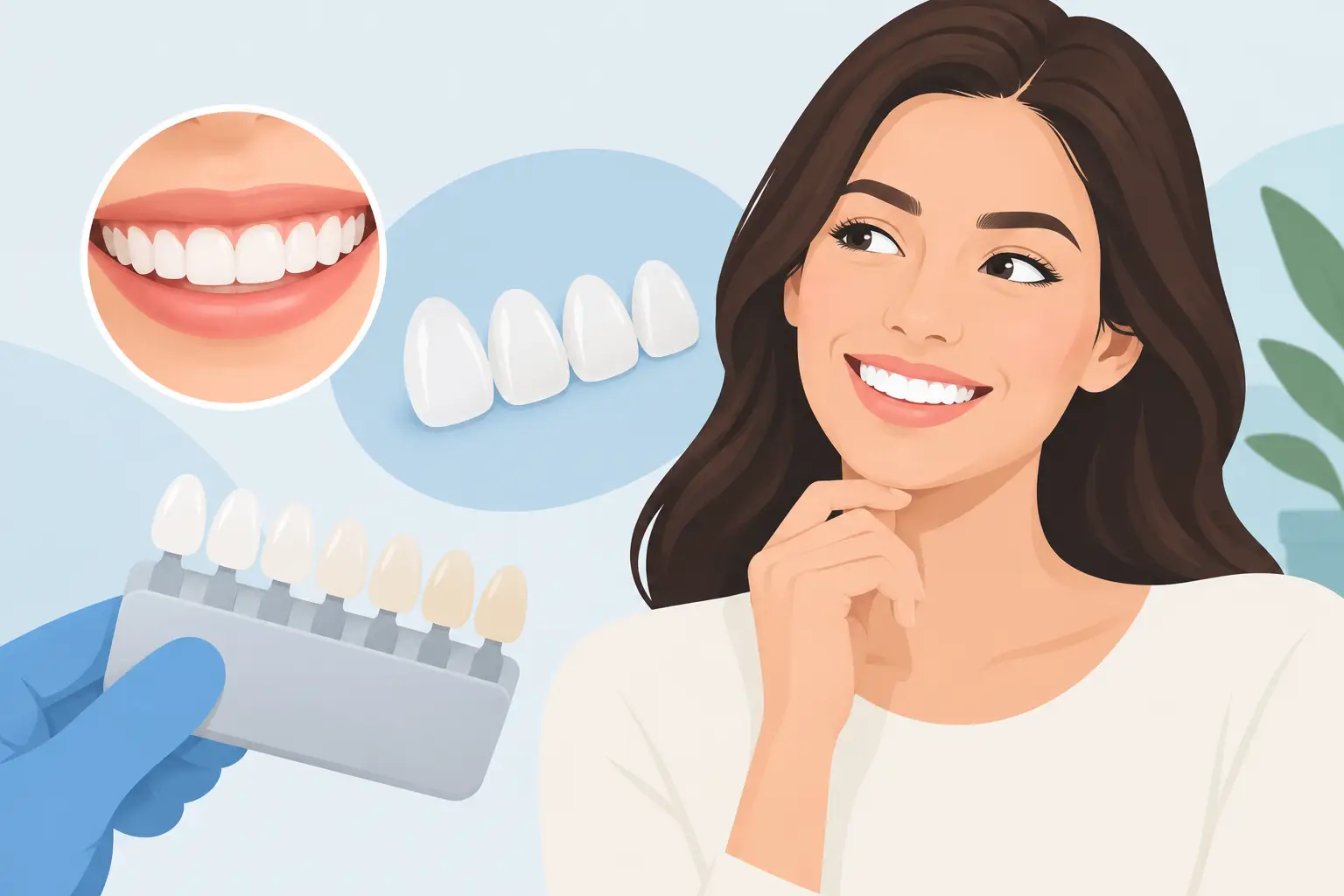
Shade selection should consider your skin tone, lip color, the whites of your eyes, age, and the color of nearby natural teeth. If you are veneering only a few teeth, matching the surrounding enamel is especially important. If you plan to whiten untreated teeth, complete whitening before the final veneer shade is chosen. Veneers do not respond to whitening gel after placement.
The same principle applies to shape. Longer teeth can create a more youthful appearance, while overly long or square teeth may not suit every face. Your dentist should assess the smile from the front, at rest, and while speaking. A beautiful smile needs to work during everyday conversation, not only in a posed photograph.
Look for a Planning Process You Can See
Cosmetic dentistry involves both technical precision and artistic judgment. Before irreversible treatment begins, ask how the proposed smile will be planned and communicated. Diagnostic photographs, digital imaging, models, and a temporary mock-up can help you understand the expected changes in length, contour, symmetry, and shade.
A preview is not a guarantee that every detail will be identical in the final porcelain, but it gives you an opportunity to share feedback early. Perhaps you want softer corners, less length, or a shade that is a little warmer. These are much easier adjustments to discuss before final veneers are made.
The best results are collaborative. You should feel listened to, not pressured toward a generic “Hollywood” smile. At Newport Beach Dentistry, cosmetic treatment planning is designed around each patient’s oral health, goals, comfort, and lifestyle.
Think Beyond the Initial Cost
The price of veneers varies based on the material, number of teeth treated, complexity of the case, laboratory work, and any dental care needed beforehand. A lower quote does not necessarily reflect the same level of planning, materials, artistry, or follow-up care.
Instead of comparing cost alone, consider the complete value of treatment. Ask what is included in the plan, whether temporary veneers are needed, how the bite will be evaluated, and what happens if an adjustment is required. It is also reasonable to ask about financing options if they are important to your decision.
Veneers are a long-term commitment, not a one-time purchase. Porcelain veneers often last many years with good care, but they are not permanent. Future replacement should be expected at some point. Choosing a design you will feel comfortable wearing over time is more meaningful than chasing a short-lived trend.
Protect Your Veneers With the Right Habits
Even strong porcelain can chip or fracture under excessive force. If you clench or grind your teeth, a custom nightguard may be recommended to protect both veneers and natural teeth. Patients who play contact sports should wear an athletic mouthguard.
Daily brushing with a nonabrasive toothpaste, flossing, and routine cleanings remain essential. Veneers cannot decay, but the natural tooth around and behind them can. Gum health also matters because receding gums can expose veneer margins and change the appearance of the smile.
Avoid using your teeth as tools to open packages, bite nails, or crack hard objects. These small habits can place unnecessary stress on cosmetic dental work. Regular checkups allow your dentist to monitor the veneers, bite, gums, and surrounding teeth before a small issue becomes a larger repair.
Questions Worth Asking at Your Consultation
A veneer consultation should leave you clearer about your options, not more confused. Ask whether veneers are the most conservative solution for your goals, what material is recommended and why, how your bite affects the plan, and what maintenance will be needed. You can also ask to review examples of results that reflect the level of change you want, from subtle enhancement to a complete smile transformation.
Pay attention to how the practice answers. You deserve a dentist who discusses benefits alongside limitations, explains alternatives without pressure, and makes space for your questions. Cosmetic dentistry is most rewarding when it is built on trust as well as technique.
The right veneers should feel like a natural extension of your smile: healthy, comfortable, and confidently your own. A thoughtful consultation is the best place to begin.