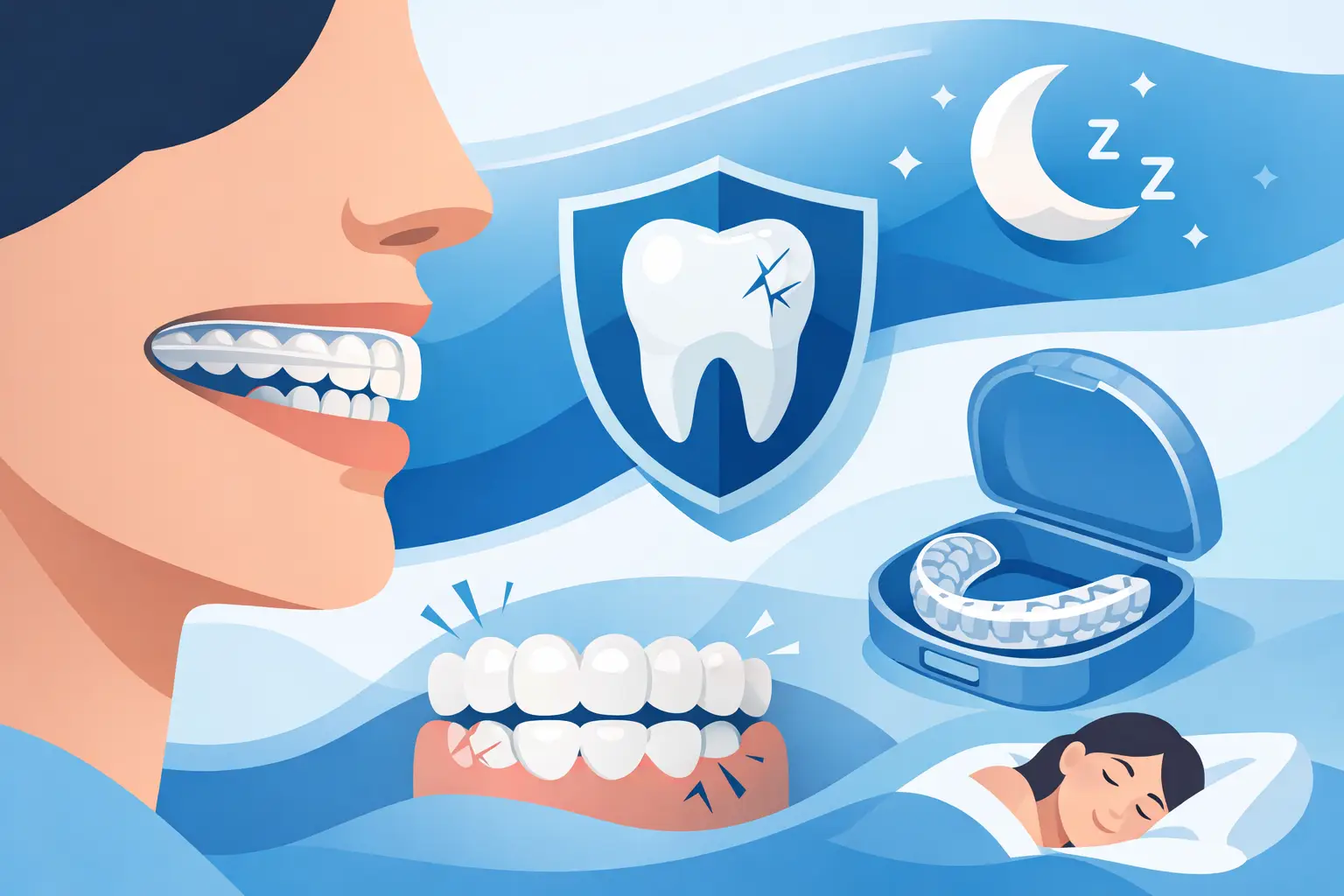
Waking with a tight jaw, a dull headache near your temples, or teeth that feel unusually sensitive is not something to simply work around. These can be signs of bruxism, the habit of clenching or grinding teeth. A night guard for teeth grinding creates a protective barrier between the upper and lower teeth, helping reduce the damage that repeated nighttime pressure can cause.
For many patients, a night guard is a straightforward, comfortable way to protect their smile. The best choice, however, depends on how severely you grind, the condition of your teeth and restorations, your bite, and whether another condition may be affecting your sleep. A personalized dental evaluation helps ensure the guard is protecting your teeth rather than creating new problems.
Why teeth grinding deserves attention
Teeth are strong, but they were not designed to withstand hours of concentrated clenching. During sleep, people who grind may exert far more force than they use while chewing. Because the habit happens unconsciously, it can continue for months or years before visible signs appear.
Early clues may include worn or flattened tooth edges, small chips, increased temperature sensitivity, sore facial muscles, or a partner hearing a grinding sound at night. Some people notice that their jaw feels tired when they wake up, while others first learn about the issue during a routine examination.
Left untreated, ongoing grinding can wear through enamel, expose the softer dentin beneath it, and place stress on fillings, crowns, veneers, bridges, and implants. It can also aggravate temporomandibular joint, or TMJ, symptoms in some patients. A guard does not necessarily stop the clenching habit itself, but it can absorb and distribute force so the teeth and dental work are less vulnerable.
Stress, certain medications, caffeine or alcohol use, bite irregularities, and sleep disturbances may all play a role. There is not always one clear cause. That is why a careful assessment matters more than choosing a one-size-fits-all solution.
How a night guard for teeth grinding works
A night guard is a removable appliance worn over the upper or lower teeth while sleeping. It separates the biting surfaces, limiting direct tooth-on-tooth contact. Depending on the material and design, it may cushion the teeth, guide the bite into a more stable position, or help distribute pressure more evenly across the arch.
The appliance is custom-made to fit precisely around each tooth. That close fit is not only more comfortable, it helps keep the guard in place through the night and reduces the chance of uneven pressure. Your dentist may recommend a hard acrylic guard, a softer material, or a dual-laminate design with a soft interior and firmer exterior.
A hard guard is often appropriate for patients who clench heavily or have significant wear because it is durable and can be adjusted carefully. A soft guard may feel more comfortable at first for mild grinding, although some people bite into soft material more intensely. The right material is a clinical decision, not simply a comfort preference.
Custom night guards versus store-bought options
Over-the-counter guards can seem appealing because they are readily available and less expensive upfront. Some are designed to be boiled and molded at home, while others come in a general size. They may provide short-term protection for a limited number of people, particularly while waiting for a dental appointment.
The trade-off is fit. A bulky or loose guard can interfere with sleep, irritate gums, shift during the night, or create an uneven bite. It may also make it harder to recognize whether grinding is causing tooth damage or whether another issue needs attention. A poorly fitting guard is more likely to end up on the nightstand than in your mouth.
A custom guard begins with an examination and detailed impressions or digital scans. Your dentist evaluates signs of wear, checks existing restorations, reviews jaw symptoms, and designs the appliance around your specific bite. At delivery, the guard is adjusted so it feels stable and natural. Follow-up visits allow for refinements as needed.
For patients with crowns, veneers, dental implants, orthodontic retainers, or complex bite concerns, customization is especially valuable. Protecting those investments requires a guard that accommodates the dental work precisely.
What to expect when you start wearing a guard
Most people adapt to a night guard quickly. The first few nights may feel different because there is an appliance in the mouth, but it should not cause persistent pain, sharp pressure, or major difficulty closing your mouth. If it does, stop wearing it and contact your dental office for an adjustment.
A night guard should fit snugly without pinching the gums or feeling as though it could fall out. You may notice less morning jaw tension over time, but a guard is not always an instant solution for headaches or facial pain. Those symptoms can have several causes, including muscle strain, sinus issues, migraine conditions, and sleep-related concerns.
Bring your guard to regular dental visits. Your dentist can inspect it for wear patterns, cracks, and changes in fit. Those patterns can reveal how and where you are placing pressure, while changes in your teeth or restorations can affect how the guard sits.
Caring for your night guard
A clean guard is more comfortable and helps reduce odor and bacterial buildup. Each morning, rinse it with cool or lukewarm water and gently brush it with a soft toothbrush. Hot water can warp many materials, so it should be avoided.
Store the guard in its ventilated case once it is dry. Keep it away from pets, as dogs are particularly drawn to the smell and texture of dental appliances. Avoid leaving it in a hot car or direct sunlight, where heat can distort its shape.
For a deeper clean, use a dentist-recommended appliance cleanser according to the product directions. Regular toothpaste can be too abrasive for some guards and may create tiny scratches that collect debris. If the guard develops a rough edge, crack, odor that does not resolve with cleaning, or no longer fits correctly, have it evaluated rather than trying to reshape it yourself.
When grinding may point to a sleep concern
Grinding can occur on its own, but it can also be associated with disrupted breathing during sleep. Snoring, gasping, pauses in breathing, daytime fatigue, waking with dry mouth, or high blood pressure are reasons to discuss possible sleep apnea with a healthcare professional.
A standard night guard is not a treatment for sleep apnea. In some cases, an appliance designed for grinding may be inappropriate if it delays evaluation of a breathing problem. Your dentist can help identify warning signs and coordinate care when a sleep assessment is needed.
Children can grind their teeth too, particularly as their teeth and jaws develop. It is not always harmful, but parents should mention it during dental visits, especially if a child has tooth wear, pain, snoring, or restless sleep. Children need an individualized approach because their mouths are still growing.
Protecting your smile with personalized care
A night guard works best as part of a broader plan for protecting your oral health. Managing stress, limiting late-day caffeine when it seems to worsen clenching, practicing gentle jaw relaxation, and addressing damaged teeth can all be useful. For some patients, bite adjustments, restorative treatment, orthodontic care, or evaluation of TMJ symptoms may be appropriate as well.
At Newport Beach Dentistry, we take time to understand what your teeth, jaw, and sleep habits are telling us before recommending treatment. Modern digital imaging and careful examinations allow us to create a plan that supports both comfort and long-term results.
If you are waking up with jaw soreness or noticing worn, chipped, or sensitive teeth, scheduling an evaluation is a practical next step. Protecting your enamel and dental work now can spare you from more extensive treatment later, while helping you wake up feeling more comfortable.