A missing tooth can change more than the way a smile looks. It may affect chewing, speech, confidence, and the way neighboring teeth function over time. When comparing a dental bridge vs implant, the best choice is rarely about selecting the most expensive or most familiar option. It is about choosing a restoration that supports your oral health, daily comfort, appearance, timeline, and budget.
At Newport Beach Dentistry, treatment planning begins with a close look at the whole picture: the health of the gums and jawbone, the condition of adjacent teeth, the location of the missing tooth, and the goals that matter most to you. Both bridges and implants can provide excellent results when they are recommended for the right situation.
Dental Bridge vs Implant: The Key Difference
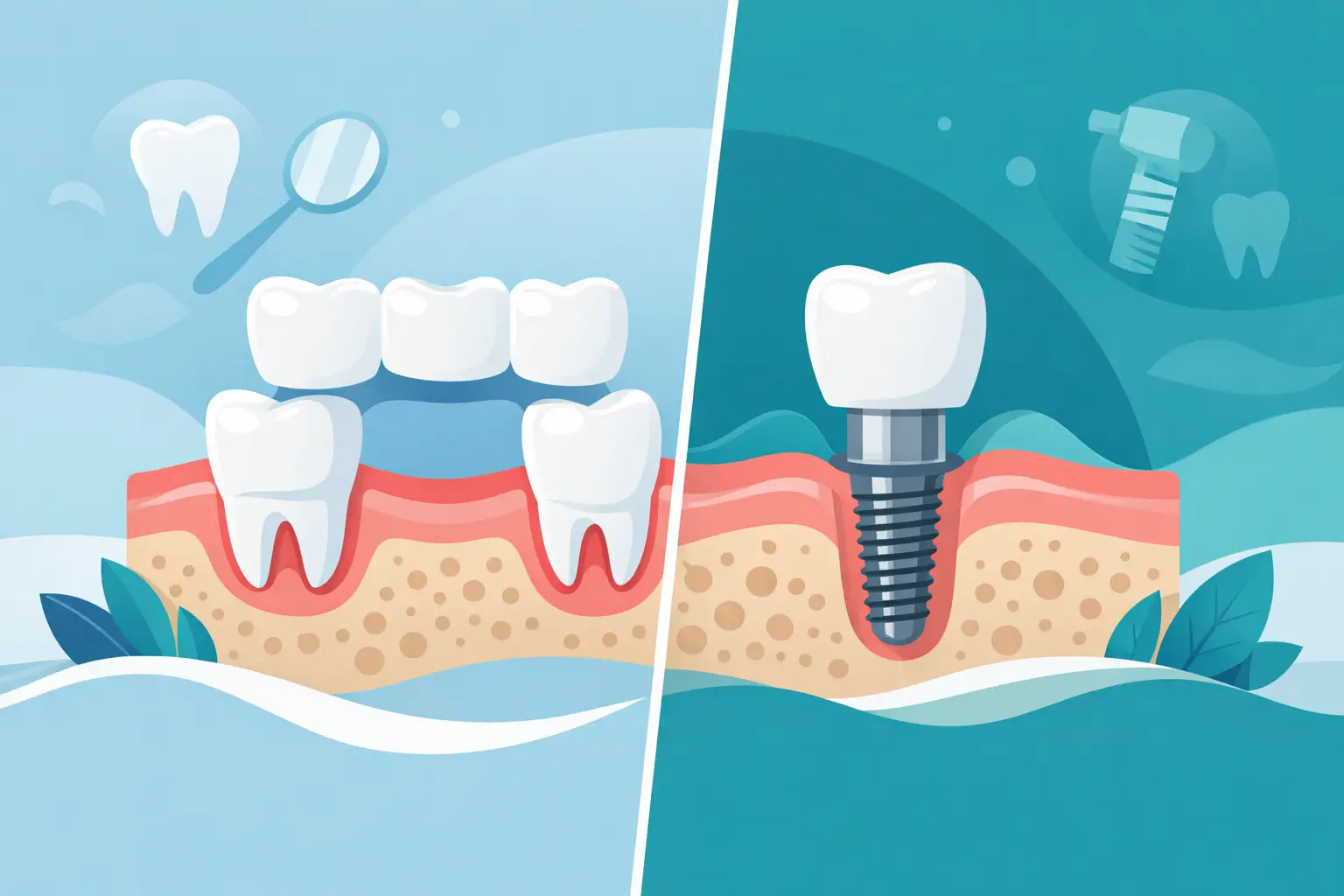
A dental bridge replaces a missing tooth by connecting an artificial tooth, called a pontic, to crowns placed on the teeth beside the gap. In some cases, a bridge may be supported by dental implants instead of natural teeth. A traditional bridge is fixed in place, meaning it does not come out for cleaning like a removable partial denture.
A dental implant replaces the tooth root as well as the visible tooth. A small titanium implant post is placed in the jawbone, where it integrates with the bone over time. Once healing is complete, the implant supports a custom crown designed to blend with the surrounding teeth.
The central distinction is simple: a bridge relies on neighboring teeth for support, while an individual implant is supported by the jawbone. That difference influences treatment time, cost, maintenance, and long-term planning.
When a Dental Bridge May Be the Better Choice
A bridge can be an effective, attractive solution for patients who want to replace a tooth without surgery or who need a restoration on a shorter timeline. Once the supporting teeth are prepared and impressions or digital scans are taken, a bridge can often be completed in a matter of weeks.
A traditional bridge may also make practical sense when the teeth on either side of the missing tooth already need crowns because of large fillings, fractures, extensive wear, or previous root canal treatment. In that situation, crowning those teeth as part of a bridge may be a sensible way to restore the entire area.
Cost is another consideration. The upfront fee for a bridge is often lower than the cost of an implant and crown, although coverage varies by dental plan. For patients who are working within a defined budget, a bridge can offer a predictable and efficient path to restoring function and appearance.
There are trade-offs. To place a conventional bridge, the adjacent teeth must be shaped to receive crowns, even if they are otherwise healthy. Bridges also require careful cleaning beneath the replacement tooth. Special floss threaders, interdental brushes, or water flossers can help keep the area healthy. With attentive home care and regular professional visits, many bridges can last for years, but they may eventually need replacement.
Types of bridges matter
Not every bridge is the same. A traditional fixed bridge is often used when strong teeth are present on both sides of the space. A cantilever bridge is supported on one side only and may be appropriate in select locations. A Maryland bridge uses bonded wings behind neighboring teeth and can be more conservative, particularly for certain front-tooth situations.
The right design depends on bite forces, tooth position, the health of surrounding teeth, and aesthetic expectations. A bridge that works well for a front tooth may not be the right choice for a heavily used back tooth.
When a Dental Implant May Be the Better Choice
Dental implants are often recommended for patients who want to replace a missing tooth without altering healthy neighboring teeth. Because an implant functions as an artificial tooth root, it supports a separate crown and can feel very similar to a natural tooth during normal eating and speaking.
Implants also help preserve the jawbone in the area of the missing tooth. After a tooth is lost, the bone that once supported it can gradually shrink. An implant provides stimulation within the jaw, which can reduce this bone loss and help maintain facial support and the alignment of nearby teeth.
For a single missing tooth, an implant can be especially appealing when the teeth beside the gap are healthy and untouched. It is also a versatile option for replacing multiple teeth or securing implant-supported bridges and dentures.
The process does require patience. After implant placement, the bone needs time to heal around the implant before the final crown is attached. Depending on the case, healing can take several months. Some patients may need bone grafting first if there is not enough healthy bone to support the implant securely.
Implant treatment also involves oral surgery, so overall health, gum health, medications, smoking status, and healing ability should be considered. Placement is highly predictable for many patients, but no procedure is appropriate for everyone without a careful evaluation.
Comparing Cost, Longevity, and Daily Care
It is understandable to focus on price when deciding between a bridge and an implant. However, it helps to think beyond the initial fee. A bridge may cost less at the beginning, but it joins multiple teeth into one restoration. If a supporting tooth develops decay, gum disease, or a fracture later, the entire bridge may need attention.
An implant usually involves a higher upfront investment because it includes surgical placement, healing visits, an abutment, and a final crown. Yet an implant does not connect to the adjacent teeth, which can make future treatment more localized. With healthy gums, strong bone support, consistent home care, and regular exams, an implant can provide a durable long-term replacement.
Neither option is maintenance-free. A bridge should be brushed carefully along the gumline and cleaned underneath every day. An implant crown should be brushed and flossed like a natural tooth, with particular attention to the tissue around the implant. Gum inflammation around an implant can progress if it is ignored, so professional cleanings and exams remain essential.
Insurance plans often contribute differently to bridges and implants. Some plans may cover a bridge more readily while providing limited implant benefits. A clear treatment estimate can help you understand the anticipated costs, available alternatives, and how to prioritize care if treatment needs to be phased.
Your Gums and Bone Help Determine the Answer
A beautiful crown or bridge begins with a healthy foundation. Before replacing a missing tooth, your dentist will evaluate gum health, bone levels, bite alignment, decay risk, and the condition of nearby teeth. Digital X-rays and other imaging can reveal concerns that are not visible during a routine exam.
If periodontal disease is present, treating it first protects the investment in either restoration. If bone loss has occurred after an extraction, grafting may make an implant possible, although it can add time and cost. In other cases, the amount of bone, the location of the sinus, or medical factors may make a bridge the more appropriate recommendation.
Timing matters as well. Leaving a space untreated can allow nearby teeth to drift, opposing teeth to over-erupt, and chewing forces to become uneven. This does not mean every missing tooth requires the same solution immediately, but an early evaluation gives you more options.
Questions to Ask Before You Decide
A productive consultation should leave you with more than a recommendation. Ask whether the teeth beside the gap are healthy, whether you have sufficient bone for an implant, how each option will affect your bite, and what maintenance will be required at home. You may also want to ask about the expected timeline, whether grafting or other preparatory treatment is needed, and what costs are expected at each stage.
For some patients, the decision is straightforward. A healthy jawbone and healthy adjacent teeth may favor an implant. For others, a bridge is the more efficient choice because neighboring teeth already require crowns or surgery is not advisable. There is no one-size-fits-all answer, and a thoughtful plan should respect both clinical needs and personal priorities.
A missing tooth deserves attention, but it does not require a rushed decision. With a detailed exam and a conversation about your health, comfort, appearance, and finances, you can choose a restoration that lets you smile, speak, and eat with greater confidence for years to come.