A wedding, a new job, or simply seeing your smile in photos can make an orthodontic concern feel more urgent. Adults often want straighter teeth, but they also need a treatment that works with meetings, meals, family responsibilities, and confidence in everyday interactions. The Invisalign vs braces adults comparison is not about finding one universally better option. It is about finding the option that can safely and predictably address your specific bite, tooth movement, lifestyle, and goals.
At Newport Beach Dentistry, orthodontic treatment begins with a close look at your teeth, gums, bite, and overall oral health. A clear answer requires more than choosing the treatment that looks best on social media.
Invisalign vs Braces for Adults: The Core Difference
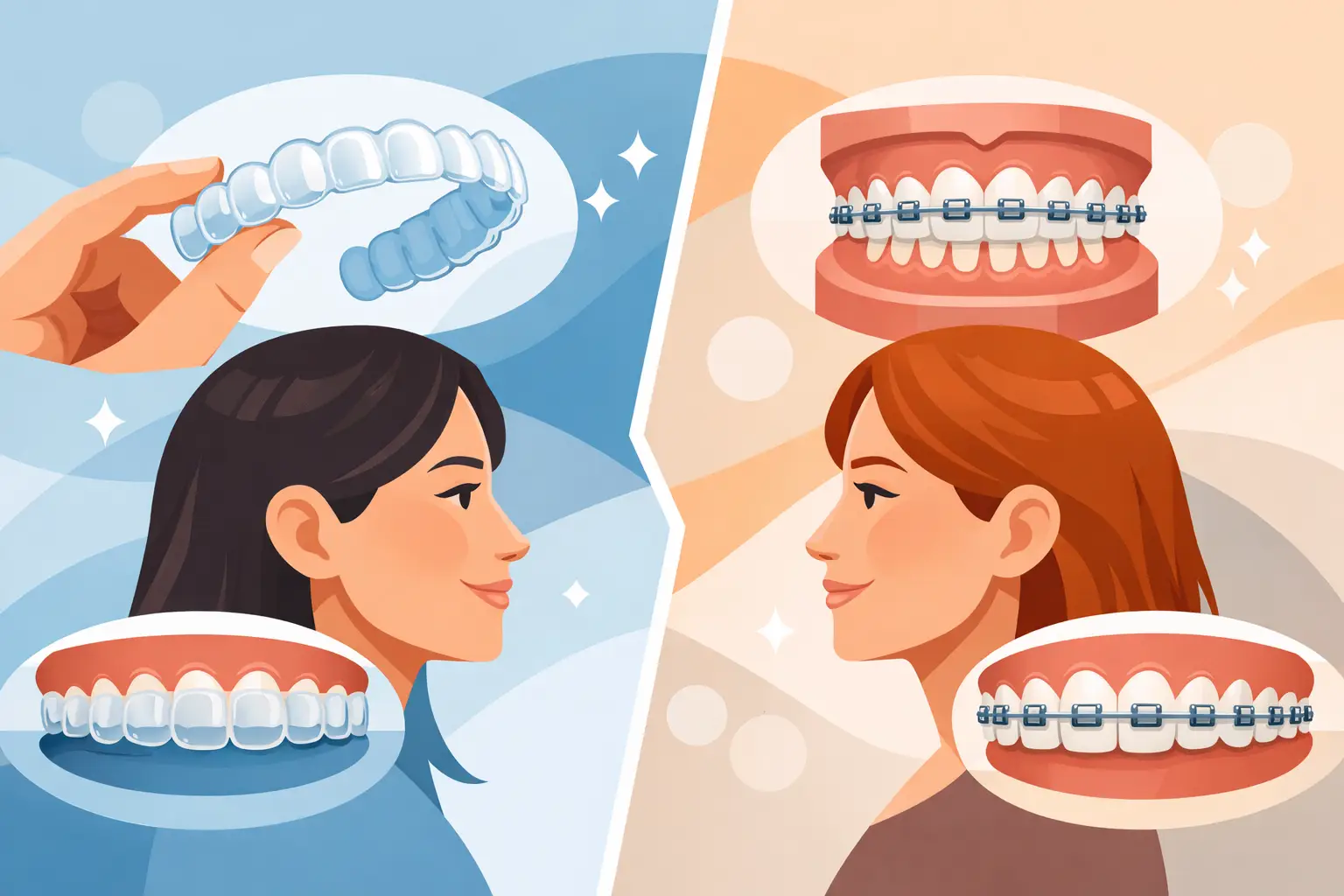
Invisalign treatment uses a series of custom clear, removable aligners that gradually guide teeth into planned positions. Each set is typically worn for most of the day and changed on the schedule prescribed by your dentist. Because aligners are transparent and removable, they are a popular choice for adults who prefer a more discreet approach.
Braces use brackets attached to the teeth and an orthodontic wire that is adjusted over time. They are visible, although ceramic brackets can make them less noticeable than traditional metal braces. Since braces remain in place around the clock, they deliver continuous force without relying on a patient to remember to put them back in after meals.
Both treatments can create beautiful, healthier-looking smiles. Both may improve crowding, spacing, tooth alignment, and certain bite concerns. The better choice depends on the complexity of the case and on what will make treatment successful for you.
When Invisalign May Be the Better Fit
Clear aligners are often an excellent option for adults with mild to moderate crowding, gaps, or alignment concerns. They can also address many bite issues when planned carefully. The greatest practical advantage is flexibility: you remove the aligners to eat, drink anything other than water, brush, and floss.
That flexibility makes daily hygiene easier. There are no brackets or wires to brush around, and many patients appreciate being able to continue their normal food choices. Clear aligners can also be comfortable for people who are concerned about irritation to the lips and cheeks, though mild pressure and temporary tenderness are normal as teeth move.
Appearance matters to many adult patients, particularly those who work in client-facing roles or attend frequent social events. Invisalign aligners are designed to be subtle, so they may feel less disruptive to your professional and personal routine.
The trade-off is commitment. Aligners generally need to be worn about 20 to 22 hours per day. Taking them out for long meals, forgetting to replace them, or wearing them inconsistently can delay progress and affect results. If you know that a removable appliance is likely to spend too much time in a napkin, a case, or a pocket, braces may be the more dependable choice.
When Braces May Be the Better Fit
Braces remain one of the most precise and versatile orthodontic tools available. They are often recommended when teeth require more complex movement, such as significant rotation, substantial spacing or crowding, difficult bite correction, or movements that need very consistent control.
Because braces are fixed to the teeth, they are working at all times. This can be reassuring for adults who do not want the responsibility of tracking aligner wear. Braces may also be a sensible option for patients whose treatment plan includes more involved tooth movements that are best managed with brackets and wires.
Modern braces are smaller and more refined than many adults remember from adolescence. Ceramic braces may be an option for patients who want a less noticeable fixed treatment. Still, braces do require adjustments to your routine. Sticky and hard foods can damage brackets or wires, and brushing and flossing take more care. Interdental brushes, floss threaders, or water flossers can help keep the areas around brackets clean.
Comfort, Convenience, and Daily Life
Neither treatment is completely discomfort-free. Teeth need gentle, controlled pressure to move, and that pressure can cause temporary soreness. Invisalign patients often notice this when starting a new aligner tray. Braces patients may feel tenderness after adjustments, and brackets can occasionally irritate the soft tissues until the mouth adapts.
Convenience means different things to different people. Invisalign can be convenient because you can remove aligners for meals and important occasions. But that convenience comes with a daily discipline requirement. Braces remove the question of whether you have worn your appliance long enough, but they require more attention at meal times and during home care.
Adults with demanding schedules should think honestly about routines. If you frequently snack, sip coffee throughout the day, travel often, or find it difficult to keep track of small items, aligner compliance may be harder than expected. If you prefer to eat without removing an appliance and are comfortable with a more visible treatment, braces may feel simpler.
Cost and Treatment Time: What Adults Should Expect
The cost of Invisalign and braces can overlap considerably. Fees are driven less by the name of the treatment and more by the complexity of your case, the anticipated duration, the need for additional appliances, and any dental care needed before orthodontics begins. A customized consultation is the only reliable way to receive an accurate estimate.
Treatment time also varies. Some straightforward aligner cases may be completed in months, while more comprehensive treatment with aligners or braces can take 12 to 24 months or longer. Moving teeth safely is not something to rush. The right plan balances efficiency with healthy bone, gum, and bite support.
Many adults need a few additional refinements after their initial clear-aligner series to fine-tune the result. Braces may also require detailed finishing adjustments. In either treatment, retainers are essential once active orthodontic care is complete. Teeth naturally tend to shift over time, and consistent retainer use protects the investment you have made in your smile.
Oral Health Comes Before Tooth Movement
Orthodontic treatment works best when teeth and gums are healthy. Active gum disease, untreated cavities, fractured teeth, or certain restorative concerns may need attention first. This is one reason comprehensive care matters: straightening teeth should support long-term oral health, not overlook it.
Adults with crowns, bridges, implants, veneers, or a history of gum disease can still be candidates for orthodontic treatment in many situations. However, treatment planning may be more detailed. Dental restorations do not move in the same way natural teeth do, and dental implants are fixed in the jawbone. Your dentist must account for these factors when designing a safe, realistic plan.
Questions That Help You Choose
Rather than asking only, “Which is faster?” consider what outcome matters most to you. Are you primarily concerned about visible crowding? Do you have jaw discomfort, uneven wear, or a bite that makes chewing difficult? Would you reliably wear aligners for most of every day? Is the ability to remove your appliance worth the responsibility that comes with it?
It also helps to ask what each option can realistically achieve in your case, how often you will need visits, whether attachments or elastics may be needed with aligners, and what your retainer plan will look like afterward. A transparent conversation about expectations can prevent surprises later.
The best orthodontic choice is the one that fits your clinical needs and your real life, not just your ideal routine. A personalized evaluation can turn a broad comparison into a treatment plan that feels clear, comfortable, and worth moving forward with.