A missing tooth can affect more than the way a smile looks in photos. It can change how you chew, make certain words harder to pronounce, and allow nearby teeth to shift over time. Dental implants offer a long-term way to replace one tooth, several teeth, or even a full arch while supporting both oral health and natural-looking results.
Unlike a removable appliance that rests on the gums, an implant is designed to replace the tooth root as well as the visible tooth. The result is a restoration that is stable, personalized, and made to blend with your smile. For many patients, that stability is what makes everyday meals, conversations, and laughter feel comfortable again.
How dental implants replace missing teeth
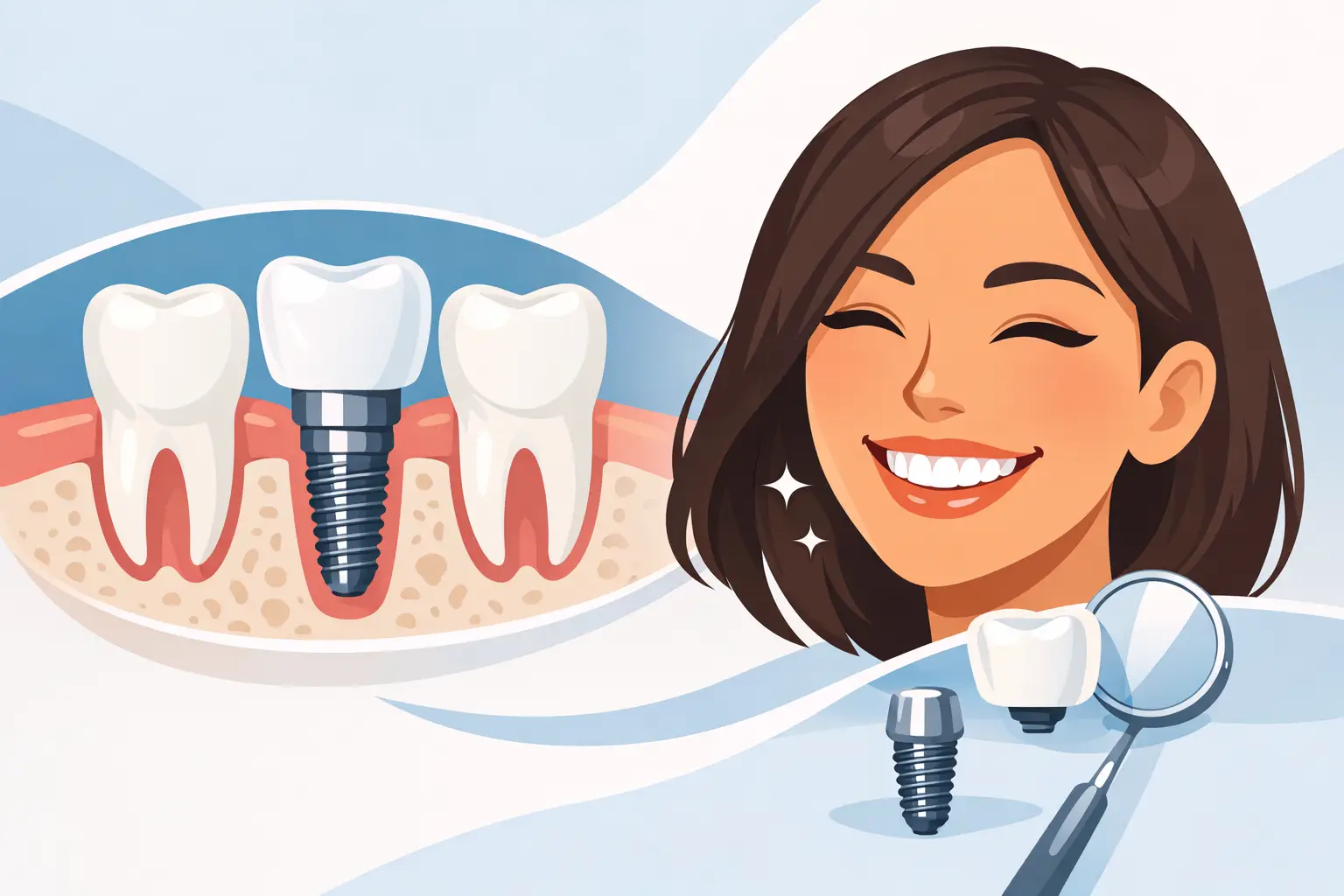
A dental implant has three main parts. The implant post is a small titanium fixture placed in the jawbone. After it heals and integrates with the bone, an abutment connects the post to the final restoration. That restoration may be a custom crown for one missing tooth, a bridge for multiple teeth, or a denture designed to restore a larger section of the smile.
The jawbone needs stimulation to maintain its strength and shape. When a tooth is lost, the bone in that area can gradually shrink because it no longer receives the pressure of chewing. Because an implant is anchored in the bone, it can help preserve the jaw structure in a way that a traditional removable denture cannot.
Implants are not the only tooth-replacement option, and the best choice depends on your health, goals, timeline, and budget. A conventional bridge may be appropriate when the teeth next to the gap already need crowns. A removable partial denture can be a more economical option for some patients. The value of an implant is often in its long-term stability and its ability to avoid placing extra stress on neighboring healthy teeth.
Are you a candidate for dental implants?
Most healthy adults with missing teeth can be considered for implant treatment, including people who have worn dentures for years. A successful plan begins with a careful examination of the gums, remaining teeth, bite, and jawbone. Digital X-rays and three-dimensional imaging can help the dentist evaluate bone volume and identify the safest, most precise position for an implant.
Healthy gums are essential. Untreated periodontal disease can affect the tissues that support an implant, just as it can threaten natural teeth. If gum inflammation or infection is present, periodontal treatment should come first. This approach protects your investment and creates a healthier foundation for restorative care.
Adequate bone is also important, but low bone volume does not automatically rule out treatment. Some patients benefit from bone grafting before implant placement. Others may be candidates for a different implant position or design. Patients who smoke, have uncontrolled diabetes, take certain medications, or clench and grind their teeth may need additional planning and monitoring. These factors do not always prevent treatment, but they should be discussed openly before surgery.
A plan should consider your whole mouth
Replacing a missing tooth is not simply about filling a space. The bite must be balanced, the restoration must fit naturally with surrounding teeth, and the gums should frame the crown attractively. If decay, worn teeth, gum disease, or bite problems are present elsewhere, addressing them as part of a coordinated plan can improve comfort and long-term results.
This whole-mouth perspective is especially valuable for patients replacing several teeth or transitioning from loose dentures to implant-supported teeth. Your dentist can explain whether the goal should be a single crown, an implant bridge, an overdenture that snaps into place, or a fixed full-arch restoration.
What happens during implant treatment
The treatment timeline varies. In some cases, an implant can be placed soon after a tooth is removed. In others, the extraction site needs time to heal or requires grafting first. Rushing treatment when the bone or gums are not ready can compromise the outcome, so timing should be based on your individual biology rather than a one-size-fits-all schedule.
During the surgical appointment, the implant post is placed in the jawbone under local anesthesia. Sedation options may also be available for patients who feel anxious or are undergoing more extensive treatment. Most patients describe the recovery as manageable, particularly when they follow instructions for medication, diet, and oral hygiene.
Over the next several months, the bone heals around the implant through a process called osseointegration. This is the step that creates the strong connection needed to support chewing forces. You may receive a temporary tooth during healing when appearance or function calls for it, though temporary options must be handled carefully to avoid putting too much pressure on the healing implant.
Once the site is ready, the final crown, bridge, or denture is designed. Shade, shape, bite, and gum contours all matter. A high-quality final restoration should not only look natural but also allow you to clean around it effectively. Follow-up visits allow the dental team to make sure the fit feels comfortable and the bite is functioning as intended.
Comfort, healing, and realistic expectations
It is normal to have some swelling, tenderness, or minor bruising after implant placement. Soft foods, careful cleaning, and rest are usually recommended for the first few days. Your care team will provide specific instructions and let you know what symptoms are expected versus what requires a call to the office.
Implants have an excellent track record, but they are not maintenance-free or risk-free. Healing can be affected by infection, inadequate bone integration, excessive biting pressure, and tobacco use. In rare cases, an implant may not integrate as expected and may need to be removed before a new plan is considered. Clear treatment planning and consistent follow-up reduce avoidable risks, but no responsible dentist should promise a result without first evaluating your health and anatomy.
Patients are sometimes surprised that the final crown is just as important as the implant itself. A crown that is too bulky, poorly contoured, or not properly balanced in the bite can make cleaning difficult and place unnecessary stress on the implant. Precision at every stage matters.
Understanding cost and long-term value
The cost of implant treatment can vary substantially because every smile starts from a different place. The total may include an examination, imaging, extraction, bone grafting when needed, the surgical implant post, the abutment, and the final crown or prosthesis. Replacing multiple teeth or rebuilding an entire arch involves different planning and materials than replacing a single tooth.
Insurance coverage also varies, and some plans may contribute to portions of treatment without covering the full implant procedure. A detailed treatment estimate helps you understand what is included and whether phased care or financing options may make treatment more manageable. The lowest initial price is not always the lowest long-term cost if it leaves out essential imaging, quality materials, or follow-up care.
At Newport Beach Dentistry, implant recommendations are based on your clinical needs, comfort, aesthetic goals, and the practical details that matter to your family. A personalized consultation gives you room to ask questions without pressure and compare the options clearly.
Caring for dental implants for years to come
Implants cannot develop cavities, but the gum tissue and bone around them still need daily care. Brush thoroughly twice a day, clean between teeth and around the implant with the tools recommended by your dentist, and keep regular professional cleanings. For some restorations, a water flosser, implant-specific floss, or small interdental brush can make home care easier.
Regular exams allow your dental team to check the gums, bone levels, bite, and condition of the restoration. If you clench or grind, a custom nightguard may help protect both your implant restoration and natural teeth. Treating an implant as part of your overall oral health routine is the best way to support its longevity.
A missing tooth does not have to dictate what you eat, how you speak, or how freely you smile. The right next step is a thoughtful evaluation that respects your health, your concerns, and the future you want for your smile.