A tooth extraction is never the first choice when a tooth can be restored comfortably and predictably. However, when a tooth is severely damaged, infected, loose from advanced gum disease, or creating problems for surrounding teeth, removing it may be the healthiest path forward. Understanding the process can replace uncertainty with a clear plan for relief, healing, and restoring your smile.
When Is Tooth Extraction Necessary?
Dentists work to preserve natural teeth whenever possible. Treatments such as fillings, crowns, root canal therapy, periodontal care, and restorative dentistry can often save a compromised tooth. Extraction becomes appropriate when those options are unlikely to provide a stable, long-term result.
A tooth may need to be removed because decay has destroyed too much healthy structure for a crown to hold, or because a fracture extends below the gumline. A serious infection that cannot be resolved with root canal treatment may also require removal. In other cases, advanced periodontal disease weakens the bone and tissues supporting a tooth, causing mobility that cannot be corrected.
Impacted wisdom teeth are another common reason for extraction. These teeth may remain trapped below the gums, press against neighboring teeth, contribute to repeated infections, or be difficult to keep clean. Orthodontic treatment can occasionally require removal of certain teeth when there is not enough room to align the smile safely and attractively.
The decision depends on more than an X-ray. Your dentist considers your symptoms, bone levels, gum health, bite, medical history, goals for your smile, and the condition of nearby teeth. If saving the tooth is realistic, the benefits and limitations of that approach should be discussed alongside extraction.
What Happens During a Tooth Extraction?
Before treatment, your dental team will review diagnostic images and examine the area carefully. Digital X-rays help show the tooth roots, bone, neighboring teeth, and any signs of infection or unusual anatomy. You should also share all medications, allergies, health conditions, and any history of difficulty with anesthesia or bleeding.
Most extractions begin with local anesthetic to fully numb the treatment area. You may feel pressure during the procedure, but you should not feel sharp pain. For patients who feel anxious or are having a more involved procedure, comfort options may be available. The right approach depends on the complexity of treatment and your individual health needs.
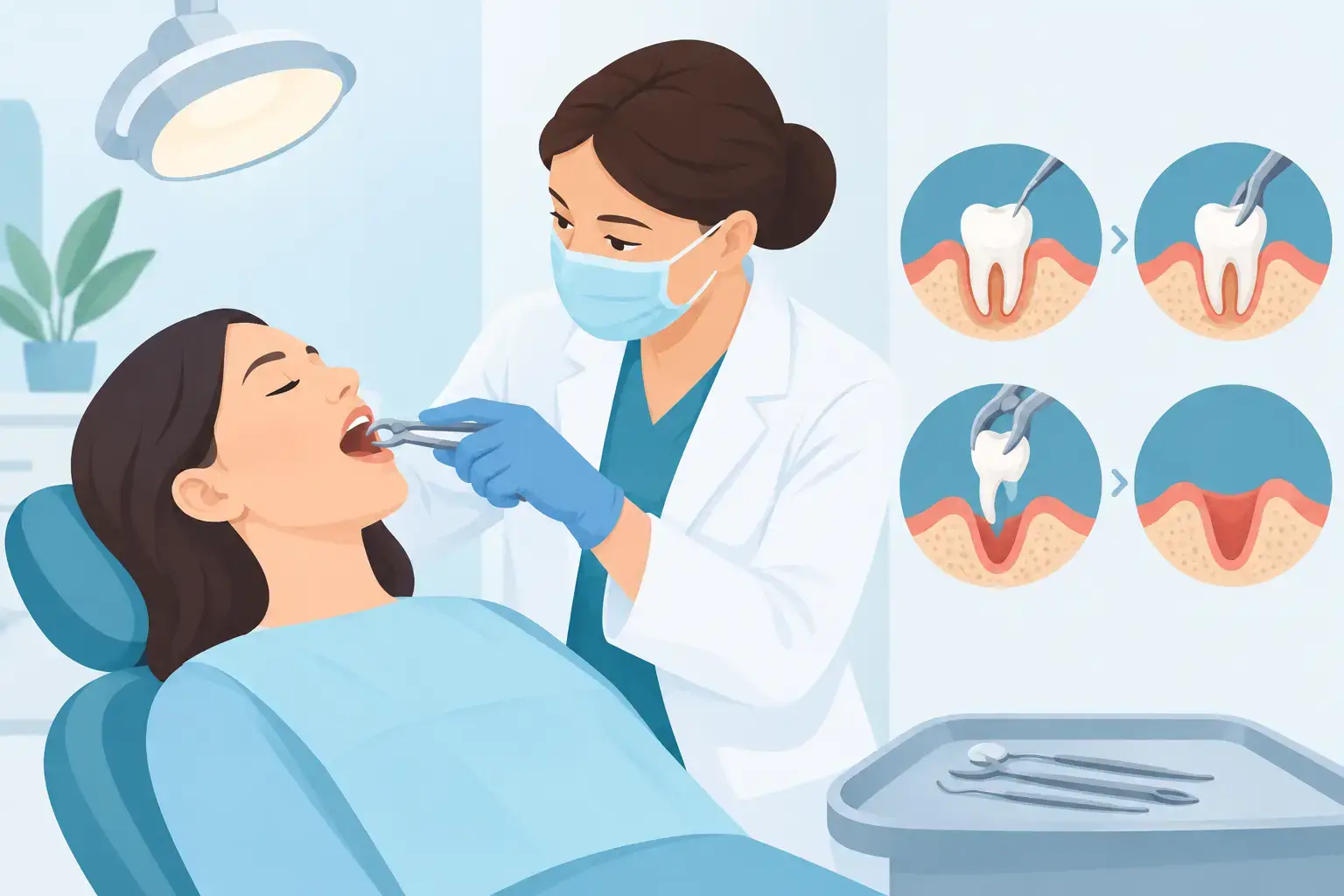
A simple extraction is used when the tooth is visible above the gumline. The dentist gently loosens the tooth and removes it with specialized instruments. A surgical extraction may be needed if a tooth is broken at the gumline, has curved or complex roots, or is impacted beneath gum tissue or bone. In that situation, a small incision may be made, and the tooth may be removed in sections to minimize trauma to surrounding tissue.
The procedure itself is often quicker than patients expect. What matters most is careful planning, profound numbing, and a technique that protects the surrounding bone and soft tissues whenever possible. This is especially valuable when an implant or another replacement option may be considered later.
The First 24 Hours of Healing
After the tooth is removed, a blood clot forms in the socket. This clot is the foundation of normal healing, so protecting it is one of the most important parts of aftercare. Your dentist will have you bite gently on gauze to control bleeding and will provide instructions specific to your procedure.
For the rest of the day, rest with your head elevated when possible. Mild oozing can be normal, but active bleeding that does not slow after firm pressure should be reported to your dental office. Swelling and tenderness are also common, particularly after surgical or wisdom tooth extraction. A cold pack applied outside the face in short intervals may help during the first day.
Avoid vigorous rinsing, spitting, smoking, vaping, and drinking through a straw. These actions can dislodge the clot and lead to dry socket, a painful condition in which the underlying bone and nerve endings are exposed. Alcohol should also be avoided while healing, particularly if you are taking prescription pain medication or antibiotics.
Choose soft, nutritious foods such as yogurt, scrambled eggs, soup that has cooled to a safe temperature, mashed vegetables, smoothies eaten with a spoon, and tender pasta. Drink plenty of water, but avoid anything very hot until numbness has completely worn off. As comfort improves, you can gradually return to your normal diet while avoiding hard, sharp, or crunchy foods near the extraction site.
Managing Discomfort and Supporting Recovery
Your dentist may recommend over-the-counter pain relievers, prescription medication, or a combination based on your procedure and health history. Take medications only as directed. Antibiotics are not necessary for every extraction, but when they are prescribed, take the full course unless your prescribing clinician advises otherwise.
Starting the day after surgery, gentle warm saltwater rinses can help keep the area clean. Do not swish forcefully. Let the water move gently around the mouth and allow it to fall out rather than spitting. Continue brushing the rest of your teeth, but use care around the extraction area until it is no longer tender.
Healing is not identical for everyone. A simple extraction may feel substantially better within a few days, while surgical extractions can take longer. The gum tissue usually closes over in the following weeks, but deeper bone healing continues for several months. Follow-up appointments are valuable because they allow your dentist to monitor healing and discuss next steps for your bite and smile.
When to Call Your Dentist
Some soreness, swelling, and minor bleeding are expected. Symptoms that worsen after initially improving deserve attention. Contact your dental office promptly if you have severe or increasing pain, heavy bleeding, fever, worsening swelling, a persistent foul taste or odor, rash, difficulty swallowing, or trouble breathing.
Dry socket often develops a few days after extraction and can cause intense, throbbing pain that may radiate toward the ear or jaw. It is treatable, but it should not be ignored. Call your dentist so the area can be evaluated and you can receive appropriate care.
Replacing a Missing Tooth: Why Timing Matters
Not every extracted tooth needs to be replaced. Wisdom teeth are the clearest example, and in some cases a missing tooth at the back of the mouth may have little effect on function. Still, many missing teeth should be addressed because neighboring teeth can shift, the opposing tooth may over-erupt, and chewing can become less balanced over time.
Replacement options may include a dental implant, bridge, or removable partial denture. Dental implants are often preferred when a patient is a good candidate because they replace the tooth root as well as the visible tooth. This can help preserve jawbone and avoid altering adjacent healthy teeth. A bridge may be a practical choice when neighboring teeth already need crowns, while a partial denture can provide an affordable, removable solution in certain situations.
The best timing depends on the reason for extraction, the amount of infection or bone loss present, overall health, and the planned replacement. Some patients may be candidates for immediate implant placement, while others benefit from healing or bone preservation first. A personalized conversation is far more useful than a one-size-fits-all timeline.
At Newport Beach Dentistry, extraction planning is approached with the same care as restorative treatment: protecting comfort, explaining options clearly, and considering what your smile will need next. If you are experiencing tooth pain, swelling, a broken tooth, or concerns about wisdom teeth, seeking an evaluation early can often make treatment simpler and help you move forward with confidence.