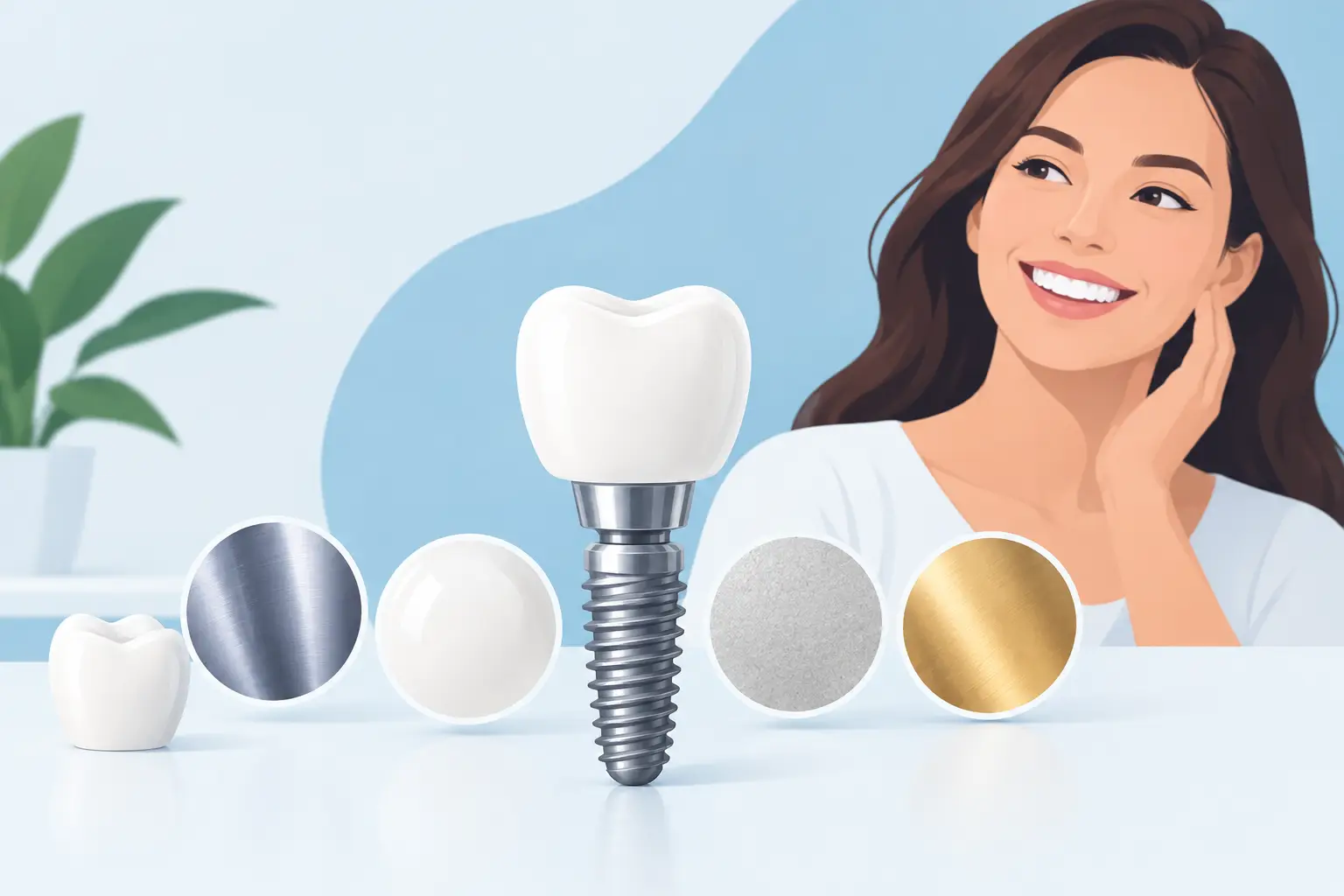
A dental implant is not a single material. It is a carefully designed system made up of the implant post beneath the gumline, the connector called an abutment, and the visible crown. Understanding the best materials for implants helps you ask better questions and make a decision that supports your health, comfort, and confidence for years to come.
For most patients, titanium remains the proven standard for the implant post. Zirconia can be an excellent metal-free alternative in select situations. Above the gumline, the ideal material often changes based on where the tooth is located, your bite forces, and how natural you want the restoration to look. The right answer is personal, not one-size-fits-all.
The Best Materials for Implants Start Below the Gumline
The implant post replaces a tooth root. It is placed into the jawbone and, over time, the bone bonds to its surface through a process called osseointegration. This stable connection is what allows an implant-supported tooth to function much like a natural tooth.
Titanium: the established choice
Titanium and titanium alloys have been used in dental implants for decades. Their long clinical history is a major reason they are widely used. Titanium is lightweight, strong, corrosion-resistant, and highly compatible with the body. Most importantly, it has an exceptional track record of integrating with healthy jawbone.
Titanium implants also come in many shapes, sizes, and surface designs. That flexibility can be valuable when a patient has limited bone volume, needs a tooth replaced in a precise location, or requires a more complex full-mouth restoration. For patients receiving several implants to support a bridge or denture, titanium often offers the widest range of predictable treatment options.
Some patients worry about metal sensitivity. True titanium allergy is considered uncommon, but it is still reasonable to discuss a history of metal reactions, autoimmune concerns, or sensitivities with your dentist before treatment. A thorough health history and personalized evaluation matter more than assumptions.
Zirconia: a metal-free alternative
Zirconia implants are made from a strong ceramic material that is naturally white. They may appeal to patients seeking a metal-free restoration or those concerned about a gray shade near the gumline. Because zirconia is tooth-colored, it can offer an aesthetic advantage in the front of the mouth for patients with thin gum tissue.
However, zirconia implants are not automatically better simply because they are metal-free. They have a shorter long-term clinical history than titanium and may offer fewer design choices in certain cases. Some zirconia systems are one-piece, meaning the abutment and implant post are connected. This can make placement especially technique-sensitive because the angle must be planned very precisely.
For a healthy patient with favorable bone and bite conditions, zirconia may be an appropriate choice. For more complex cases, titanium may provide greater versatility. The best option depends on the anatomy of your jaw, the tooth being replaced, gum health, and the restoration your dentist is planning.
The Visible Tooth Material Matters Just as Much
Once the implant has healed, the final restoration is created. This includes the abutment, which joins the post to the crown, and the crown itself. These materials strongly influence the appearance of your smile and how the implant holds up to everyday chewing.
Abutments: titanium or zirconia
A titanium abutment is durable and reliable, particularly for back teeth where chewing pressure is greatest. It can be an excellent choice when strength is the first priority. In many cases, the abutment is hidden entirely by the crown and gum tissue.
A zirconia abutment may be preferable for a front tooth, especially when a patient has thin or translucent gum tissue. Its white color can help prevent a dark shadow from showing through near the gumline. Your dentist may also recommend a custom abutment to support the gum tissue in a way that creates a more natural contour around the crown.
Zirconia crowns: strength with a natural appearance
Zirconia is one of the most popular materials for implant crowns. Modern zirconia is exceptionally strong, making it well suited for molars and patients who place heavy pressure on their teeth. It is also biocompatible and does not contain metal.
Not all zirconia looks the same. Highly durable zirconia can be more opaque, while newer translucent varieties are designed to better mimic natural enamel. For a back tooth, a stronger, more opaque zirconia may be ideal. For a front tooth, a more translucent option may create a more lifelike result. The choice involves balancing strength and esthetics.
Lithium disilicate: excellent esthetics in the smile zone
Lithium disilicate is a glass-ceramic material known for its beautiful translucency. It can be an excellent option for a single front implant crown because it reflects light in a way that closely resembles a natural tooth.
The trade-off is that lithium disilicate is generally not the first choice for areas exposed to extreme biting forces, such as a molar in a patient who clenches or grinds. It may be very appropriate in the right location, but the material should be selected with your bite in mind, not appearance alone.
Porcelain-fused-to-metal: a proven option with limits
Porcelain-fused-to-metal crowns combine a metal interior with a porcelain outer layer. They have served dentistry well for many years and can be durable. Yet they may show a dark line at the gumline over time, particularly if gums recede, and the porcelain layer can chip.
For these reasons, all-ceramic options such as zirconia are now frequently favored when patients want a highly natural appearance. Still, porcelain-fused-to-metal may be recommended in particular restorative situations. A good treatment plan accounts for function, esthetics, available space, and cost.
What Determines the Right Implant Material for You?
Material selection is only one part of successful implant treatment. Even the finest crown material cannot compensate for untreated gum disease, insufficient bone, poorly controlled grinding, or an implant placed without careful planning.
Your dentist will consider the location of the missing tooth, your bone density and volume, gum thickness, bite alignment, and oral hygiene habits. A front tooth often calls for greater attention to color, translucency, and gum contours. A back tooth must withstand more force. Someone with bruxism may need a particularly strong crown material and a protective nightguard.
Digital imaging and detailed treatment planning help the dental team assess these factors before implant placement. In some cases, bone grafting or periodontal treatment is recommended first to create a healthier, more stable foundation. This may add time to treatment, but it can protect the long-term result.
Material Quality Is Not the Only Measure of Success
Patients sometimes focus on finding the “best” implant brand or crown material, but long-term success depends on the full treatment process. Precise placement, a well-designed restoration, healthy gums, and consistent home care all affect how an implant performs.
After receiving an implant, brush twice daily, clean carefully around the restoration, and attend regular professional cleanings and exams. Although an implant cannot develop a cavity, the gum and bone around it can become infected. Early inflammation around an implant is treatable, while advanced disease can threaten the support holding it in place.
A well-made implant should feel comfortable, look natural, and allow you to eat and speak with confidence. At Newport Beach Dentistry, material recommendations are based on your complete oral health picture, not a generic preference or a single cosmetic goal.
The most helpful next step is a personal consultation. With a close examination, digital imaging, and an honest conversation about your goals, your dentist can recommend materials that fit your smile, your bite, and the future you want for your oral health.