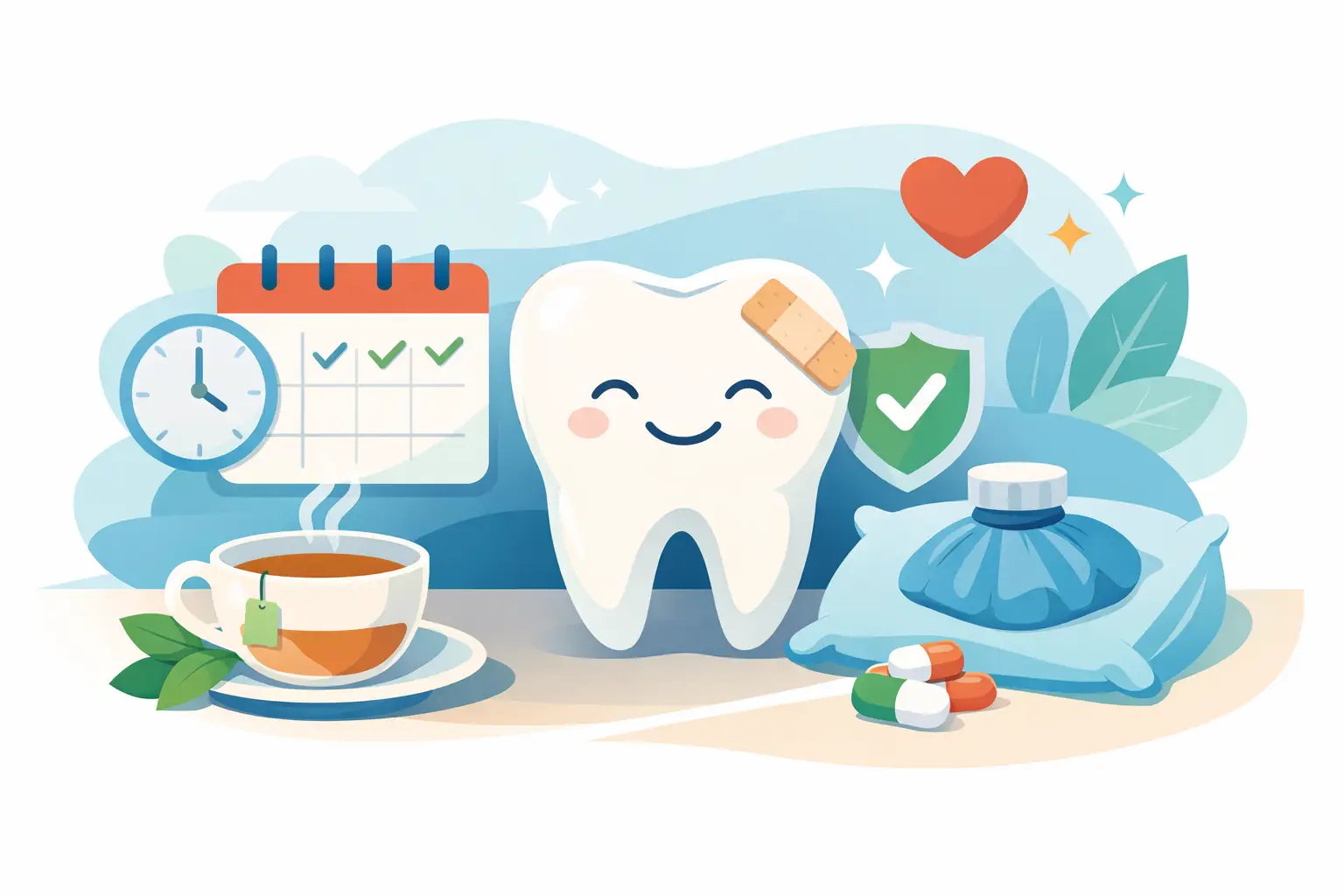
A root canal relieves the pain and infection inside a tooth, but the tooth and surrounding tissues may still feel tender once the numbness fades. The most useful root canal recovery tips are not complicated: protect the treated tooth, follow your dentist’s instructions, and pay attention to symptoms that do not follow the expected healing pattern.
Many patients are pleasantly surprised by how manageable recovery is. Mild soreness when biting, jaw fatigue from holding your mouth open, and tenderness around the tooth are common for several days. Recovery can vary, though, depending on how inflamed or infected the tooth was before treatment, whether you have a temporary restoration, and your overall health.
What to Expect After a Root Canal
Local anesthetic can leave your lip, cheek, or tongue numb for a few hours. Until normal sensation returns, avoid hot drinks and chewing so you do not accidentally bite or burn yourself. Once numbness is gone, the treated tooth may feel different from the teeth around it for a short time. This is usually related to inflammation in the tissues that support the tooth, not a sign that the procedure failed.
A dull ache or sensitivity to pressure often improves gradually over the first few days. If the tooth was severely infected beforehand, tenderness can last longer. The key is that discomfort should steadily improve, rather than become more intense or spread.
Root Canal Recovery Tips for the First Few Days
1. Use pain medication as directed
Your dentist may recommend an over-the-counter anti-inflammatory medication, acetaminophen, or a prescription option based on your medical history and level of discomfort. Take medications exactly as instructed. Do not combine medicines or exceed the labeled dose without guidance from your dentist, physician, or pharmacist.
If you received antibiotics, take the full course as prescribed unless your dentist or physician tells you otherwise. Antibiotics are not needed for every root canal, but when they are prescribed, completing the medication helps address the infection being treated.
2. Choose softer foods and chew thoughtfully
For the first day or two, choose foods that are easy to chew, such as yogurt, eggs, oatmeal, soup that is not overly hot, pasta, cooked vegetables, or smoothies eaten with a spoon. Avoid sticky candy, nuts, ice, popcorn, hard crusts, and other foods that place concentrated force on the tooth.
If a temporary filling or crown is in place, avoid chewing on that side whenever possible until your final restoration is completed. A temporary restoration is designed to protect the tooth between appointments, but it is not as durable as a permanent filling or crown. Biting down on something hard can crack it, loosen it, or damage the tooth underneath.
3. Keep your mouth clean, gently
Continue brushing twice daily and flossing as usual unless your dental team gives you different instructions. Good oral hygiene supports healing by limiting plaque and bacteria around the tooth and gums. Use a soft-bristled toothbrush and be gentle near any tender area.
It is normal for the gums around the treated tooth to feel mildly sensitive. Warm saltwater rinses can be soothing: mix a small amount of salt into warm water, swish gently, and spit it out. Do not rinse aggressively, as forceful swishing can irritate already-sensitive tissues.
4. Give your jaw a break
Some post-treatment soreness comes from keeping your mouth open during the procedure, especially after a longer appointment. Avoid gum, chewy foods, and activities that require heavy jaw use for a day or two. A warm compress against the outside of the jaw may help relax tight muscles if your dentist has not advised against it.
5. Do not postpone your final restoration
A root canal removes infected or damaged pulp while preserving the natural tooth. However, a tooth that has had root canal therapy can be more vulnerable to fracture, particularly a back tooth that absorbs substantial chewing force. A permanent filling or crown is often recommended to restore strength and seal the tooth.
Schedule and keep your follow-up appointment. Waiting too long to place the final restoration can increase the risk of a broken tooth, leakage around a temporary material, or reinfection. Your dentist will recommend the restoration that best fits the tooth’s location, remaining structure, bite, and appearance goals.
6. Avoid tobacco and limit alcohol
Tobacco use can interfere with oral healing and increase the risk of gum problems around the treated tooth. Avoid smoking, vaping, and chewing tobacco while you heal, and consider using the recovery period as a chance to discuss a long-term cessation plan with your healthcare provider.
Alcohol can interact with certain pain medications and antibiotics. If you have been prescribed medication, ask your dentist or pharmacist whether alcohol is safe. When in doubt, avoid it until you have finished the medication and are feeling well.
7. Pay attention to your bite
After a root canal or temporary restoration, tell your dentist if the tooth feels as though it hits first when you close your mouth. A high spot can make biting painful and place unnecessary stress on the tooth. This is often a simple adjustment, but it is better to address it promptly than to keep avoiding the tooth.
When to Call Your Dentist
Mild discomfort is expected. Severe pain, swelling, or symptoms that worsen after initially improving deserve a call to your dental office. Your care team can determine whether you need an adjustment, an examination, or additional treatment.
Contact your dentist promptly if you notice significant facial or gum swelling, fever, a persistent bad taste or drainage, a rash or other reaction after starting medication, or a temporary filling or crown that comes out or breaks. Call if pain is not controlled by the medication plan you were given, or if you develop pressure that makes it difficult to bite.
Seek urgent medical care for trouble breathing or swallowing, rapidly increasing facial swelling, or swelling around the eye or neck. These symptoms can signal a serious spreading infection and should not wait for a routine appointment.
Supporting Long-Term Success After Root Canal Treatment
A successfully treated tooth can serve you for many years with consistent care. Once your final restoration is complete, brush thoroughly, clean between teeth daily, and keep regular preventive visits. Digital X-rays and clinical exams help your dentist monitor the treated tooth, surrounding bone, gum health, and the condition of the crown or filling over time.
It also helps to protect your teeth from excessive force. If you grind or clench, especially at night, a custom night guard may be recommended to reduce pressure on restorations and natural teeth. If you play contact sports, wear a properly fitted mouthguard. These small protective measures can make a meaningful difference for a tooth that has already needed extensive care.
Root canal treatment is designed to save your natural tooth and get you back to comfortable eating, speaking, and smiling. Be patient with the first few days of healing, protect the tooth until it is fully restored, and let your dentist know if something does not feel right. A quick conversation can provide reassurance or prevent a small issue from becoming a larger one.