
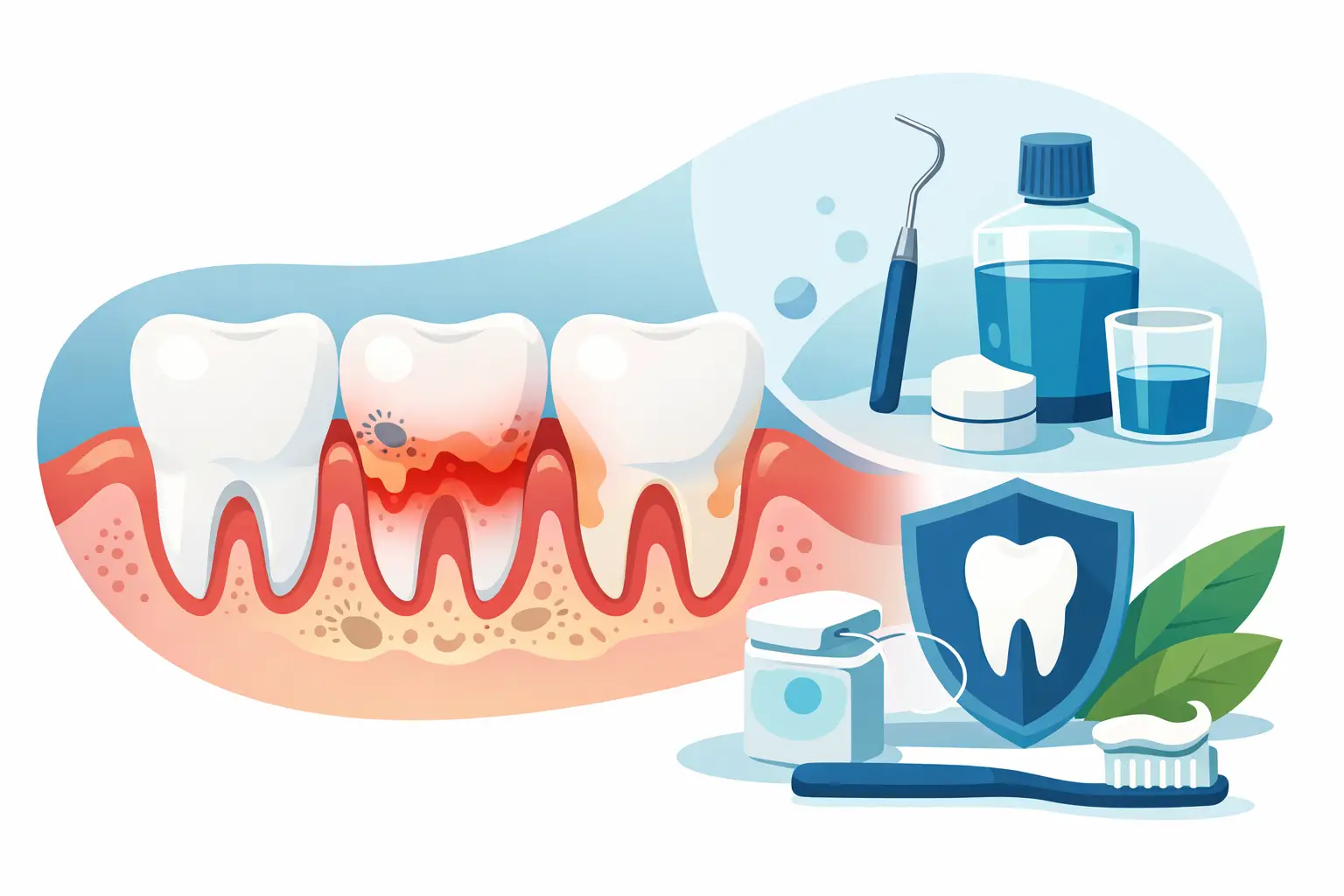
Bleeding when you brush is easy to dismiss, especially when it stops quickly. But healthy gums generally do not bleed during gentle brushing or flossing. Gum disease often begins quietly, with subtle changes that may not cause pain, then can progress into a condition that threatens the bone and tissues supporting your teeth.
The encouraging news is that early gum disease is often reversible, and even more advanced periodontal disease can be managed with the right care. The key is recognizing changes early, receiving an accurate diagnosis, and following a plan that fits your health, comfort, and long-term goals.
What Is Gum Disease?
Gum disease, also called periodontal disease, is an infection and inflammatory response affecting the gums and the structures that hold teeth in place. It begins when bacterial plaque is allowed to collect along and below the gumline. Plaque is a sticky film that forms throughout the day. If it is not thoroughly removed, it can harden into tartar, also called calculus, which cannot be removed with a toothbrush or floss alone.
The earliest stage is gingivitis. Gums may look red or puffy, bleed easily, or feel tender. At this stage, there has not yet been permanent damage to the bone supporting the teeth. A professional cleaning and consistent home care can often restore gum health.
When inflammation remains untreated, it can advance to periodontitis. The gums may begin pulling away from the teeth, forming pockets where bacteria can collect. Over time, the body’s inflammatory response and bacterial infection can damage the bone and connective tissue around the teeth. This damage is not fully reversible, but thoughtful periodontal treatment can stop or significantly slow progression.
Signs of Gum Disease That Deserve Attention
Many patients are surprised to learn they have periodontal disease because it is not always painful. Paying attention to changes in your mouth can make a meaningful difference. Common warning signs include bleeding during brushing or flossing, persistent bad breath, gum tenderness, swelling, or gums that appear darker or redder than usual.
Other signs may include gums that have receded and made teeth look longer, new spaces between teeth, sensitivity near the gumline, or a bite that feels different. Teeth that become loose or shift position require prompt evaluation. These changes do not always mean gum disease is the cause, but they should never be ignored.
A dental examination is the only reliable way to assess the health of the tissues below the gumline. Your dentist or hygienist may measure the spaces between teeth and gums, check for bleeding and inflammation, evaluate mobility, and use digital X-rays to review bone levels. This allows treatment to be based on what is actually happening rather than on symptoms alone.
Why Gum Disease Develops
Plaque buildup is the primary cause, but several factors can increase a person’s risk or make the condition harder to control. Inadequate brushing and flossing matter, but gum disease is not simply a reflection of whether someone takes good care of their teeth. Genetics, overall health, medications, and lifestyle all play a role.
Smoking and tobacco use are among the strongest risk factors. They can reduce blood flow to the gums, mask bleeding, slow healing, and make treatment less predictable. Diabetes also has a close relationship with periodontal health. High blood sugar can make infections more difficult to manage, while active gum inflammation can make blood sugar harder to control.
Hormonal changes during pregnancy, puberty, or menopause can make gums more sensitive to plaque. Certain medications can contribute to dry mouth or gum enlargement. Stress, clenching and grinding, crowded teeth, poorly fitting restorations, and inconsistent professional cleanings may also complicate oral hygiene. For some patients, a family history of periodontal disease means closer monitoring is especially valuable.
How Periodontal Treatment Protects Your Smile
Treatment depends on the stage of disease, the depth of periodontal pockets, bone support, medical history, and how your mouth responds to care. There is no one-size-fits-all solution, which is why a personalized plan is so important.
For gingivitis, a thorough professional cleaning and improved daily plaque removal may be all that is needed. Your dental team can show you where plaque tends to remain and recommend techniques or tools that make home care more effective. Small adjustments, such as using a soft-bristled toothbrush correctly or adding an interdental cleaner, can have a significant effect.
For periodontitis, treatment often begins with scaling and root planing. This deep cleaning removes tartar and bacteria from beneath the gumline and smooths root surfaces so the gums can heal more effectively. Depending on the condition, localized antimicrobial treatment, laser therapy, or ultrasonic instruments may be used to enhance care and improve comfort.
After initial treatment, the gums need time to heal before they can be reassessed. Some patients respond well and move into a periodontal maintenance schedule. Others may need additional treatment if deep pockets, inflammation, or bone loss remain. In more advanced situations, surgical periodontal care or bone and tissue grafting may be recommended to preserve teeth and improve stability.
The goal is not simply to make gums look better. Periodontal care aims to control infection, reduce inflammation, preserve supporting bone, and help you keep your natural teeth for as long as possible. If a tooth cannot be saved, careful management of gum and bone health is also essential before considering a dental implant or other replacement option.
What You Can Do at Home
Professional treatment and home care work together. A deep cleaning cannot protect your gums indefinitely if plaque is allowed to rebuild, and even excellent brushing cannot remove tartar once it has hardened below the gumline.
Brush twice daily with a soft-bristled toothbrush and fluoride toothpaste, using gentle pressure along the gumline. Clean between teeth once a day with floss, interdental brushes, or another device recommended for your specific spaces and restorations. If your gums bleed when you begin flossing, do not stop automatically. Gentle, consistent cleaning may reduce bleeding as inflammation improves. However, continued bleeding should be evaluated rather than accepted as normal.
An antimicrobial mouth rinse may be useful for certain patients, but it is not a substitute for brushing, interdental cleaning, or professional care. The best routine is the one you can perform consistently and correctly. Your dental team can help tailor it around braces, implants, bridges, crowns, dexterity concerns, or sensitivity.
Why Ongoing Maintenance Matters
Once periodontitis has occurred, periodontal maintenance is usually a lifelong commitment. This does not mean your condition will inevitably worsen. It means your gums need regular monitoring because the bacteria associated with periodontal disease can repopulate below the gumline over time.
Maintenance visits are often recommended more frequently than standard cleanings, commonly every three to four months. The right interval depends on pocket depths, bleeding, bone levels, tobacco use, diabetes, home care, and past response to treatment. These visits allow your dentist to detect small changes before they become a larger problem.
For families in Newport Beach, having preventive, periodontal, restorative, and implant care available through one dental home can make long-term treatment easier to coordinate. It also means your care plan can adapt as your needs change, whether the goal is protecting natural teeth, improving comfort, or restoring confidence in your smile.
When to Schedule an Evaluation
Schedule an appointment if you notice bleeding gums, persistent bad breath, recession, swelling, sensitivity, or changes in how your teeth fit together. You should also consider an evaluation if it has been a long time since your last cleaning, you have diabetes, you use tobacco, or gum disease runs in your family.
Periodontal disease is manageable, and early care is usually simpler, more comfortable, and less costly than waiting for visible damage. A focused examination can give you clear answers and a practical path forward. Your gums support every smile, meal, conversation, and photograph – giving them timely attention is a lasting investment in your health and confidence.