A missing tooth can change more than a photograph. You may start chewing on one side, avoiding certain foods, or feeling self-conscious when you speak or smile. The best options for missing teeth depend on where the tooth is missing, the health of your gums and jawbone, your goals for appearance and comfort, and the kind of long-term care that feels right for you.
There is no one-size-fits-all replacement. A single missing front tooth, several missing molars, and a full arch of missing teeth each call for a different conversation. The good news is that modern dentistry offers dependable solutions that can restore function, protect your oral health, and help your smile feel like your own again.
Why Replacing Missing Teeth Matters
When a tooth is lost, the surrounding teeth can gradually shift into the open space. That movement may change your bite, create areas that are harder to clean, and place extra pressure on remaining teeth. Missing teeth can also make it harder to eat a balanced diet, particularly when back teeth are affected.
The jawbone beneath a missing tooth needs stimulation from chewing to maintain its volume. Over time, bone loss can occur in that area. This is one reason it is wise to discuss replacement options sooner rather than later, even if the gap is not causing pain today.
Replacement is not only about appearance. It is a way to support the balance, strength, and long-term health of your entire smile.
Best Options for Missing Teeth: A Closer Look
The right restoration should fit your clinical needs and your everyday life. Your dentist will look at the condition of nearby teeth, your bite, gum health, bone levels, medical history, timeline, and budget before making a recommendation.
Dental implants
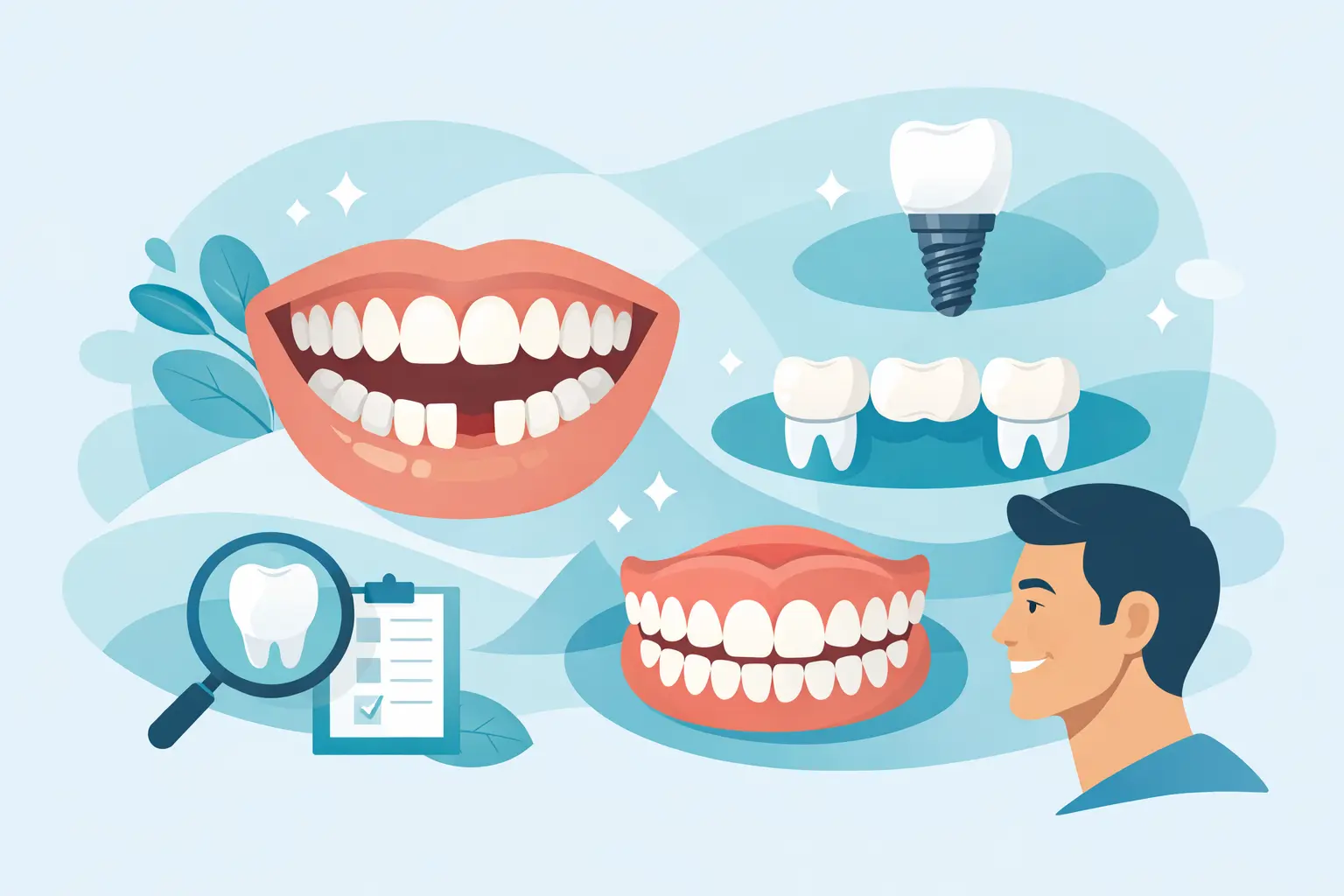
A dental implant replaces a missing tooth root with a small post placed in the jawbone. After healing, the implant supports a custom crown, bridge, or denture. For a single missing tooth, an implant and crown can look and function much like a natural tooth without requiring the teeth next to it to be altered.
Implants are often considered the closest replacement to natural teeth because they are fixed in place and help stimulate the jawbone. With consistent brushing, flossing, and professional care, they can provide a durable long-term solution. They can also support multiple replacement teeth, making them useful for patients who are missing several teeth or an entire arch.
Implant treatment takes planning and healing time. Some patients need bone grafting or periodontal treatment before implant placement, especially if bone loss or gum disease is present. Not every patient is immediately ready for implants, but many can become candidates with personalized preparation.
Dental bridges
A dental bridge fills the space left by one or more missing teeth. In a traditional bridge, crowns are placed over the healthy teeth on either side of the gap, with a replacement tooth attached between them. The bridge is cemented in place, so it does not come out for cleaning.
Bridges can be an excellent option when the neighboring teeth already need crowns because of large fillings, damage, or wear. They are typically completed more quickly than an implant and can restore chewing ability and smile appearance effectively.
The trade-off is that a traditional bridge requires reshaping the supporting teeth. Cleaning under a bridge also takes a little extra attention, often with floss threaders or specialized brushes. An implant-supported bridge may be considered when several adjacent teeth are missing and suitable bone is available.
Partial dentures
A removable partial denture replaces several missing teeth while fitting around the teeth that remain. Today’s partial dentures can be designed with more natural-looking materials and carefully matched replacement teeth. They are often a practical choice when multiple teeth are missing in different areas of the mouth or when fixed treatment is not the best fit.
Partial dentures are generally more affordable upfront than implants and can often be made without surgery. They do require daily removal and cleaning, and they may need adjustments as the mouth changes over time. A well-designed partial should feel stable and comfortable, but it may take a short adjustment period while speaking and eating.
Full dentures and implant-supported dentures
Full dentures replace all teeth in the upper arch, lower arch, or both. Conventional dentures rest on the gums and can restore facial support, appearance, and the ability to eat a wider variety of foods. They remain a valuable treatment option for many patients, especially when extensive tooth loss has occurred.
For patients seeking greater stability, implant-supported dentures can be a meaningful upgrade. A small number of strategically placed implants can help secure a removable denture, while other systems support a fixed full-arch bridge that stays in place. The best design depends on bone availability, health considerations, hygiene needs, and personal preference.
Implant support can reduce movement during meals and conversations. It may also help preserve bone more effectively than a conventional denture alone. However, treatment is more involved and carries a higher initial investment. A consultation can clarify whether conventional dentures, implant-retained dentures, or fixed full-arch restoration best aligns with your goals.
How to Choose the Right Tooth Replacement
Start with function. If you are missing a back tooth but can still eat comfortably, you may wonder whether replacement is necessary. The answer depends on your bite, the condition of neighboring teeth, and the risk of shifting or overloading other areas. If a front tooth is missing, aesthetics and speech may understandably be your first concerns, but bite support and gum health still matter.
Next, consider permanence and maintenance. Implants and fixed bridges stay in place, while partial and full dentures are removable. Neither approach is automatically better. Some patients prefer a non-surgical solution that can be completed efficiently. Others value the stability and bone-preserving benefits that implants may offer over many years.
Cost should be discussed openly as part of treatment planning. The least expensive option at the start is not always the lowest-cost choice over time, particularly if repairs, relines, or replacement become necessary. At the same time, the most comprehensive option is not always necessary for every patient. A thoughtful plan should respect your health needs, priorities, and financial comfort.
The Foundation Comes First: Gums, Bone, and Bite
Before placing a crown, bridge, denture, or implant, your dentist should evaluate the foundation supporting it. Untreated gum disease can weaken the tissues around teeth and implants. Active decay, cracked teeth, bite imbalance, and teeth with a poor long-term outlook may also affect which treatment makes sense.
Digital X-rays and detailed examinations help identify bone levels, root health, hidden infection, and the anatomy of the treatment area. For implant planning, advanced imaging may be used to evaluate the amount and position of available bone. This diagnostic step is not an obstacle to treatment. It is how a restoration is designed to last.
If you have delayed dental care because of anxiety, discomfort, or uncertainty about cost, you are not alone. A compassionate dental team can explain each stage clearly, discuss comfort options, and pace treatment in a way that feels manageable.
What to Expect During Treatment
The process begins with a comprehensive consultation. Your dentist will listen to what you want to change, assess your oral health, and explain the options that are appropriate for your situation. You should leave understanding the advantages, limitations, expected timeline, maintenance needs, and costs of each recommended approach.
Some restorations, such as bridges or dentures, may be completed over several appointments once your teeth and gums are ready. Implant treatment often includes surgical placement followed by a healing period before the final crown or prosthesis is attached. Temporary teeth may be available in many cases, so you do not have to feel left without a smile during treatment.
After your restoration is complete, ongoing care protects the investment. Implants, bridges, and dentures all need daily cleaning and regular dental visits. Professional exams allow your dentist to monitor the fit, bite, gums, and supporting teeth before small concerns become larger problems.
A missing tooth does not have to define how you eat, speak, or feel when you smile. The most helpful next step is a personalized examination that looks beyond the gap itself and focuses on the healthy, comfortable smile you want to maintain for years to come.