Wisdom teeth can remain quiet for years, then suddenly cause a sore jaw, swollen gums, or pressure near the back of the mouth. For some patients, these third molars grow in normally and need only routine monitoring. For others, limited space or an unfavorable position can create problems that are easier to treat before they become painful or damaging.
At Newport Beach Dentistry, we evaluate wisdom teeth as part of your overall oral health, not as a one-size-fits-all reason for surgery. The right approach depends on your tooth position, symptoms, gum health, neighboring teeth, and long-term needs.
What Are Wisdom Teeth?
Wisdom teeth are the last permanent molars to develop, typically appearing between the late teens and mid-twenties. Most people can have up to four, located at the very back of the upper and lower jaws. Because they arrive after the rest of the adult teeth are already in place, there may not be enough room for them to erupt fully.
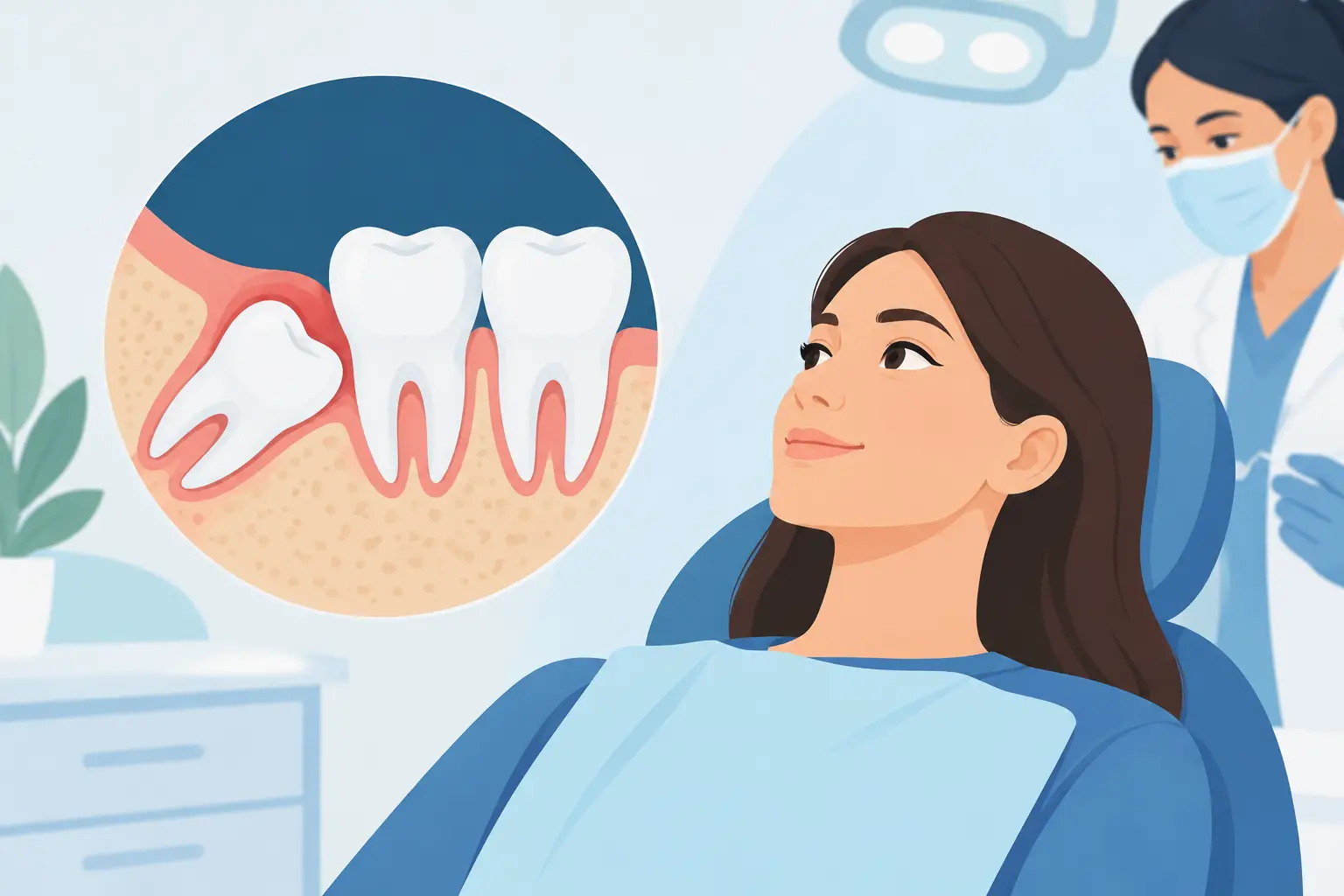
A wisdom tooth may come in straight and remain easy to clean. It may also emerge only partly through the gums, tilt toward the tooth in front of it, or stay completely beneath the gum and bone. A tooth that cannot erupt into a healthy, functional position is called impacted.
Impacted teeth are common, but they do not always require immediate removal. Digital X-rays allow your dentist to see the tooth’s position, root development, available jaw space, and relationship to nearby structures. That information guides a personalized recommendation.
When Wisdom Teeth Need Attention
Pain is a clear reason to schedule an exam, but discomfort is not the only sign that a wisdom tooth needs care. Partially erupted lower wisdom teeth can create a pocket of gum tissue where food and bacteria collect. This may lead to recurring inflammation or infection, often called pericoronitis.
You may notice tenderness at the back of the jaw, swollen or bleeding gums, bad breath that does not improve with brushing, an unpleasant taste, or difficulty opening your mouth comfortably. Pain can also radiate toward the ear or throat, which is why an examination is more useful than trying to identify the source on your own.
Removal may be recommended when a wisdom tooth is causing repeated infection, decay, gum disease, cyst formation, or damage to the tooth beside it. A tooth that is angled forward can press against the second molar, creating an area that is difficult to clean and vulnerable to cavities or bone loss. In some cases, removing a problem tooth protects a neighboring tooth that is far more important for chewing.
On the other hand, a fully erupted wisdom tooth that is healthy, properly positioned, and easy to clean may be kept. The decision is not based on age alone or on the assumption that every wisdom tooth must come out. Regular examinations and X-rays help determine whether monitoring remains the best choice.
Why Timing Can Matter
When removal is appropriate, earlier treatment can sometimes be less complex. In younger patients, the roots may not be fully formed and the surrounding bone is often less dense. Healing can also be more predictable. Still, adults can have wisdom teeth removed safely when their clinical needs call for it.
Timing should be based on the individual. Some patients benefit from planned treatment before travel, pregnancy, orthodontic treatment, or a period when recurring flare-ups would be especially inconvenient. Others may be better served by watching a stable tooth over time. Your dentist can explain the trade-offs clearly, including the risks of delaying treatment and the expected recovery from surgery.
What Happens During a Wisdom Tooth Evaluation?
A thorough evaluation begins with a conversation about symptoms, dental history, medications, and any concerns about anxiety or comfort. Your dentist will examine the gums and bite, then review digital X-rays to assess tooth position and root anatomy.
For lower wisdom teeth, one key consideration is the proximity of the roots to the nerve that supplies feeling to the lower lip and chin. For upper teeth, the relationship to the sinus may matter. These details influence the surgical plan and help your provider discuss potential risks honestly before treatment.
If removal is recommended, you will receive instructions tailored to the complexity of the procedure and your health history. Patients who feel nervous about dental treatment should mention it early. Comfort-focused options and a calm, well-explained plan can make a meaningful difference.
What to Expect During Removal
Wisdom tooth removal is performed with local anesthetic to numb the treatment area. Depending on the procedure and your level of anxiety, additional sedation options may be available. The goal is for you to remain comfortable while the dental team works carefully and efficiently.
A fully erupted tooth may be removed much like another molar. An impacted tooth may require a small opening in the gum tissue and, in some cases, gentle removal of a small amount of bone. The tooth may be divided into smaller sections so it can be removed with less pressure on the surrounding area. Stitches may be placed afterward, and many are designed to dissolve on their own.
The procedure itself is only one part of the experience. Clear aftercare instructions, access to guidance if questions arise, and follow-up when needed all support a smoother recovery.
Recovery: The First Few Days Matter Most
Mild swelling, tenderness, and limited jaw opening are common after wisdom tooth removal, especially for impacted lower teeth. Swelling often peaks around the second or third day before gradually improving. Your provider may recommend prescribed or over-the-counter pain medication based on your needs and medical history.
Rest on the day of surgery, use cold packs as directed, and choose soft foods such as yogurt, eggs, mashed potatoes, soup that has cooled, or smoothies eaten with a spoon. Hydration is helpful, but avoid using straws. The suction can dislodge the protective blood clot that forms in the extraction site.
For the first day, avoid vigorous rinsing, spitting, smoking, vaping, and strenuous exercise. These activities can interfere with clot formation and raise the risk of dry socket, a painful condition in which the clot is lost too soon. Beginning the day after surgery, gentle rinsing with warm salt water may be recommended. Brush the rest of your mouth normally, but be careful around the surgical area.
Contact your dental office if bleeding does not slow with the instructions you were given, pain becomes severe after initially improving, swelling worsens after several days, or you develop fever, trouble swallowing, or difficulty breathing. These symptoms deserve prompt professional attention.
A Personalized Plan Protects More Than Comfort
Wisdom tooth decisions are about preserving health in the back of the mouth, where problems can remain hidden until they affect nearby teeth or gums. Whether your best path is routine monitoring or removal, the value of an exam is knowing where you stand and why.
If you have pressure, swelling, recurring gum irritation, or questions about wisdom teeth seen on an X-ray, a thoughtful evaluation can replace uncertainty with a clear plan for your comfort and long-term smile health.