A chipped tooth can happen in a single bite of popcorn, a fall at the pool, or an unexpected bump during a game. If you are wondering how to fix chipped tooth damage, the right answer depends on how much enamel is missing, whether the tooth is painful, and where the chip is located. Small chips are often repaired quickly, while larger breaks may need treatment that protects the tooth from further damage.
The most reassuring first step is this: many chipped teeth can be restored with results that look natural and feel comfortable. Prompt dental care helps preserve the remaining tooth structure, reduce sensitivity, and prevent a minor issue from becoming a more involved repair.
What to Do Immediately After Chipping a Tooth
Rinse your mouth gently with warm water to clear away any small pieces and check for bleeding. If you can find the broken fragment, place it in a clean container with milk or saliva and bring it to your appointment. In some cases, a dentist may be able to reattach it.
Use a cold compress on the outside of your cheek for swelling or soreness. If the tooth has a sharp edge, dental wax or sugar-free gum can temporarily cover it and protect your tongue or cheek. Choose soft foods and avoid chewing on that side until the tooth has been evaluated.
Do not try to file the tooth yourself, use household glue, or place an over-the-counter temporary filling product directly on a deep break. These approaches can irritate the tooth, alter the bite, or make a professional repair more difficult. An over-the-counter pain reliever may help if you can take it safely, but persistent pain needs dental attention.
When a Chipped Tooth Is an Emergency
Call a dentist promptly if the chip is accompanied by severe pain, a loose tooth, significant bleeding, swelling, facial injury, or a tooth that has changed color. These signs can indicate damage beyond the outer enamel.
You should also seek urgent care if the tooth has a large missing section, the inner pink or red tissue is visible, or the tooth is sharp enough to cut your mouth. Even when there is no pain, a same-day or timely appointment is wise after a significant break. Teeth can develop sensitivity or cracks later, especially after trauma.
How to Fix Chipped Tooth Damage: Treatment Options
A dentist will examine the tooth, surrounding gums, and bite. Digital X-rays and intraoral imaging may be used to look for fractures below the gumline or injury to the nerve. Treatment is personalized because a tiny edge chip on a front tooth has very different needs from a fractured back tooth that absorbs heavy chewing pressure.
Dental Contouring for a Very Small Chip
If only a small amount of enamel has chipped and the tooth remains smooth, strong, and comfortable, contouring may be enough. The dentist gently reshapes and polishes the edge to remove roughness and restore a balanced appearance.
This conservative option usually requires little or no anesthesia and preserves nearly all of the natural tooth. It is best for minor cosmetic imperfections, not for chips that expose dentin, affect the bite, or weaken the tooth.
Dental Bonding for Natural-Looking Repair
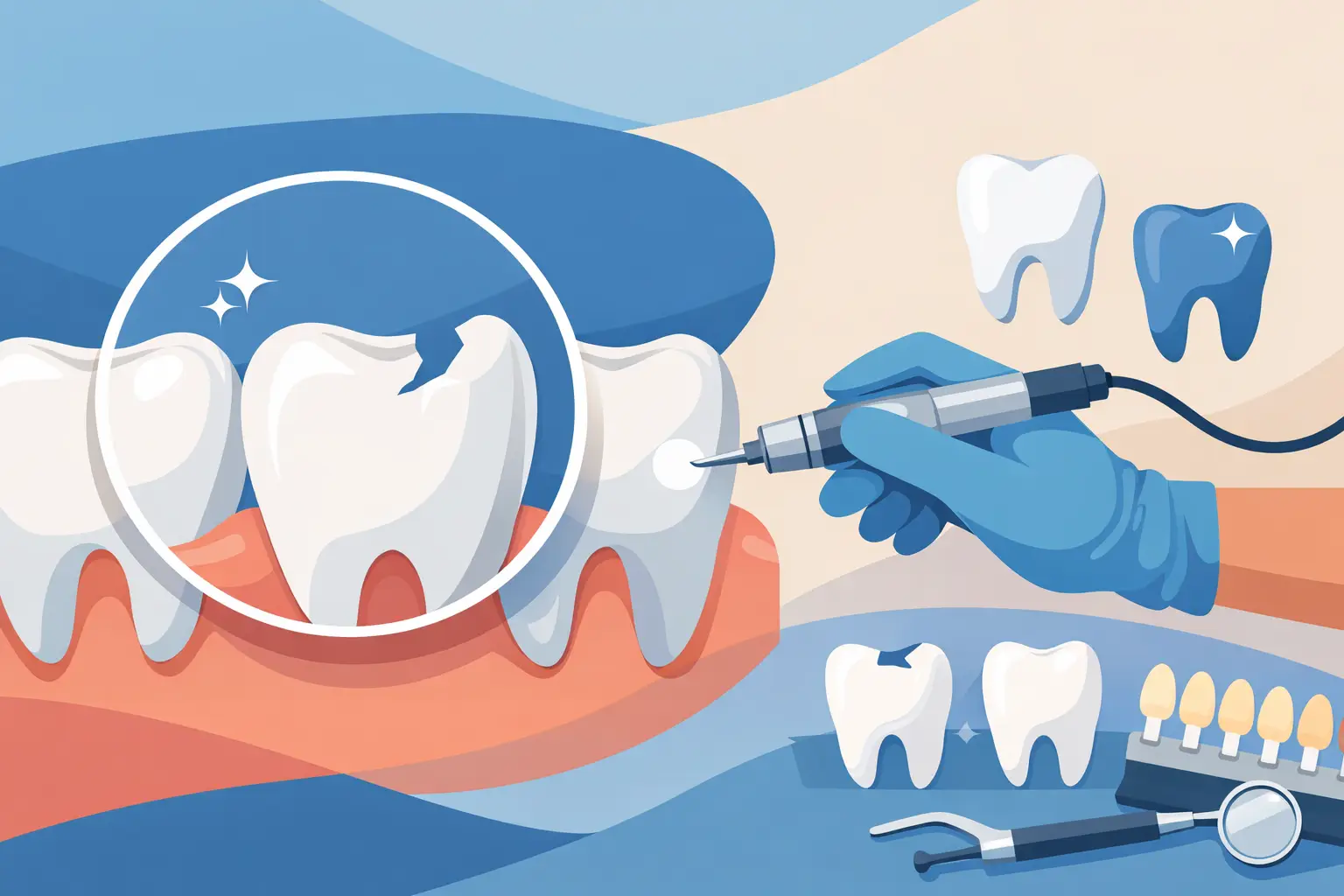
Dental bonding is one of the most common solutions for a chipped front tooth. A tooth-colored composite resin is carefully matched to your enamel, shaped to replace the missing area, hardened with a curing light, and polished for a natural finish.
Bonding can often be completed in one visit and usually requires minimal removal of healthy tooth structure. It is a practical choice for small to moderate chips, especially when appearance matters. The trade-off is that composite resin may stain, wear, or chip sooner than porcelain, particularly for patients who bite their nails, chew ice, or grind their teeth.
Porcelain Veneers for Cosmetic Changes
A porcelain veneer is a thin, custom-made shell bonded to the front surface of a tooth. It can repair a chipped edge while also improving concerns such as uneven shape, discoloration, or small gaps.
Veneers are often considered when a front tooth needs a more comprehensive cosmetic enhancement or when bonding would not provide the desired long-term appearance. Porcelain resists stains well and reflects light similarly to natural enamel. However, veneers are generally a larger investment than bonding and typically involve some preparation of the tooth, so they should be chosen thoughtfully.
Dental Crowns for Larger Breaks
When a tooth has lost a substantial portion of its structure, a dental crown may provide the most dependable protection. A crown covers the visible portion of the tooth, helping it withstand chewing forces while restoring shape, color, and function.
Crowns are frequently recommended for heavily chipped molars, teeth with large existing fillings, or teeth that have cracks extending beyond a simple surface chip. Modern materials can be selected based on the tooth’s location, your bite, and aesthetic goals. A crown requires more preparation than bonding, but it can prevent a weakened tooth from breaking further.
Root Canal Treatment When the Nerve Is Injured
A deep chip may reach the pulp, the living tissue inside the tooth. Symptoms can include lingering sensitivity to hot or cold, spontaneous throbbing, pain when biting, or visible pink tissue inside the break. Trauma can also damage the pulp even if the chip initially appears modest.
When the nerve is inflamed or infected, root canal treatment can remove the damaged tissue and preserve the natural tooth. The tooth is then commonly protected with a crown. Saving a natural tooth is usually preferable when it is clinically possible, because it supports normal chewing and helps maintain the surrounding bone.
Why Waiting Can Make a Chipped Tooth Worse
Enamel is the hard outer layer of a tooth, but once it is broken, the softer dentin beneath may be exposed. Dentin contains tiny channels that can transmit temperature changes and bacteria toward the nerve. That is why a tooth that seemed fine after an accident can become sensitive days or weeks later.
A chipped edge can also change the way your teeth come together. Small bite changes may place repeated pressure on the weakened area, increasing the chance of a larger fracture. Repairing the tooth early is often simpler and more conservative than waiting until pain, decay, or a deeper crack develops.
Special Considerations for Children
Children commonly chip teeth during play, sports, and everyday falls. A chipped baby tooth still deserves an exam because sharp edges can injure soft tissue and trauma can affect the developing permanent tooth underneath. The approach may range from smoothing a minor edge to restoring the tooth, depending on the child’s age and the extent of damage.
If a permanent tooth is chipped, timely care is particularly important. Keep any fragment, avoid hard foods, and arrange a dental evaluation. For a fully knocked-out permanent tooth, immediate emergency guidance is needed. Do not attempt to reinsert a baby tooth.
Protecting Your Restored Tooth
After treatment, good home care and a few practical habits can extend the life of your restoration. Brush twice daily with fluoride toothpaste, clean between teeth each day, and maintain regular dental visits so small changes can be caught early.
Avoid using your teeth to open packaging, cut thread, or hold objects. Ice chewing, hard candy, and unpopped popcorn kernels can damage both natural enamel and restorations. If you clench or grind your teeth, a custom night guard can protect a bonded tooth, veneer, or crown from excessive force. Athletes of all ages should wear a properly fitted mouthguard for contact and high-impact sports.
A chipped tooth does not have to keep you from smiling, speaking, or eating comfortably. With a careful diagnosis and a treatment plan tailored to your goals, Newport Beach Dentistry can restore both the health and appearance of your smile with compassionate, modern care. If you have noticed a new chip, sharp edge, sensitivity, or change in your bite, scheduling an evaluation now can help protect the tooth you already have.