Missing teeth can change more than a smile. You may start favoring one side when you chew, avoiding certain foods, or feeling self-conscious when you speak or laugh. This guide to partial dentures explains how these custom restorations work, what choices are available, and how to decide whether they are the right next step for your oral health.
A partial denture is designed to replace one or more missing teeth while working around the healthy teeth you still have. It can improve chewing, support clearer speech, and help prevent neighboring teeth from shifting into open spaces. The best option is never one-size-fits-all. Your remaining teeth, gum health, bite, goals, timeline, and budget all help shape the recommendation.
What Is a Partial Denture?
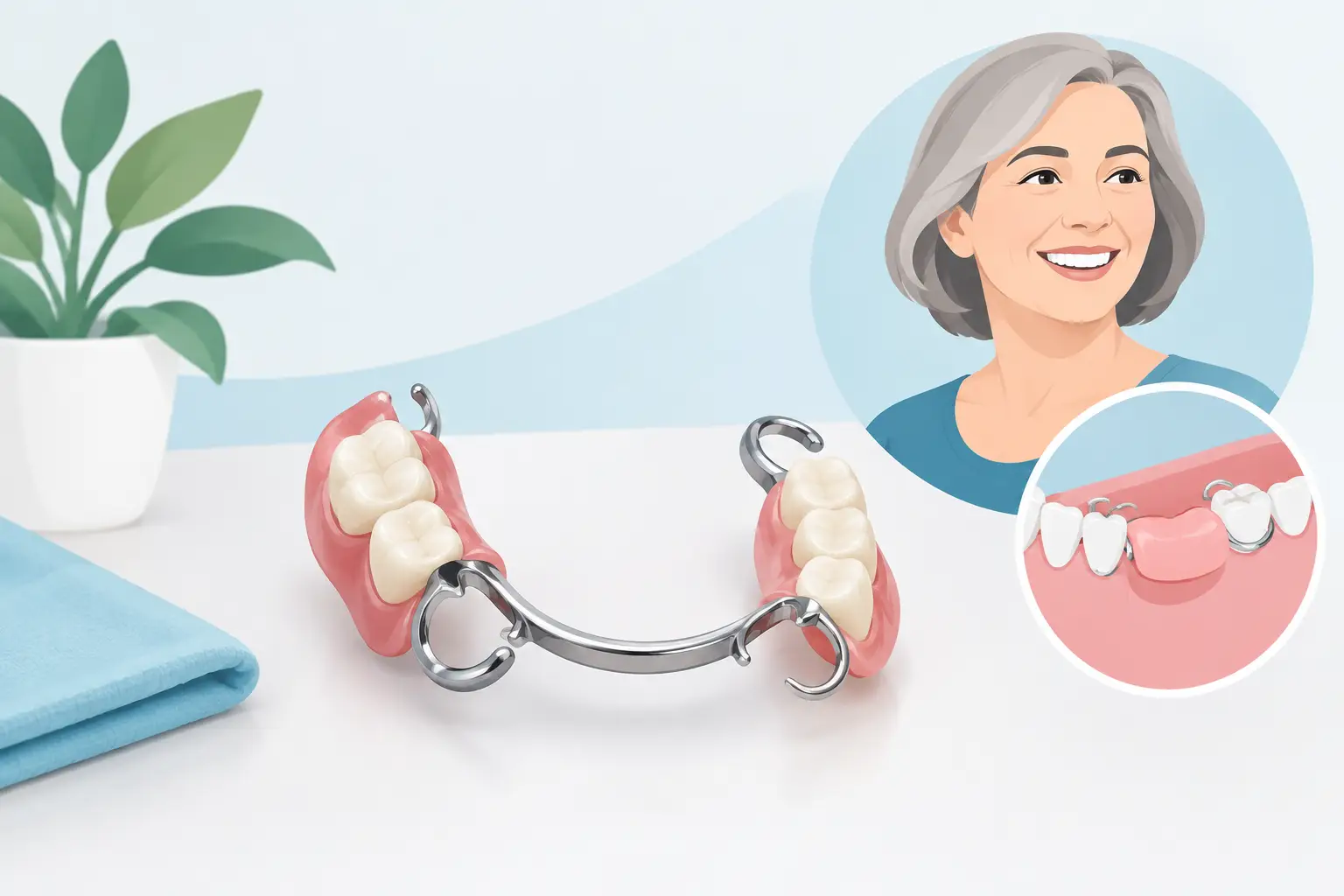
A partial denture is a removable appliance made of replacement teeth attached to a gum-colored base. It fills gaps in an arch when some natural teeth remain. Depending on the design, the appliance may rest on the gums and use discreet clasps or precision attachments to stay in place.
Partial dentures can be an effective restorative solution when tooth replacement is needed but fixed bridges or dental implants are not the preferred option. They are also commonly used as an interim restoration while a patient heals after extractions or prepares for implant treatment.
Replacing missing teeth is about function as well as appearance. An open space can allow nearby teeth to tip or drift, change the way the upper and lower teeth meet, and place extra pressure on teeth that are doing more of the chewing. Restoring the space may help protect the balance of your bite over time.
Guide to Partial Dentures: Your Main Options
The right material and design depend on where teeth are missing, how many teeth need replacement, and how much support your remaining teeth can provide.
Acrylic Partial Dentures
Acrylic partials have a pink, gum-colored base with replacement teeth and may include wire clasps. They are often a practical and cost-conscious choice, particularly as a temporary solution after teeth are removed. Because acrylic can be bulkier than other materials, it may take longer to adapt to the feel of the appliance.
Cast Metal Partial Dentures
Cast metal partials use a thin, strong metal framework beneath the gum-colored material and replacement teeth. They are often more stable and less bulky than acrylic designs, which can make them comfortable for long-term use. The framework is custom made to fit around existing teeth, and visible clasps may be minimized depending on the location of the missing teeth.
Flexible Partial Dentures
Flexible partials are made from a pliable, tissue-colored material. Many patients appreciate their natural appearance and the absence of metal clasps. However, flexibility is not automatically the best choice for every bite. Flexible materials can be harder to adjust or repair, and they may not provide the same level of support as a more rigid framework in certain cases.
Implant-Supported Options
If enough bone is present, dental implants may support a fixed bridge or help stabilize a removable denture. Implants do not suit every patient, and they involve surgery, healing time, and a higher initial investment. Still, they can offer excellent stability and help preserve jawbone in areas where teeth are missing. A comprehensive exam can clarify whether an implant-based approach is appropriate now, later, or not at all.
How to Choose the Best Partial Denture
A beautiful-looking partial denture must also function well. Before recommending treatment, your dentist should evaluate the teeth that will support the appliance, the condition of your gums, bone levels, bite alignment, and any signs of decay or periodontal disease. A partial denture placed around unhealthy supporting teeth is unlikely to perform well for long.
Appearance matters, too. If a missing tooth is visible when you smile, the shape, color, and translucency of the replacement tooth deserve careful attention. The location of clasps can also influence your decision. In some cases, precision attachments or alternative restorative plans may provide a more discreet result, though they can add complexity and cost.
Consider how you want your restoration to fit into daily life. A removable partial denture needs to be taken out for cleaning and should not be worn while sleeping unless your dentist gives different instructions. If you prefer a fixed solution that stays in place, a bridge or implant-supported restoration may be worth discussing. If surgery is not desirable or treatment needs to move forward quickly, a removable partial can be a thoughtful solution.
What the Treatment Process Looks Like
The process begins with a consultation, examination, and digital X-rays when needed. Your dentist will discuss the teeth being replaced, examine the health of supporting teeth and gums, and explain the benefits and limitations of each option. If extractions, periodontal treatment, fillings, or crowns are needed first, addressing those concerns helps create a healthier foundation.
Next, impressions or digital scans are taken to create a custom appliance. The dental team will select tooth shade and shape to complement your natural smile. For more complex cases, a try-in appointment may be used to check appearance, tooth position, and bite before the final denture is completed.
When your partial is delivered, expect an adjustment period. Speaking may feel slightly different at first, and it is normal to notice areas of pressure as your mouth adapts. Start with softer foods cut into small pieces, chew on both sides when possible, and gradually add firmer foods. Do not try to adjust clasps or rough edges at home. A simple professional adjustment can make a significant difference in comfort.
Wearing and Caring for a Partial Denture
A partial denture should feel secure, but it should not cause ongoing soreness, ulcers, or difficulty chewing. Some movement can occur with removable appliances, especially when chewing sticky foods, but persistent looseness deserves attention. Your mouth changes over time, and the fit of a denture can change with it.
Daily care protects both the appliance and your remaining teeth. Remove the partial after meals when possible and rinse away food particles. Brush it gently with a soft denture brush and a cleaner recommended for dentures. Regular toothpaste can be too abrasive for some materials. Keep the appliance over a folded towel or a sink filled with water while cleaning, since a fall can cause damage.
Continue brushing natural teeth twice daily and cleaning between them as directed by your dental team. Pay close attention to the teeth supporting clasps, as plaque can collect around these areas. Remove your partial at night to give gum tissues time to rest, then store it according to your dentist’s instructions so it does not dry out or warp.
Schedule regular dental visits even if you no longer have pain. Your dentist can check the fit of the partial, screen for decay and gum disease, evaluate bite changes, and look for irritation or tissue changes beneath the appliance.
Costs, Coverage, and Long-Term Value
The cost of a partial denture varies based on the material, number of teeth replaced, complexity of the design, needed preparation of supporting teeth, and whether other treatment is required first. Acrylic options may have a lower upfront cost, while cast metal frameworks and implant-supported solutions often involve a greater investment.
Dental insurance may contribute to a portion of treatment, but coverage varies by plan. For patients without insurance, it is helpful to ask about payment options and phased treatment. The least expensive choice is not always the most cost-effective over time if it is uncomfortable, poorly fitting, or likely to need early replacement.
A partial denture may eventually require adjustment, repair, reline, or replacement as your gums and bone change. Caring for the appliance and maintaining healthy gums and remaining teeth can help extend its useful life.
Common Questions About Partial Dentures
Will a partial denture look natural?
A well-designed partial can blend naturally with your smile. The final result depends on careful shade selection, tooth shape, gum-colored materials, and a design that considers where clasps will sit. Discuss your cosmetic priorities before treatment begins.
Can I eat normally with a partial denture?
Most patients return to eating a broad range of foods, though adaptation takes time. Start slowly, avoid biting directly into hard foods with front replacement teeth, and use caution with sticky foods. If chewing remains difficult after the adjustment period, the fit or bite may need to be evaluated.
How long do partial dentures last?
There is no single timeline. Material, daily care, changes in your mouth, and the health of supporting teeth all matter. Regular checkups help identify when an adjustment or replacement is needed before discomfort becomes a larger problem.
If missing teeth are affecting your comfort, confidence, or ability to enjoy meals, a personalized consultation can bring clarity. At Newport Beach Dentistry, the goal is to help you choose a solution that supports your health, fits your life, and feels like a natural part of your smile.