Waking with a tight jaw, a dull headache, or teeth that suddenly feel sensitive can be more than an uncomfortable start to the day. These are common signs of bruxism, the clinical term for grinding or clenching teeth. Learning how to stop teeth grinding matters because the force involved can gradually wear down enamel, fracture restorations, strain the jaw joints, and change the appearance of your smile.
Teeth grinding is common, and it is treatable. The right solution depends on what is causing it, whether it happens during sleep or while you are awake, and how much damage or discomfort it has already created. A personalized dental evaluation can identify the source and help protect your teeth before a manageable habit becomes a more complex restorative issue.
Why Teeth Grinding Happens
Many people think teeth grinding is only caused by stress. Stress can certainly play a role, particularly with daytime jaw clenching, but it is not the only explanation. Sleep bruxism is often connected to the way the brain and muscles behave during sleep. Some people grind more during periods of poor sleep, alcohol use, caffeine intake later in the day, or certain medication changes.
Your bite may also deserve attention. An uneven bite, missing teeth, shifting teeth, or restorations that no longer fit properly can contribute to muscle strain. However, bite adjustment is not automatically the answer for every patient with bruxism. A careful examination is essential before making permanent changes to healthy teeth.
For some patients, grinding occurs alongside snoring or obstructive sleep apnea. Brief arousals during sleep can trigger jaw-muscle activity. If you snore loudly, wake up gasping, feel unusually tired during the day, or have been told you stop breathing during sleep, mention it to your dentist and physician. Protecting your teeth is important, but identifying a potential sleep-breathing problem is even more important.
Signs You May Be Grinding Your Teeth
Grinding can be surprisingly quiet, especially when it takes the form of clenching rather than obvious scraping. You may not realize it is happening until a partner hears nighttime grinding or a dentist notices patterns of wear.
Common signs include morning jaw soreness, temple headaches, tight facial muscles, tooth sensitivity, chipped edges, cracked teeth, and fillings or crowns that repeatedly break. Teeth can look shorter, flatter, or more translucent at the edges as enamel wears away. Some people also notice jaw clicking, limited opening, or pain near the ear, where the temporomandibular joints are located.
Not every headache or jaw click means you grind your teeth. These symptoms have several possible causes. Still, a dental examination can help distinguish ordinary sensitivity from damage that needs protection.
How to Stop Teeth Grinding While You Are Awake
Daytime clenching often improves when you become aware of the habit. At rest, your lips may be together, but your upper and lower teeth should not be touching. Think: “lips together, teeth apart.” Your tongue can rest lightly against the roof of your mouth just behind your upper front teeth.
Set a few reminders on your phone during the day to check your jaw. If you catch yourself clenching while driving, working at a computer, exercising, or concentrating, gently relax your shoulders and let your jaw loosen. This is simple, but repeated awareness can reduce the amount of force your teeth experience each day.
Stress management is also worthwhile, though it should not be presented as a cure-all. Regular exercise, breathing exercises, counseling, and restorative sleep can reduce muscle tension for many people. If clenching is tied to anxiety, treating the underlying concern with an appropriate healthcare professional is often more effective than trying to force your jaw to relax.
Pay attention to chewing habits. Frequent gum chewing, biting pens, nail biting, and chewing ice can keep the jaw muscles overworked. Reducing these habits gives irritated muscles a chance to settle.
How to Stop Teeth Grinding During Sleep
Because sleep grinding happens unconsciously, willpower alone cannot stop it. The practical goal is to reduce contributing factors and protect the teeth from excessive force.
Start with a consistent sleep routine. Aim for regular bedtimes, limit alcohol close to bedtime, and consider reducing caffeine in the afternoon and evening if you notice it affects your sleep. Review new medications with the prescribing clinician if grinding began after a medication change. Do not stop a prescribed medication on your own.
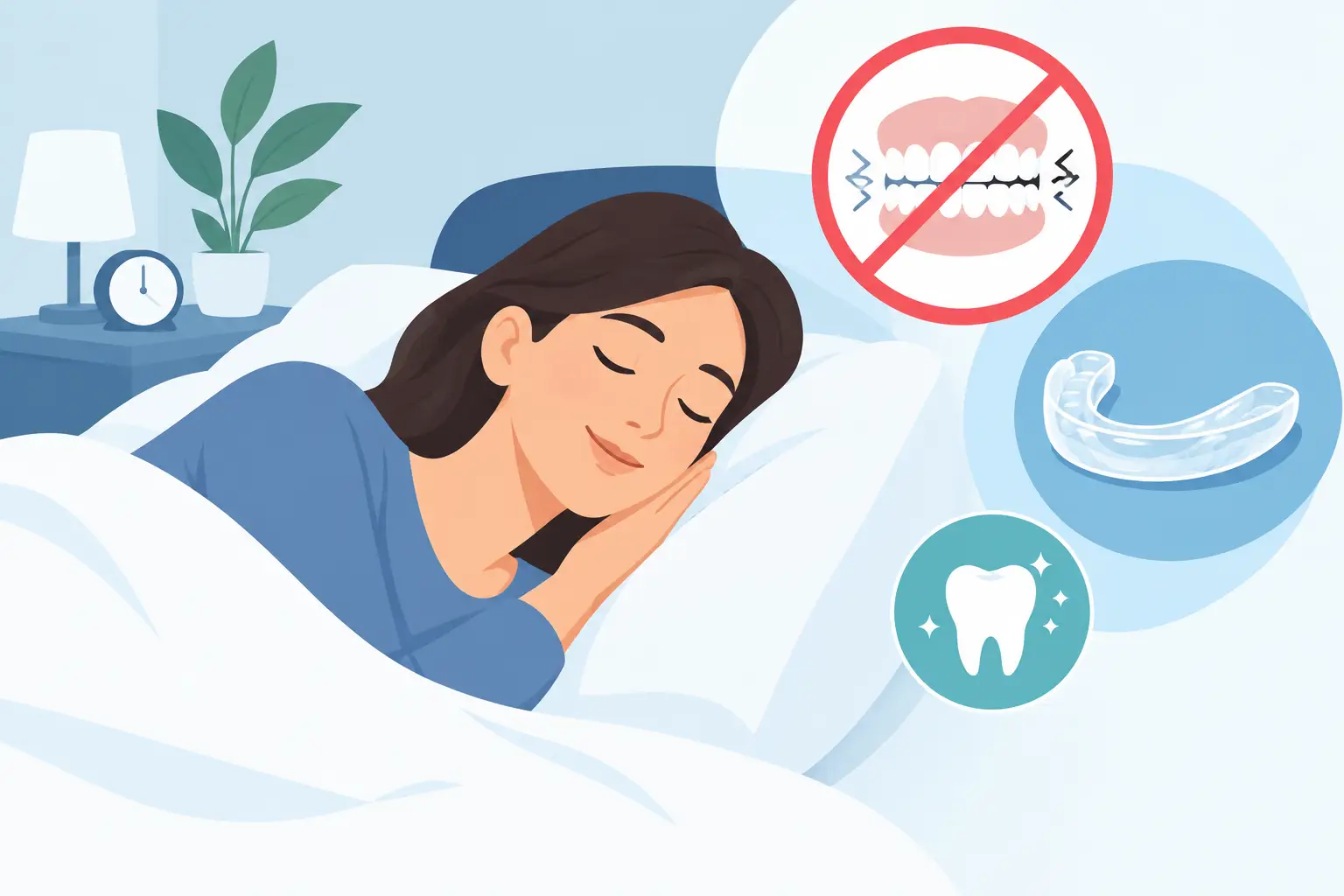
A custom night guard is often one of the most reliable ways to protect teeth from sleep bruxism. Made from an impression or digital scan of your mouth, it is designed to fit securely and distribute pressure more evenly. It does not always eliminate the underlying muscle activity, but it creates a protective barrier that can prevent further wear, chips, and damage to dental work.
Over-the-counter guards may be useful as a short-term option for some people, but they are not interchangeable with a professionally made appliance. Boil-and-bite guards can feel bulky, fit loosely, or alter the way the teeth meet. A poor fit may lead to inconsistent use or aggravate jaw discomfort. If you have crowns, veneers, implants, orthodontic treatment, significant jaw pain, or a history of cracked teeth, ask a dentist before choosing a store-bought guard.
When a Dental Evaluation Is the Best Next Step
A dentist can look for subtle wear patterns, fractures, gum recession, loose restorations, and signs of jaw-muscle strain. Digital X-rays and intraoral imaging may help assess damage that is not visible in a mirror. The goal is not simply to hand every patient a night guard. It is to understand your risk, protect what is healthy, and address any teeth that have already been compromised.
Treatment may include a custom night guard, repairing a chipped or cracked tooth, replacing a worn filling or crown, or coordinating care with a physician or sleep specialist when symptoms point to a larger health concern. If your teeth have become shortened or uneven from years of wear, restorative or cosmetic treatment may eventually be considered. In those cases, protecting the bite first is essential so new dental work is not exposed to the same damaging forces.
At Newport Beach Dentistry, treatment planning is tailored to the patient, not the appliance. Some patients need monitoring and practical habit changes. Others need a precise custom guard, restorative care, or a more comprehensive evaluation of their jaw and sleep health.
Do Not Ignore These Warning Signs
Schedule a prompt dental visit if you have a broken tooth, severe pain when biting, a loose crown or filling, jaw locking, or swelling. A cracked tooth can worsen quickly, and early care may preserve more of the natural tooth.
Seek medical guidance for symptoms such as loud snoring, choking or gasping at night, witnessed pauses in breathing, or persistent daytime exhaustion. A night guard can protect your teeth, but it does not treat sleep apnea.
Small Changes That Help Protect Your Smile
Even while you are arranging an appointment, avoid chewing hard foods on a painful tooth and do not test a suspected crack by repeatedly biting down on it. Choose softer foods temporarily if your jaw is sore. A warm compress over tight jaw muscles may provide comfort, and gentle relaxation can help, but avoid aggressive stretching if it causes pain or clicking.
The most effective way to stop teeth grinding is rarely a single trick. It is a combination of identifying the pattern, protecting the teeth, reducing triggers where possible, and getting professional guidance when symptoms persist. Your teeth are built to last, and timely care can help keep grinding from taking a lasting toll on your comfort, function, and confidence.