
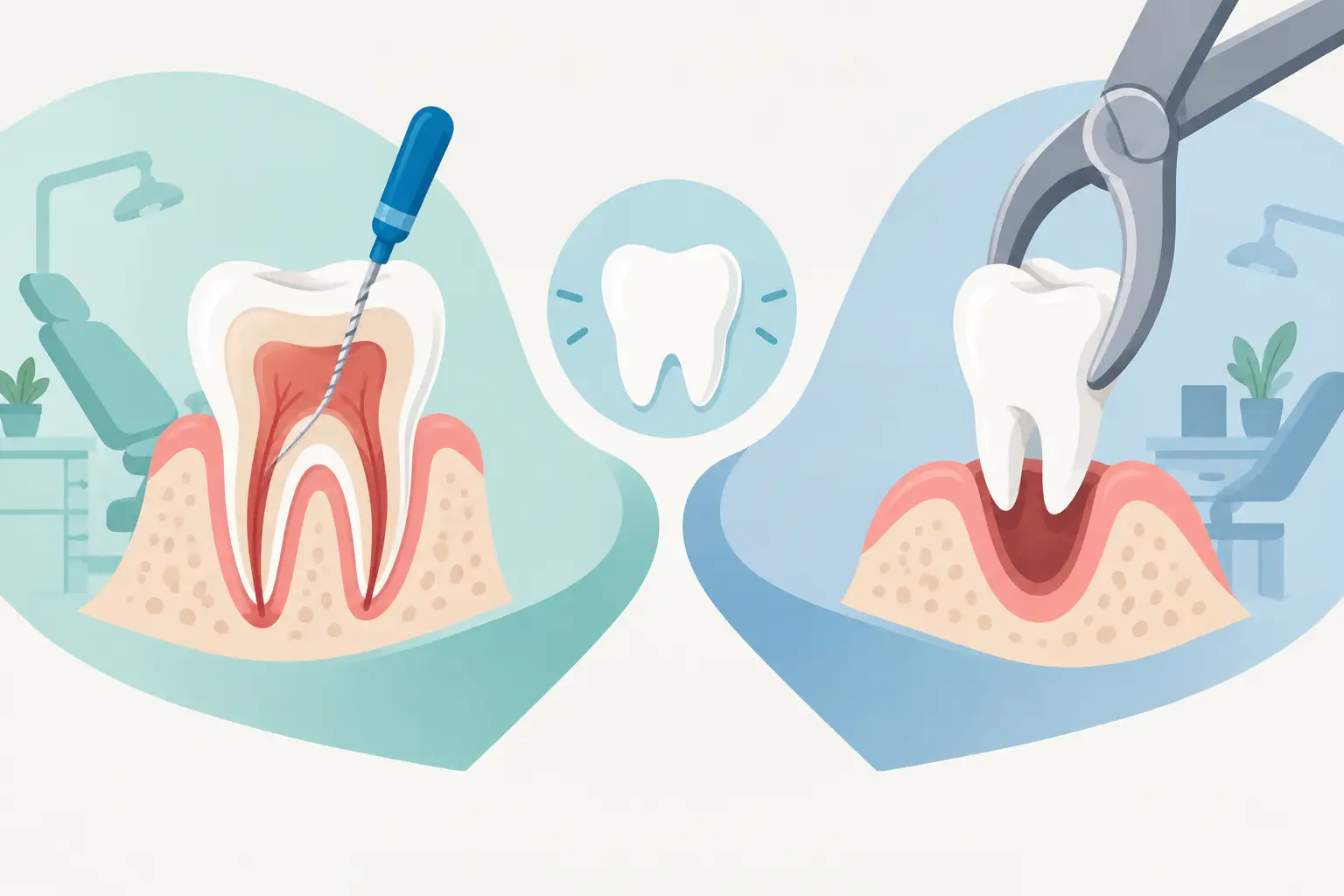
A severe toothache can make every decision feel urgent. Patients sometimes ask for a “root canal extraction” when what they really mean is, “Can this tooth be saved, or does it need to come out?” Those are two very different treatments, and the best choice depends on the condition of the tooth, the surrounding bone and gums, and your goals for long-term oral health.
At Newport Beach Dentistry, we take time to explain both paths clearly. Our priority is to preserve a natural tooth whenever it can be predictably restored. When saving it is no longer the healthiest option, we can also help you plan a comfortable extraction and a reliable replacement.
Root Canal Treatment and Extraction Are Different
A root canal treatment is designed to keep your natural tooth. Inside each tooth is soft tissue called pulp, which contains nerves and blood vessels. Deep decay, a crack, repeated dental work, or trauma can allow bacteria into this space. The result may be inflammation, infection, sensitivity to temperature, swelling, or persistent pain when biting.
During root canal treatment, the dentist removes infected or damaged pulp, cleans and disinfects the inside of the tooth, and seals the canal system. In many cases, a crown is then recommended to protect the remaining tooth structure from fracture. The tooth stays in place and continues to function normally.
An extraction removes the entire tooth from the mouth. It may be the appropriate choice when a tooth is too damaged to repair, has severe periodontal bone loss, or cannot be treated successfully with root canal therapy and restoration. Extraction can stop pain and infection, but it also creates a space that should be evaluated for replacement.
The phrase root canal extraction can be confusing because a root canal does not extract a tooth. Instead, it treats the tissue inside the tooth in an effort to save it.
When a Root Canal May Be the Better Choice
Saving a natural tooth is often beneficial because it maintains your bite, supports surrounding teeth, and avoids the additional treatment needed to replace a missing tooth. A root canal may be a strong option when the infection is confined to the pulp or root canals and enough healthy tooth remains above the gumline for a durable restoration.
A tooth with a large cavity can still be restorable if the decay has not destroyed too much of the supporting structure. Likewise, a tooth that has developed an abscess near the root tip may often be saved if the root is intact and the surrounding bone can heal after treatment.
Root canal therapy is not simply about relieving pain. It is a restorative decision. Once the infection is removed and the tooth is properly sealed and protected, it can often serve you for many years. The outcome depends on factors such as the tooth’s location, the complexity of its roots, the amount of remaining structure, your bite forces, and consistent home care.
What root canal treatment feels like
Many people associate root canals with discomfort because infection itself can be painful. Modern local anesthesia, digital imaging, and careful technique make treatment much more comfortable than its reputation suggests. Most patients describe the procedure as similar to having a filling placed. If you are anxious about dental care, let your dental team know early so comfort options and a calm treatment pace can be discussed.
When Tooth Extraction Is Necessary
There are situations where removing a tooth is the healthier, more predictable recommendation. Trying to save a tooth with a poor long-term prognosis may lead to repeated treatment, ongoing infection, and added expense without a stable result.
Extraction may be recommended when there is a deep vertical root fracture, extensive decay below the gumline, severe bone loss from periodontal disease, or damage so significant that a crown cannot be supported. It can also be appropriate when a tooth has already received root canal treatment but develops a problem that cannot be predictably corrected.
The decision is not always black and white. For example, a back tooth may be technically treatable but have limited remaining structure and a guarded prognosis. In that case, your dentist should explain what treatment would involve, what the likely lifespan may be, and whether extraction followed by an implant could offer a more dependable long-term solution.
The Long-Term Impact of a Missing Tooth
Removing a tooth ends the immediate problem, but it should not be viewed as the end of the care plan. Teeth can shift toward an empty space over time, affecting bite alignment and making cleaning more difficult. The bone that once supported the tooth may also gradually shrink after extraction.
For many patients, a dental implant is the closest replacement to a natural tooth. An implant replaces the root beneath the gums and supports a custom crown above it. It does not rely on neighboring teeth for support and can help preserve bone in the area. Healing time, bone quality, overall health, and budget all influence whether an implant is the right choice.
A dental bridge may be another effective option, particularly when the teeth next to the space already need crowns. A removable partial denture can also be appropriate in certain cases, especially when several teeth are missing or a patient wants a more economical approach. Each option has advantages, maintenance needs, and costs to consider.
How We Decide Between Saving and Removing a Tooth
The best recommendation begins with a complete evaluation, not a guess based only on pain. Digital X-rays help reveal infection, bone levels, root shape, hidden decay, and other concerns that cannot be seen during a visual exam. An intraoral camera can also help you understand what the dental team sees and why a particular treatment is being recommended.
Your dentist will assess whether the tooth is restorable, whether its roots are stable, how much bone support remains, and whether gum disease is affecting the prognosis. Your medical history, bite pattern, timeline, esthetic concerns, and financial priorities matter as well.
A thoughtful conversation should include the likely outcome of each option. If a root canal and crown offer a good chance of long-term success, preserving the tooth may make excellent sense. If the tooth is compromised beyond predictable repair, extraction with a well-planned replacement can protect your overall oral health.
What Happens if You Wait Too Long?
Dental infections do not reliably resolve without treatment. Pain may fade temporarily if the nerve inside the tooth stops responding, but bacteria can remain and continue affecting the tissues around the root. Swelling, drainage, worsening bone loss, and a more complicated dental emergency can follow.
Seek prompt dental care for severe or persistent tooth pain, facial swelling, a gum bump near a tooth, pain when biting, fever, or trouble swallowing. Difficulty breathing or rapidly spreading swelling requires emergency medical attention.
Early treatment can sometimes mean the difference between a straightforward root canal and a tooth that can no longer be saved. It can also reduce the likelihood of needing urgent care when your schedule is already full.
Caring for Your Smile After Treatment
After root canal treatment, follow instructions for protecting the tooth until its final restoration is placed. Avoid chewing hard foods on a tooth with a temporary filling or crown, and return promptly for the permanent crown if one is recommended. Brushing twice daily, cleaning between teeth, and attending regular checkups help protect both the treated tooth and the surrounding gums.
After an extraction, keep the area clean as directed and avoid actions that can disturb the blood clot, such as vigorous rinsing or using a straw during the early healing period. If an implant or other replacement is planned, timing matters. In some cases, bone preservation or implant placement can be considered at the time of extraction; in others, a healing period is preferable.
No one wants to hear that a tooth needs major treatment. But a clear diagnosis and an individualized plan can replace uncertainty with a practical next step. Whether the right answer is saving your tooth with root canal therapy or replacing it after extraction, the goal remains the same: a comfortable, healthy smile that supports you for years to come.