
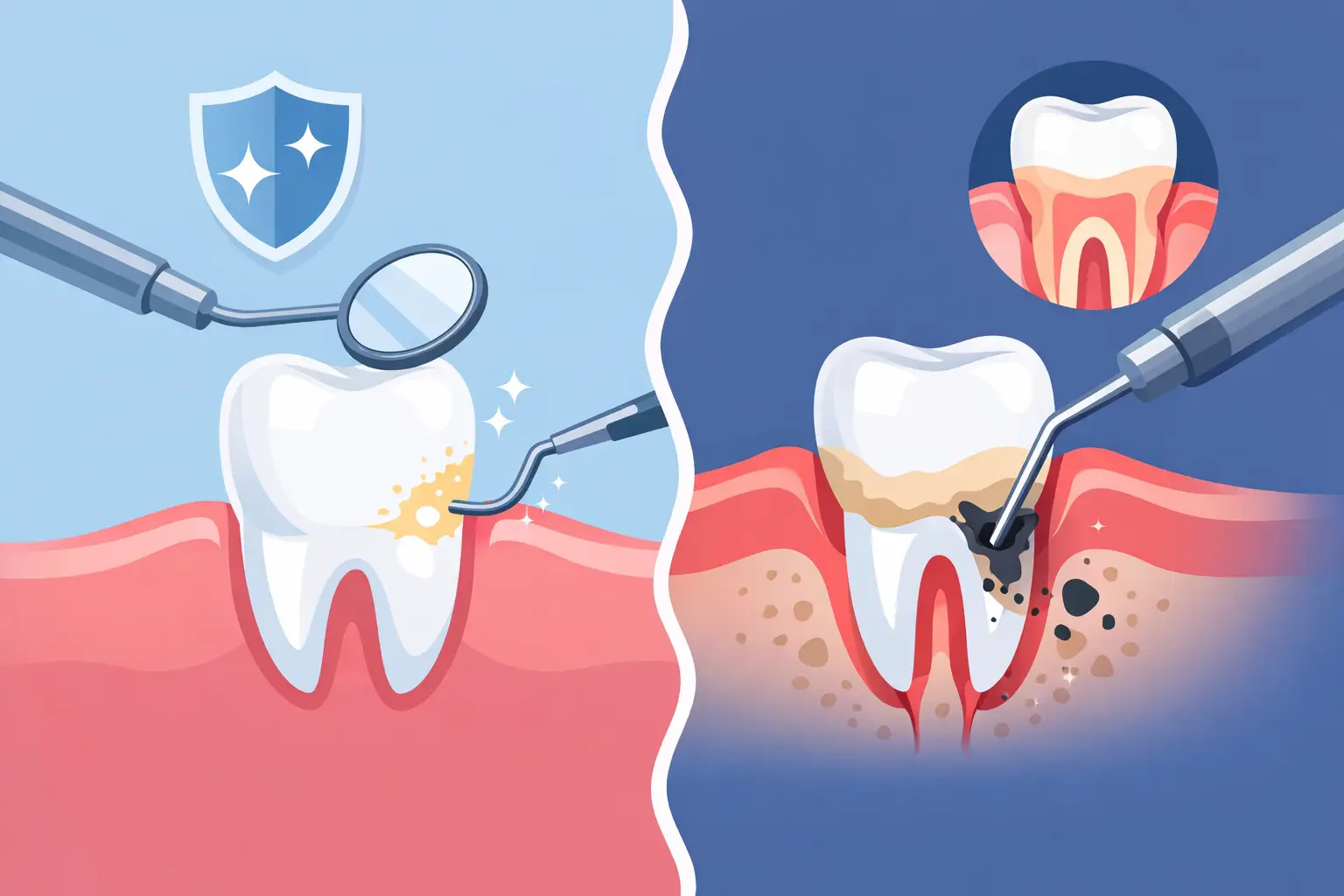
A routine cleaning may feel familiar: your teeth are polished, plaque is removed, and you leave with that smooth, fresh feeling. A deep cleaning is different because it is designed to treat gum disease below the gumline. Understanding dental cleaning vs deep cleaning can help you know what your dentist is recommending, why it matters, and what to expect at your appointment.
Neither treatment is “better” in every situation. The right choice depends on the health of your gums, the depth of the spaces around your teeth, the amount of buildup present, and whether there are signs of infection or bone loss.
What Is a Routine Dental Cleaning?
A routine dental cleaning, also called prophylaxis, is preventive care for patients whose gums are generally healthy. During this visit, a dental hygienist removes plaque, tartar, and surface stains from the visible portions of the teeth, especially around the gumline and in areas that are difficult to reach with a toothbrush.
Plaque is a sticky film of bacteria that forms throughout the day. When it is not removed completely, it can harden into tartar, also called calculus. Tartar cannot be brushed away at home. Professional instruments, including ultrasonic technology when appropriate, are used to remove it safely.
After buildup is removed, the teeth are typically polished to help remove surface stains and create a smoother surface. Your dental team may also review brushing and flossing habits, check for early signs of cavities or gum inflammation, and recommend preventive steps based on your needs.
For many patients, routine cleanings are recommended every six months. Some people benefit from more frequent visits, including those who build up tartar quickly, have a history of gum concerns, wear orthodontic appliances, are pregnant, or have medical conditions that can affect oral health.
What Is a Deep Cleaning?
A deep cleaning is a periodontal treatment, not simply a more intensive version of a standard cleaning. Its clinical name is scaling and root planing. It is recommended when bacteria and tartar have collected below the gumline, where a routine cleaning cannot adequately reach.
Healthy gums fit closely around the teeth. When gum disease develops, inflammation can cause the gum tissue to pull away, creating periodontal pockets. These spaces can trap bacteria, plaque, and tartar. Left untreated, the infection may progress and contribute to gum recession, bone loss, tooth mobility, persistent bad breath, and eventually tooth loss.
During scaling, the hygienist or dentist carefully removes deposits from above and below the gumline. Root planing smooths the tooth root surfaces so bacteria are less likely to adhere and the gums have a better opportunity to heal and reattach.
Deep cleaning is often completed in sections of the mouth, such as one side at a time. Local anesthetic may be used to keep you comfortable, particularly when deeper pockets or sensitive areas are present. At Newport Beach Dentistry, treatment recommendations are personalized, with comfort and clear communication at the center of every visit.
Dental Cleaning vs Deep Cleaning: The Main Difference
The most meaningful difference is where the treatment takes place. A routine cleaning focuses on the teeth at and just above the gumline for preventive maintenance. A deep cleaning reaches below the gumline to remove infection-causing buildup from periodontal pockets and root surfaces.
Routine cleanings are generally performed on healthy or mildly inflamed gums. Deep cleanings are performed when there is evidence of active periodontal disease or a level of tartar buildup below the gums that requires treatment.
The visits also differ in time and follow-up. A standard cleaning is often completed in one appointment. Deep cleaning may require more than one visit and is commonly followed by periodontal maintenance appointments, often every three or four months. This maintenance schedule helps control bacteria and protect the progress made during treatment.
A deep cleaning is not a punishment for missing appointments, and it is not a cosmetic add-on. It is targeted care for a health condition. Just as a small cavity may need treatment beyond a routine exam, gum disease needs care beyond a standard cleaning when it has progressed below the gumline.
How Does Your Dentist Decide Which You Need?
The decision should be based on a thorough examination, not on guesswork. Your dental team evaluates your gums, measures periodontal pocket depths, checks for bleeding, and reviews digital X-rays for signs of bone loss beneath the gums.
Bleeding when brushing or flossing can be an early sign of gingivitis, the mildest form of gum disease. Gingivitis can often be reversed with improved home care and regular routine cleanings. However, when pocket depths become deeper, tartar is present below the gums, or X-rays show bone loss, scaling and root planing may be necessary.
Your dentist will also consider factors that can make gum disease more likely or harder to manage. These include smoking or vaping, diabetes, dry mouth, certain medications, hormonal changes, genetics, stress, and inconsistent oral hygiene. Even patients who brush carefully can develop periodontal concerns, especially if they are predisposed to gum disease.
If you are told you need a deep cleaning, it is reasonable to ask about your pocket measurements, the areas being treated, whether bone loss is visible, and what maintenance will look like afterward. Clear answers help you make informed decisions about your care.
What Does a Deep Cleaning Feel Like?
Many patients worry that deep cleaning will be painful. Comfort levels vary, but the procedure should not feel overwhelming. Local anesthetic can numb the treatment area, and modern ultrasonic instruments can efficiently remove buildup while reducing the need for extensive hand scaling in many cases.
After treatment, it is common to have mild tenderness, temporary sensitivity to hot or cold foods, or slight bleeding for a few days. Your gums may also look less puffy as inflammation improves. If recession was previously hidden by swollen gums, teeth can appear slightly longer afterward. This does not mean the treatment caused recession. It often reveals the true gum position once swelling has reduced.
Following your aftercare instructions is essential. Gentle brushing with a soft toothbrush, daily cleaning between the teeth, and keeping scheduled maintenance visits all support healing. If discomfort is severe, swelling increases, or bleeding does not improve, contact your dental office promptly.
Can You Go Back to Regular Cleanings After a Deep Cleaning?
Sometimes, but not always. Once a patient has been diagnosed with periodontal disease, periodontal maintenance is often the most appropriate long-term plan. These visits are more than routine cleanings because they focus on monitoring pocket depths, controlling bacterial buildup below the gumline, and watching for changes in gum or bone health.
This does not mean you have failed or that your mouth will always feel unhealthy. It means your care plan reflects your history. Many patients maintain stable, comfortable gums for years with consistent professional care and effective home hygiene.
The interval depends on your individual risk level. A person with shallow, stable pockets may need maintenance less often than someone with deeper pockets, diabetes, or a history of rapid gum disease progression. Your dentist can adjust the schedule as your condition changes.
Protecting Your Gums Between Visits
Professional treatment works best when it is supported at home. Brush twice daily with fluoride toothpaste, clean between your teeth every day, and replace your toothbrush or brush head regularly. If floss is difficult to use, ask about alternatives such as interdental brushes or water flossers. The most effective tool is the one you can use correctly and consistently.
Pay attention to changes that deserve an earlier appointment: gums that bleed repeatedly, persistent bad breath, swelling, sensitivity near the gumline, gum recession, or a tooth that feels different when biting. Gum disease can progress quietly, which is why regular examinations and X-rays are valuable even when you are not in pain.
If it has been a while since your last visit or you have noticed bleeding gums, scheduling an exam is a practical next step. A personalized evaluation can clarify whether you need a routine cleaning, periodontal treatment, or simply guidance to keep your smile healthy for the long term.