
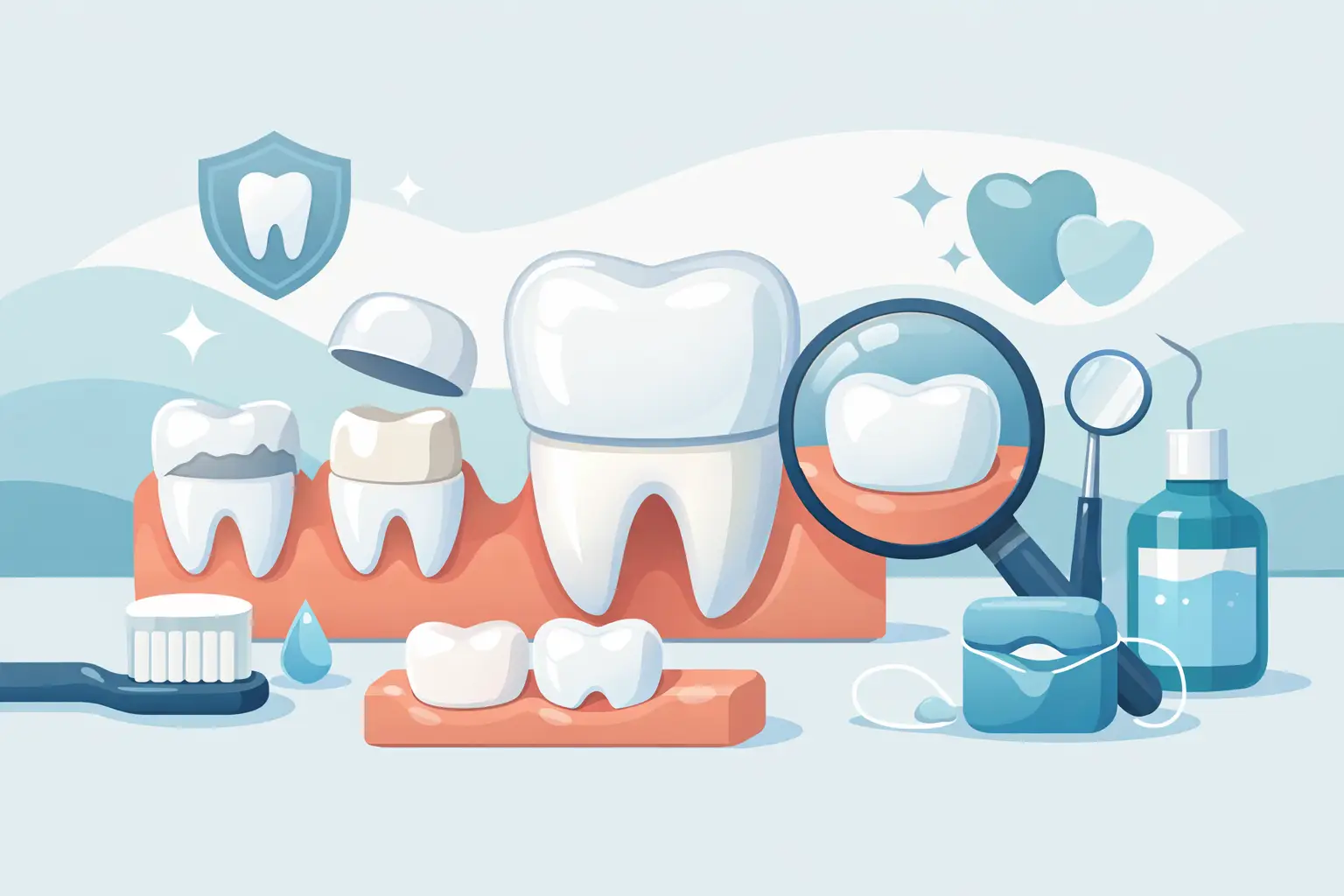
A cracked tooth does not always announce itself with severe pain. It may simply feel tender when you bite, react to cold drinks, or catch food around an old filling. A complete guide to dental crowns begins with this simple truth: crowns are often recommended not just to improve a tooth’s appearance, but to help preserve a tooth that may otherwise continue to weaken.
A dental crown is a custom-made covering that fits over the visible portion of a tooth. It restores strength, shape, function, and, when needed, a natural-looking color. Because every tooth, bite, and smile has different needs, the right crown is selected through a personalized evaluation rather than a one-size-fits-all approach.
When Is a Dental Crown Needed?
A crown is typically used when a tooth has lost too much healthy structure for a filling to provide reliable support. This can happen after a large cavity, a fracture, repeated dental work, or root canal treatment. Back teeth in particular endure significant biting pressure, so protecting them after substantial damage can help prevent a more serious break.
Crowns can also address cosmetic concerns. A tooth that is severely discolored, misshapen, worn down, or uneven may benefit from a crown when more conservative cosmetic options are not appropriate. In other cases, a crown is placed on top of a dental implant to replace a missing tooth.
The key question is not simply whether a tooth looks damaged. Your dentist will assess how much healthy enamel remains, the location and depth of any crack or decay, gum health, the condition of the tooth’s nerve, and how your upper and lower teeth meet. Sometimes a filling, bonding, inlay, onlay, or veneer may be the more conservative solution. When a tooth needs full coverage and reinforcement, however, a crown can be the most predictable long-term choice.
Types of Dental Crowns
Crown materials have improved considerably, allowing dentists to balance durability with lifelike aesthetics. The ideal material depends on where the crown will be placed, your bite forces, grinding habits, cosmetic goals, and budget.
All-Ceramic and Porcelain Crowns
All-ceramic crowns are popular for front teeth because they can closely mimic the translucency and color variation of natural enamel. Modern ceramic materials are also strong enough for many back-tooth restorations. They are metal-free, which appeals to patients who want a highly natural appearance at the gumline.
Zirconia Crowns
Zirconia is a highly durable ceramic that is often a strong option for molars and patients who clench or grind their teeth. Newer zirconia formulations can provide improved translucency, making them suitable for many visible areas of the smile as well. The trade-off is that some high-strength options may not have quite the same enamel-like character as the most esthetic layered ceramics.
Porcelain-Fused-to-Metal Crowns
Porcelain-fused-to-metal crowns combine a metal substructure with a porcelain exterior. They have a long track record and may be useful in certain clinical situations. Over time, though, the metal edge can sometimes become visible near the gumline, particularly if gums recede. For highly visible front teeth, many patients now prefer modern all-ceramic alternatives.
Full Metal Crowns
Gold and other metal crowns are exceptionally durable and require less removal of natural tooth structure than some other materials. They are most often considered for back teeth where appearance is less of a concern. While they are not the preferred choice for everyone, they remain a practical option in the right situation.
What Happens During the Crown Procedure?
Most traditional crown treatment takes two appointments. At the first visit, the dentist examines the tooth and takes digital images as needed to evaluate the root and surrounding bone. Local anesthetic is used to keep the area comfortable. The tooth is then carefully shaped to create space for the crown while preserving as much healthy structure as possible.
If a tooth has extensive damage, it may need a buildup before the crown is placed. A buildup replaces missing tooth structure so the crown has a stable foundation. Teeth that have had root canal treatment occasionally need additional internal support, but a post is not automatically required. It depends on how much solid tooth remains.
After preparation, a precise digital or traditional impression is taken. This record guides the creation of a crown designed for your tooth, bite, and smile. A temporary crown protects the tooth while the final restoration is being made. It is important to avoid especially sticky or hard foods on that temporary, since it is not as securely bonded as the final crown.
At the second visit, the temporary is removed and the final crown is checked for fit, color, comfort, and bite. Small adjustments may be made before the crown is permanently bonded. Some patients are candidates for same-day crowns, depending on the tooth and the technology available. Same-day treatment can be convenient, but the best approach is the one that supports precise results for your particular case.
Does Getting a Crown Hurt?
Patients are often more concerned about the procedure than they need to be. With appropriate local anesthetic, crown preparation should not be painful. You may notice vibration and pressure, but your dental team can pause, explain each step, and help you remain comfortable throughout the visit.
It is normal to have mild sensitivity or gum tenderness for a few days after preparation or final placement. Your bite may feel slightly different at first, but it should not feel high, painful, or difficult to close. If discomfort persists, chewing causes sharp pain, or the crown feels loose, contact your dentist promptly. A minor bite adjustment can make a major difference in comfort and longevity.
How Much Do Dental Crowns Cost?
The cost of a dental crown varies based on the material selected, the tooth’s location, the complexity of treatment, and whether additional care is needed. For example, a tooth requiring root canal therapy, gum treatment, a buildup, or replacement of a failing restoration will have different needs than a tooth receiving a straightforward crown.
Dental insurance may cover part of a crown when it is considered medically necessary, though plans vary in annual maximums, waiting periods, deductibles, and material allowances. Before treatment begins, a clear estimate helps you understand the recommended care and any anticipated out-of-pocket cost. For uninsured or cost-conscious patients, discussing available payment options and current practice specials can make treatment more manageable.
Choosing solely on the lowest initial price can create problems if the crown does not fit well, the material is poorly suited to your bite, or underlying disease is left untreated. A quality restoration begins with accurate diagnosis and thoughtful planning, not just the final crown itself.
Caring for a Crown So It Lasts
A crown does not decay, but the natural tooth at its edge can still develop cavities. Gum disease can also compromise the tissues that support the tooth. Daily brushing with fluoride toothpaste, cleaning between teeth, and routine professional cleanings remain essential.
Crowns are strong, not indestructible. Avoid using teeth to open packaging, chewing ice, or biting hard objects. If you grind or clench, a custom night guard may help protect both your crown and your natural teeth from excessive wear. With good home care and regular dental visits, many crowns last well over a decade, although no restoration has an identical lifespan for every patient.
Watch for warning signs such as a chipped edge, a loose crown, persistent sensitivity, bleeding gums around the crown, a bad taste, or pain when biting. These symptoms do not always mean the crown has failed, but they deserve timely attention before a small issue becomes more complex.
Crowns, Veneers, and Onlays: Choosing the Conservative Option
It is reasonable to ask whether a crown is more treatment than you need. Veneers generally cover the front surface of a tooth and are primarily cosmetic. Onlays restore damaged areas of a tooth while preserving more natural enamel than a full crown. Fillings are effective for smaller areas of decay or damage.
A crown becomes more appropriate when the tooth is structurally compromised on multiple surfaces, has a significant crack, or needs protection after root canal treatment. The goal should always be to preserve healthy tooth structure whenever possible while providing enough support for reliable function. At Newport Beach Dentistry, treatment planning considers both the health of the tooth today and the best path for your smile over time.
If a tooth has been repeatedly repaired, hurts when you chew, or has a visible fracture, do not wait for it to become an emergency. A timely evaluation can clarify whether a crown, a more conservative restoration, or another treatment can help you keep your natural tooth comfortable, functional, and confident-looking.