A dental implant is designed to feel like part of your smile, so it can be easy to forget that it still needs consistent attention. The implant itself cannot develop a cavity, but the gum tissue and bone supporting it can become inflamed or infected. Knowing how to care for dental implants helps protect the investment you made in your health, comfort, and confidence.
With the right daily habits and regular professional care, dental implants can remain stable, functional, and natural-looking for many years. Your routine does not need to be complicated. It simply needs to be thorough and tailored to the type of restoration you have, whether that is a single implant crown, an implant-supported bridge, or a full-arch restoration.
How to Care for Dental Implants at Home
The goal of home care is to remove plaque before it collects around the gumline. Plaque is a sticky bacterial film that can irritate the tissues surrounding an implant. Left in place, it may lead to peri-implant mucositis, an early and reversible form of gum inflammation. If inflammation progresses and affects the supporting bone, it can become peri-implantitis, a more serious condition that may threaten the implant’s long-term stability.
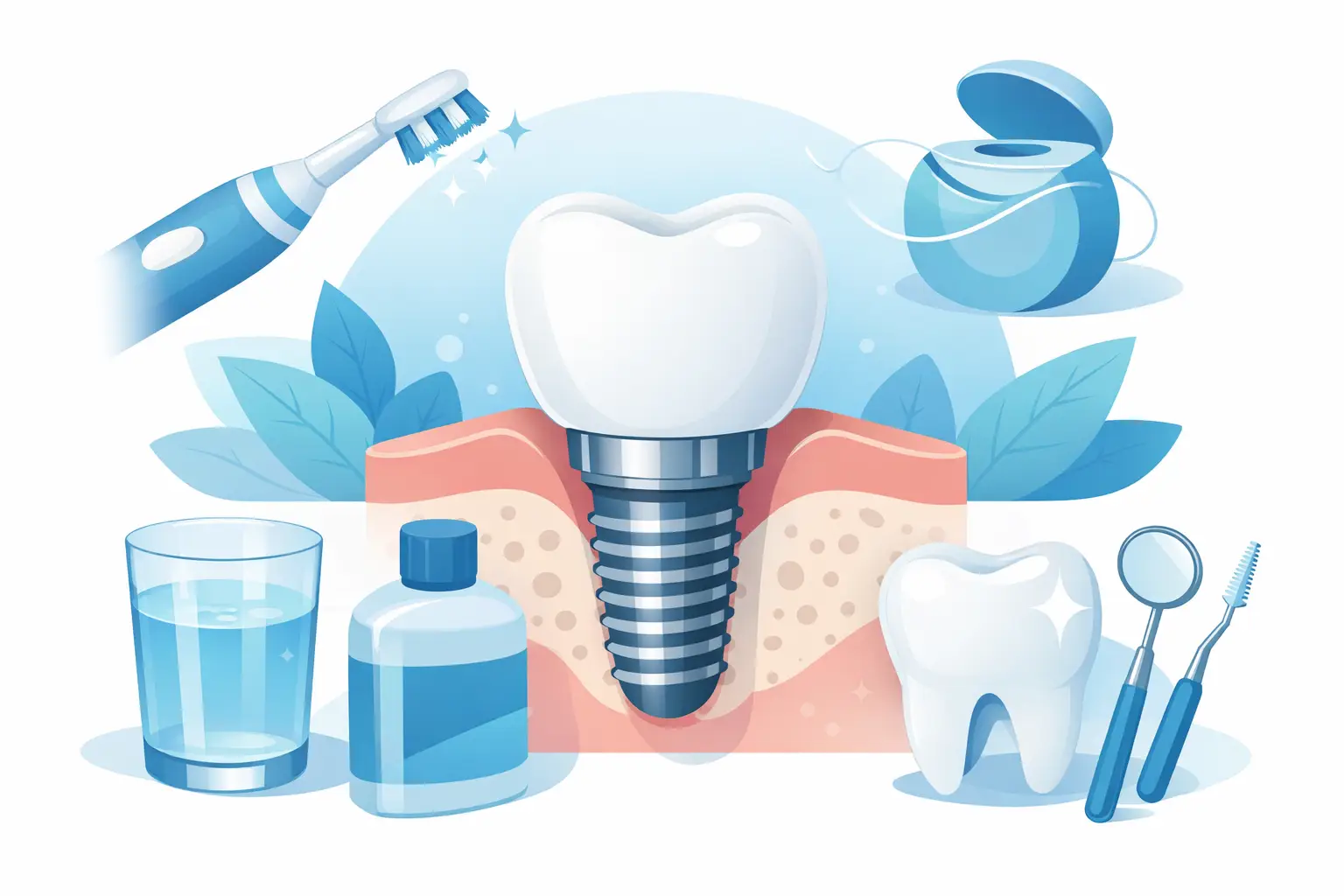
Brush at least twice daily using a soft-bristled toothbrush and a gentle, nonabrasive toothpaste. Brush along the gumline with small, controlled motions, paying special attention to where the crown or bridge meets the gums. Aggressive brushing is not necessary. A careful technique is more effective and more comfortable for your tissues.
An electric toothbrush can be a helpful option for many patients because its timer and consistent movement support a more complete clean. However, a manual soft-bristled brush can work very well when used correctly. The best choice is the one you will use consistently and comfortably.
Clean Between the Teeth Every Day
Brushing alone cannot reach every surface around an implant. Daily cleaning between the teeth is essential, especially around the sides of an implant crown and beneath an implant bridge.
For a single implant crown, floss may be enough when there is space to pass it gently between the implant and neighboring teeth. Interdental brushes can also be useful, particularly if you have larger spaces near the gums. Choose a size that fits without force. A brush that is too large can irritate the tissue, while one that is too small may not clean effectively.
If you have an implant-supported bridge or full-arch restoration, your dentist may recommend a floss threader, implant-specific floss, a water flosser, or a combination of these tools. Water flossers are especially helpful for flushing food debris from beneath a bridge, but they should not replace brushing or other cleaning methods your dental team has recommended.
Choose Products That Protect Your Restoration
Dental implants are made from durable materials, but the surrounding tissues still deserve gentle care. Avoid highly abrasive whitening toothpastes, stiff toothbrushes, and harsh products that may scratch a crown or irritate your gums. Small surface scratches can make it easier for plaque to cling to a restoration over time.
A fluoride toothpaste remains beneficial because it protects your natural teeth from decay. If you have dry mouth, a common concern for patients taking certain medications, ask your dentist about products that help keep the mouth moist and reduce your risk of cavities on nearby teeth.
Antimicrobial mouth rinses may be appropriate in certain situations, such as during healing or when your dentist is managing gum inflammation. They are not automatically necessary for every implant patient, and some should only be used for a limited period. Personalized recommendations matter more than adding multiple products to your routine.
Eat Mindfully, Especially After Treatment
Once an implant has fully healed and your final restoration is in place, you can usually enjoy a varied diet. Still, implants are not indestructible. Repeatedly biting hard objects can chip porcelain, loosen a restoration, or place unnecessary force on the implant and surrounding bone.
Avoid using your teeth to open packages, cut fishing line, or hold objects in place. Be cautious with ice, hard candies, popcorn kernels, and unpitted olives. Foods such as nuts and crisp vegetables are often fine, but how you eat them matters. Cut very hard foods into smaller pieces rather than biting directly into them with a front implant crown.
If you have a newly placed implant or a temporary restoration, follow the diet instructions provided by your dentist closely. Healing periods vary. Your treatment plan may require soft foods for several days or longer, particularly after bone grafting, multiple implant placement, or full-arch treatment.
Protect Implants From Grinding and Clenching
Teeth grinding, also called bruxism, can place heavy pressure on implant restorations. Because implants do not have the same cushioning ligament that natural teeth do, excessive force can be transferred directly to the crown, screw, implant, or supporting bone.
You may not realize you grind your teeth at night. Morning jaw soreness, frequent headaches, worn natural teeth, or chipped restorations can all be signs. If you clench or grind, a custom night guard can help protect both your implants and natural teeth. A professionally designed guard is preferred because it is made to fit your bite and restoration accurately.
Stress can also contribute to daytime clenching. Try to notice when your teeth are touching outside of eating. At rest, your lips can be closed, but your teeth should generally be slightly apart.
Keep Regular Dental Visits on Your Schedule
Professional maintenance is one of the most valuable parts of long-term implant care. Even patients with excellent home routines need periodic examinations and cleanings. During these visits, your dental team can assess the health of the gums, check your bite, remove hardened deposits, and evaluate whether the restoration is stable.
Dental X-rays may be recommended at intervals to monitor the bone surrounding the implant. Modern digital imaging helps your dentist identify subtle changes before they become more difficult to treat. Your ideal recall schedule depends on your gum health, medical history, smoking status, home-care habits, and the complexity of your restoration. Many implant patients benefit from cleanings every three to six months.
At Newport Beach Dentistry, implant maintenance is approached as part of your overall oral health plan. Your care team can evaluate your natural teeth, gums, bite, and restoration together, rather than treating the implant as an isolated concern.
Know When to Call Your Dentist
Healthy implants should feel secure and comfortable. Contact your dentist promptly if you notice bleeding when brushing, persistent bad breath, swollen or tender gums, pus around the implant, a change in how your bite feels, or a crown that seems loose. Pain, pressure, or movement around an implant should never be ignored.
These symptoms do not always mean the implant has failed. Sometimes the issue involves the crown, connecting screw, bite pressure, or gum inflammation and can be addressed successfully when caught early. Waiting can allow a manageable concern to become more complex.
Smoking and poorly controlled diabetes can also increase the risk of implant complications because both can affect healing and gum health. If either applies to you, regular monitoring and a personalized preventive plan are especially valuable.
A well-cared-for dental implant should support more than chewing. It should let you speak, smile, and enjoy meals without second-guessing your teeth. Give it the same daily attention you would give a healthy natural tooth, and let your dental team help you protect it for the long run.