A tooth that suddenly feels sensitive to cold water, looks more yellow near the edges, or has small chips may be showing more than ordinary wear. Understanding what causes enamel erosion can help you protect your smile before discomfort and structural damage become more difficult to manage.
Enamel is the hard, protective outer layer of each tooth. It is the strongest substance in the human body, but it is not indestructible. Repeated exposure to acid can gradually soften and dissolve its mineral structure. Unlike a broken bone, enamel does not grow back. Early mineral loss can sometimes be strengthened with professional guidance and fluoride, but lost enamel requires prevention and, in some cases, restorative care.
What Causes Enamel Erosion?
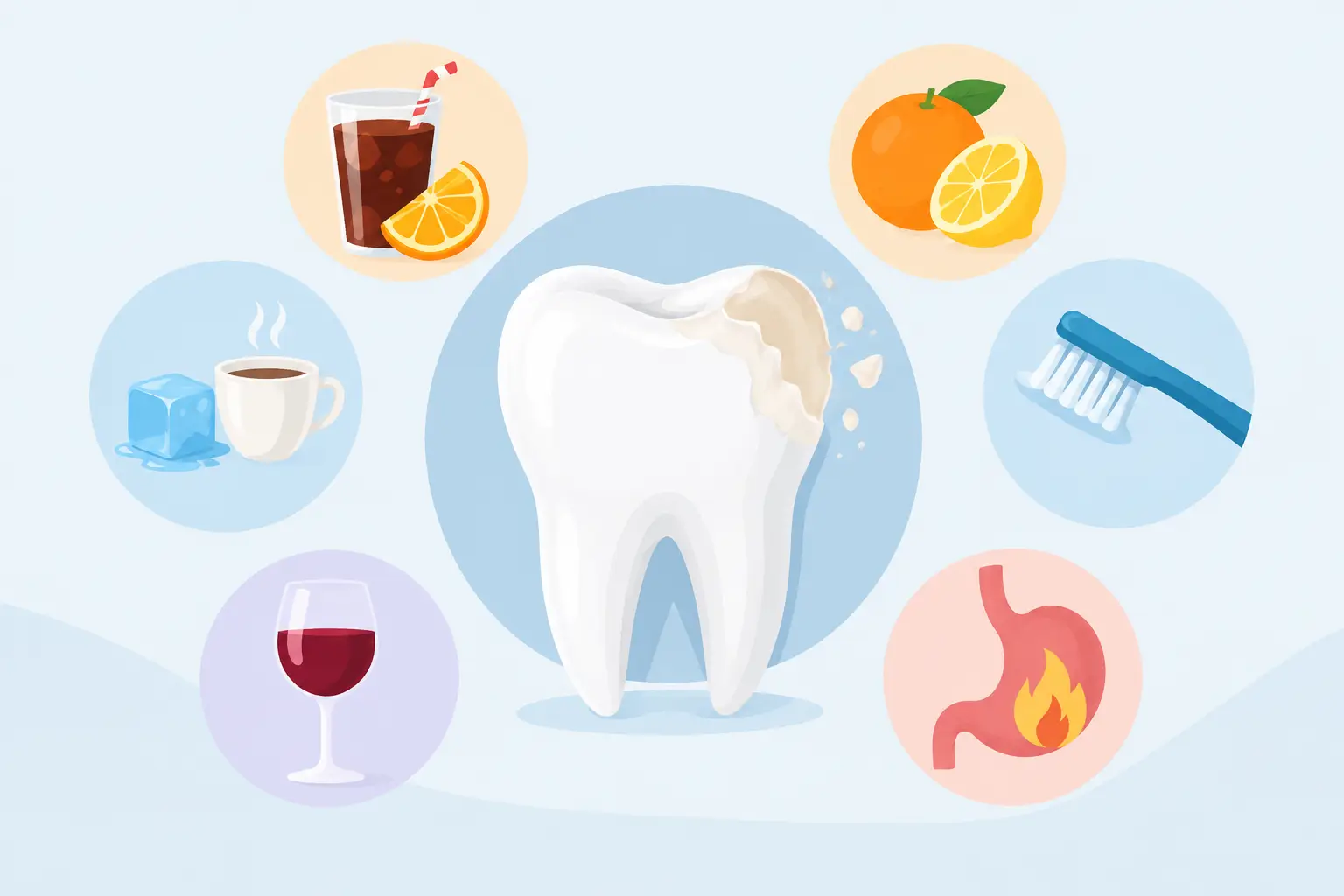
The primary cause of enamel erosion is acid. That acid may come from foods and drinks, from the stomach, or from certain health conditions and habits. The risk is not always about having one acidic item. It often comes down to how frequently acid reaches the teeth, how long it remains there, and whether saliva can rinse and neutralize it.
Acidic Drinks and Frequent Sipping
Soft drinks, sports drinks, energy drinks, fruit juices, sparkling water with citrus flavoring, wine, and sweetened coffee drinks can all be acidic. Even options marketed as healthier may affect enamel if they are consumed often. A drink can be low in sugar and still have a low pH that softens tooth enamel.
Frequency matters as much as quantity. Slowly sipping an acidic beverage over several hours exposes teeth to repeated acid attacks. Having it with a meal and following with plain water is generally less harmful than carrying it around all afternoon. Sugar adds another concern because oral bacteria use it to produce more acid, increasing the risk of cavities along with erosion.
Citrus, Sour Foods, and Acidic Snacks
Lemons, limes, oranges, grapefruit, vinegar-based foods, tomatoes, pickled foods, and sour candies can contribute to enamel erosion. These foods do not need to be eliminated for most people. The goal is to avoid constant exposure and make thoughtful choices about timing.
For example, sucking on lemons, drinking lemon water throughout the day, or frequently eating sour candy exposes enamel repeatedly. Rinsing with water afterward is helpful. Brushing immediately after an acidic food or drink is not ideal, because enamel may be temporarily softened and more vulnerable to friction from the toothbrush.
Acid Reflux and Other Stomach Conditions
Not all acid comes from the diet. Gastroesophageal reflux disease, or GERD, can bring stomach acid into the mouth, especially at night. Frequent vomiting related to illness, pregnancy, certain medications, or an eating disorder can also expose teeth to powerful stomach acid.
This type of erosion may affect the inside surfaces of the upper teeth and the chewing surfaces of the lower back teeth. It can be easy to miss in its early stages. A dentist may notice a pattern of enamel loss before a patient realizes that reflux or another medical concern is affecting the smile.
If reflux symptoms, nausea, or vomiting are recurring, it is wise to discuss them with a physician as well as a dentist. Dental treatment can protect the teeth, but controlling the source of acid is an essential part of long-term care.
Dry Mouth and Reduced Saliva Protection
Saliva is one of the mouth’s natural defenses. It helps wash away food particles, dilute acids, and deliver minerals that support early enamel repair. When saliva flow is reduced, acids can stay on the teeth longer.
Dry mouth may be related to medications, dehydration, mouth breathing, certain medical conditions, tobacco or cannabis use, and some cancer treatments. People with dry mouth may notice a sticky feeling, difficulty swallowing dry foods, persistent bad breath, or a greater tendency toward cavities. Because the cause can vary, treatment should be personalized. It may include hydration habits, saliva-stimulating products, fluoride protection, medication review with a physician, or other professional recommendations.
Brushing Too Soon or Too Aggressively
Brushing does not cause acid erosion by itself, but forceful brushing can wear down enamel that has already been softened by acid. A hard-bristled brush, abrasive toothpaste, and scrubbing with excessive pressure can also wear at the gumline and expose the softer root surface.
After acidic food, drinks, or reflux, rinse with plain water and wait about 30 minutes before brushing. Use a soft-bristled toothbrush and gentle, small motions rather than a back-and-forth scrubbing technique. Good oral hygiene should protect teeth, not put added stress on them.
Other Less Obvious Contributors
Some people are exposed to acid through work or recreation. Competitive swimmers who spend long periods in improperly balanced pool water may experience enamel changes. Wine tasting, frequent tasting during food preparation, and occupations involving acidic fumes can also increase exposure.
Teeth grinding is different from erosion, but it can make the consequences more noticeable. Grinding flattens and fractures enamel through pressure, while erosion chemically softens it. When both occur, teeth may become thin, chipped, sensitive, or shorter more quickly. A custom night guard may be appropriate when grinding is part of the picture.
Signs Enamel Erosion May Be Developing
Early erosion can be subtle. Teeth may feel sensitive when eating ice cream, drinking coffee, or breathing cold air. As enamel becomes thinner, the naturally yellow dentin beneath it can show through, causing teeth to look more yellow even when they are clean.
You may also notice that the edges of front teeth appear translucent, surfaces look unusually smooth or shiny, or old fillings seem raised above the surrounding tooth. Small chips, rounded edges, and changes in the fit of a bite can occur as wear progresses. These changes do not always mean erosion, which is why a professional examination is valuable.
How Dentists Help Protect Eroding Enamel
A dental exam identifies where enamel loss is occurring and helps distinguish erosion from cavities, grinding, abrasion, or a combination of concerns. Digital X-rays and intraoral imaging can help document changes over time, while a conversation about diet, dry mouth, reflux, medications, and habits helps identify likely causes.
When erosion is mild, the focus is often on prevention. This may include prescription-strength fluoride, remineralizing products, desensitizing treatments, dietary adjustments, and a home-care plan that fits your routine. For a patient who enjoys sparkling water, for instance, practical changes may be more realistic than an all-or-nothing restriction.
When enamel loss has led to significant sensitivity, chips, or cosmetic changes, restorative options may be recommended. Tooth-colored bonding can repair small worn areas. Crowns, veneers, or other restorations may be appropriate when a tooth needs more complete protection or when erosion has changed the shape and appearance of the smile. The right approach depends on the amount of healthy tooth structure remaining, bite forces, aesthetic goals, and the underlying cause of erosion.
Everyday Habits That Make a Meaningful Difference
You do not need a perfect diet to protect enamel. Start by limiting frequent acid exposure rather than focusing only on occasional treats. Drink acidic beverages with meals when possible, avoid swishing them around the mouth, and choose water between meals. If you use citrus in water, enjoy it at one time rather than sipping it continuously throughout the day.
Chewing sugar-free gum after meals may help stimulate saliva for some people. Fluoride toothpaste, twice-daily brushing with a soft brush, and regular dental visits provide another layer of protection. If you have dry mouth, reflux, frequent vomiting, or ongoing sensitivity, do not wait for visible damage to become severe.
At Newport Beach Dentistry, enamel concerns are evaluated with your overall health, comfort, and smile goals in mind. A personalized examination can clarify what is affecting your teeth and help you choose practical steps that preserve the healthy tooth structure you have for years to come.